The first English-language collection of Takuma Nakahira’s influential writings on photography.
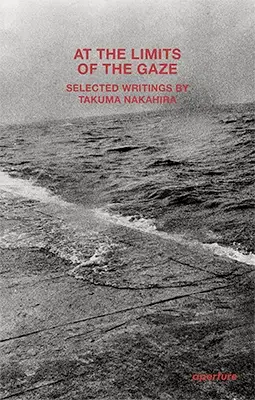
At the Limits of the Gaze collects the writings of photographer and critic Takuma Nakahira in English for the first time. A crucial figure within the history of Japanese photography, Nakahira is best known outside of Japan as a founding member of Provoke, the experimental magazine of photographs, essays, and poetry, first published in 1968, and for his important photobook For a Language to Come (1970). Throughout a decades-long career, Nakahira raised incisive questions about visual culture and politics in both his photography and his writing. As part of a dynamic moment of artistic and political experimentation in Tokyo, he wrote on a range of topics hardly limited to photography: art, film, journalism, literature, politics, television, and more. Nakahira’s essays brim with urgency, relentlessly interrogating photography’s relationship to power, the connection between language and images, and the gaze. As editors and translators Daniel Abbe and Franz Prichard write, Nakahira’s essays “both suggest doubt about, and possibilities for, a photographically mediated reckoning with the world.”
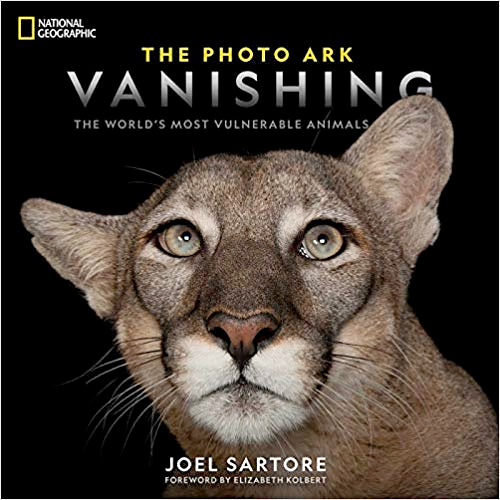
Joel Sartore's quest to photograph all the animal species under human care celebrates its 15th year with this glorious and heartwrenching collection of photographs. The animals featured in these pages are either destined for extinction or already extinct in the wild but still alive today, thanks to dedication of a heroic group committed to their continued survival. From the majestic Sumatran rhinoceros to the tiny Salt Creek tiger beetle, Sartore's photographs bring us eye to eye with the kaleidoscopic diversity of shapes, colors, personalities, and attitudes of the animal world.
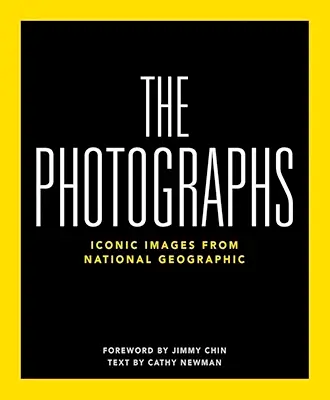
For tastemakers and citizens of the world, this iconic collection features the best of National Geographic’s world-class imagery across more than 250 cutting-edge photographs.
This glorious, large-format photography collection will immerse animal, science, and nature lovers in the unparalleled legacy of National Geographic’s best-in-class imagery. Featuring fan favorites like the Afghan girl and the sunken prow of the Titanic, as well as gems unearthed from the organization’s celebrated archive, THE PHOTOGRAPHS is for anyone passionate about discovering, protecting, and honoring the wonders of the planet.
In these pages, you’ll find dazzling images from every corner of the globe, including magnificent wildlife and human achievements in science, technology, exploration, archaeology, and adventure. Step into the lives of acclaimed National Geographic photographers like Brian Skerry, Anand Varma, and Jodi Cobb, and read interviews with legends and rising stars like Rob Clark, David Doubilet, Erika Larsen, Camille Seaman, and many more.
Both vivid and timeless, THE PHOTOGRAPHS is a must-have for anyone who loves photography, nature, and the human story.
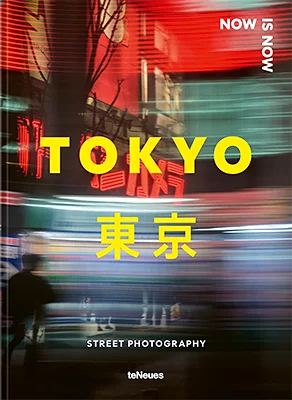
The urban landscape of the Japanese capital undergoes a rigorous visual interrogation in Now is Now Tokyo: Street Photography. This volume serves as a comprehensive anthology of contemporary lens-based observations, aggregating the work of diverse practitioners who navigate the city’s dense topographical layers. Tokyo, a metropolis characterized by its high-frequency movement and contrasting architecture, provides a complex environment for the street genre. The curated selection moves beyond the static tropes of neon-lit corridors, focusing instead on the "dynamic essence" of a city that exists in a state of perpetual flux. By synthesizing multiple perspectives into a single volume, the book documents the social and physical infrastructure of Tokyo with a detached, analytical clarity.
The publication highlights the specific aesthetic of Komorebi—the interplay of light and shadow—as well as the rigid social choreographies that define public life in districts like Shinjuku, Shibuya, and Ginza. The photographers involved utilize a range of technical approaches, from high-speed candid captures to long-exposure studies of human density. These images record the fleeting interactions of commuters, the silent geometry of residential backstreets, and the sprawling intersections that facilitate the city’s massive daily circulation. This multifaceted approach reveals a Tokyo that is both highly regulated and surprisingly intimate, capturing the minute details of urban existence that often escape the casual observer.
For collectors and enthusiasts of Japanese aesthetics, the work provides an essential record of the city’s current cultural climate. The text avoids the sentimentality of traditional travelogues, opting for a journalistic survey of how modern Tokyo functions as a living organism. By presenting the "How is How" of the genre, the book analyzes the various methodologies used to interpret the Japanese capital’s unique visual language. The resulting archive serves as a definitive document of the city’s diversity, preserving the present moment of one of the world’s most significant urban centers. It positions the street photograph as a critical tool for understanding the intersection of tradition and technological advancement in the twenty-first century.
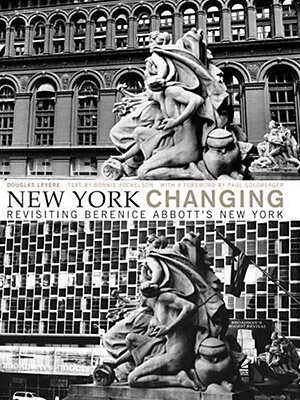
By Douglas Levere, Bonnie Yochelson, Paul Goldberger
Publisher : Princeton Architectural Press
2004 | 192 pages
In 1935 the renowned photographer Berenice Abbott set out on a five-year, WPA-funded project to document New York's transformation from a nineteenth-century city into a modern metropolis of towering skyscrapers. The result was the landmark publication Changing New York, a milestone in the history of photography that stands as an indispensable record of the Depression-era city.
More than sixty years later, New York is an even denser city of steel-and-glass and restless energy. Guided by Abbott's voice and vision, New York photographer Douglas Levere has revisited the sites of 100 of Abbott's photographs, meticulously duplicating her compositions with exacting detail; each shot is taken at the same time of day, at the same time of year, and with the same type of camera. New York Changing pairs Levere's and Abbott's images, resulting in a remarkable commentary on the evolution of a metropolis known for constantly reinventing itself.
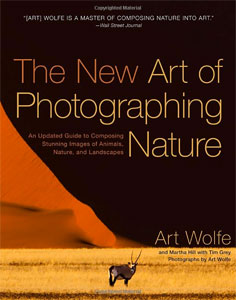
What is the difference between a good picture and a great one? In this fully revised edition of the classic bestseller The Art of Photographing Nature, master photographer Art Wolfe and former Audubon photo editor Martha Hill team up to explain the art of composing images of enduring beauty. Against a backdrop of more than 250 photographs of nature, wildlife, and landscapes, they share insights and advice about what works and what doesn’t, and how small changes can take an image from ordinary to extraordinary. Throughout, all-new tips from digital imaging expert Tim Grey show readers how to make the most of digital technology, whether by choosing the right color space, understanding sensor size, or removing distracting elements in post-processing. The result is an invaluable collection of expert advice updated for the modern age.
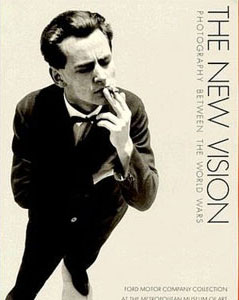
Important collection of modernist photography, beautifully printed in a special four color gravure process. Published on the occasion of the exhibition mounted by the Metropolitan Museum of Art, NYC, September 22-December 31, 1989 - that subsequently traveled to other major museums around the U.S. Includes two essays in English on American and European photographers, 318 pp., work of 70+ photographers in 203 illustrations, including 125 full-page plates divided into 10 sections, bibliography and index.
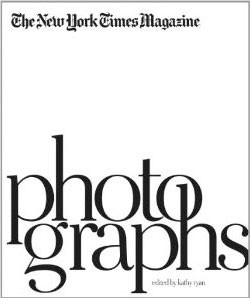
For over 30 years, The New York Times Magazine has been synonymous with the myriad possibilities and applications of photography. The New York Times Magazine: Photographs reflects upon and interrogates the very nature of both photography and print magazines at this pivotal moment in their history and evolution. Edited by Kathy Ryan, longtime photo editor of the Magazine, and with a preface by former editorial director Gerald Marzorati, this volume presents some of the finest commissioned photographs worldwide in four sections: reportage, portraiture, style and conceptual photography, including photo illustration. Diverse in content and sensibility, and consistent in virtuosity, the photographs are accompanied by reproduced tear sheets to allow for the examination of sequencing and the interplay between text and image, simultaneously presenting the work while illuminating its distillation to magazine form. This process is explored further through texts offering behind-the-scenes perspective and anecdotes by the many photographers, writers, editors and other collaborators whose voices have been a part of the magazine over the years. Issues of documentary photography are addressed in relation to more conceptual photography; the efficacy of storytelling; and what makes an image evidentiary, objective, subjective, truthful or a tool for advocacy; as well as thoughts on whether these matters are currently moot, or more critical than ever. As such, The New York Times Magazine: Photographs serves as a springboard for a rigorous, necessary and revitalized examination of photography as presented within a modern journalistic context.
For some travelers, a hotel is simply a place to stay. For LEONE, it is an experience shaped by atmosphere, people, and a sense of belonging. His third book, *A Place We Like*, grew out of a years-long search for that elusive feeling. Published as the inaugural title under the Leisure imprint of C41 Magazine, the project serves as both a visual guide to some of Europe’s most remarkable hotels and a personal reflection on the meaning of hospitality.
Discover Crossing, Kaplan’s powerful documentary photography project capturing Roxham Road, the irregular Canada-US border crossing used by refugees from 2018 to 2023.
Spurred by Trump-era immigration policies, this tiny site between New York and Quebec became a safe, highly unusual microcosm of global migration. Over four years, Kaplan photographed the entire ecosystem—from local cab drivers and border police to the asylum-seekers themselves. Moving past traditional media tropes of victimhood, these photographs challenge stereotypes to highlight the immense courage and resilience required to step into an unknown future before the site's closure in 2023.
I have spent years looking at Lee Friedlander’s America. It has always been a country of sharp angles, cluttered street corners, and shadows that seem to swallow the photographer whole. So when I picked up his latest monograph, Life Still, I expected the familiar noise of his world. Instead, I found something stranger: a 91-year-old master holding his breath.
Part of a bigger journey of liberation through self-exploration, this new photobook by Jo Ann Chaus is above all a collection of self-portraits, complemented by landscapes, still lifes and domestic interiors observed and inhabited by the photographer-cum-model
Blending photography and poetry, Burnt Eyes explores nostalgia, memory, and identity, offering a profound reflection on the complexities of belonging and the stories that shape us.
Seasons of Time by Nathalie Rubens is an intimate and fearless photobook exploring the emotional distance and deep connection between mother and daughter, while confronting the beauty, vulnerability, and physical reality of a woman’s aging body with rare honesty.
1804 continues Rich-Joseph Facun’s exploration of life in the Appalachian foothills of Southeast Ohio, this time turning his lens toward the local university and its complex, symbiotic relationship with the surrounding community.
GOST Books presents Robin Bernstein’s debut photobook MAPALAKATA, a compelling visual investigation into landscape, memory, and the layered histories of Southern Africa. The project offers a nuanced reflection on how geography is not only inhabited, but continually rewritten through movement, extraction, and shifting narratives of belonging.