All about photo.com: photo contests, photography exhibitions, galleries, photographers, books, schools and venues.
FINAL CALL TO ENTER AAP MAGAZINE PORTRAIT: PUBLICATION AND $1,000 CASH PRIZES

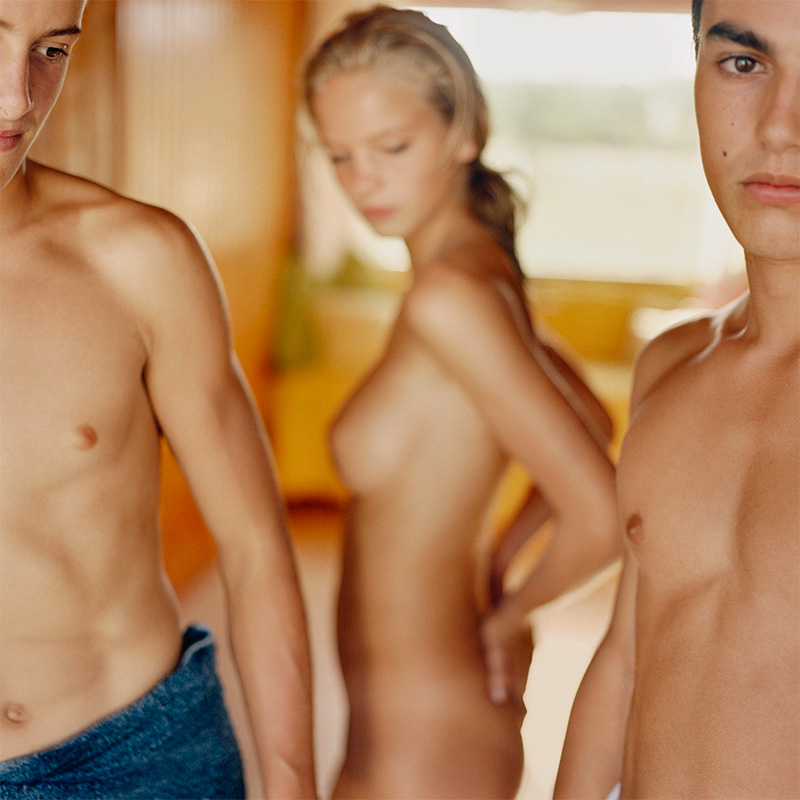
Mona Kuhn: Timeless

From November 05, 2022 to December 23, 2022
Share
Mona Kuhn: Timeless
1295 Alabama Street
San Francisco, CA 94110
EUQINOM Gallery is pleased to present Mona Kuhn: Timeless, a stunning career retrospective of one of today’s most respected and widely exhibited contemporary art photographers working today, coinciding with her 2021 retrospective monograph, Works, published by Thames & Hudson.

Mona Kuhn is internationally acclaimed for her contemporary re-interpretations of the nude, employing playful visual strategies and drawing from traditional iconography to create profoundly intimate depictions of the complexities of human nature and our connectedness with the environment. Over a career spanning more than twenty years, Kuhn has reflected on humanity’s longing for spiritual connection and solidarity. The artist develops close relationships with her subjects. The resulting images are remarkably intimate, evoking a sublime sense of comfort between the human figure and its environment.

“Photographing someone in the nude is my attempt to reach that moment of perfect balance, the light of awareness in the way we perceive life to be. The nude is present in my work not as a one-dimensional physical manifestation, but rather as a proof of our being, our presence in time, and ultimately our caring for what will be lost. I’m most comfortable representing the nude as minimal, timeless, somewhat monastic, and mostly pensive. I enjoy the nuances, the elegance of simplicity, the rustic forms, because it brings us close to our own nature and sense of self. My works are not meant to be of this time but to transcend, in its basic form, the elements of time.” —Mona Kuhn

The artist will be signing copies of Mona Kuhn Works published by Thames & Hudson, they will be available for sale at the gallery.

Image:Jacintha, 2007 from Evidence © Mona Kuhn
Our printed edition showcases the winners of AAP Magazine call of entries
All About Photo Magazine
Issue #55
Stay up-to-date  with call for entries, deadlines and other news about exhibitions, galleries, publications, & special events.

Exhibitions Closing Soon

Devaki Murch: My Name Is Mimosa
East Window | Boulder, CO
From April 04, 2026 to April 25, 2026
Devaki Murch: My Name Is Mimosa unfolds as both an intimate excavation and a collective act of remembrance. Presented at East Window gallery from April 4 to 25, 2026, the exhibition traces a life shaped not by family albums or official documents, but by fragments of public record and historical rupture. The date of April 4, 1975 echoes throughout the work, marking the tragic crash of the first evacuation flight of Operation Babylift, a moment suspended between loss and survival. From this event emerges a voice that has taken decades to fully form, now expressed through a careful weaving of image, text, and recovered memory. Murch’s practice navigates the unstable terrain between personal history and institutional archives. Newspaper clippings, flight manifests, and bureaucratic traces become visual anchors, yet they never settle into certainty. Instead, they flicker with absence, suggesting the many lives and identities left undocumented or misrecorded. In this space of ambiguity, Murch positions herself not only as a subject but also as a custodian, reassembling narratives that were once scattered across continents and systems. Her work invites viewers to consider how identity is constructed when origins remain obscured or mediated by external forces. Beyond autobiography, the exhibition resonates as a broader call to reconnect a dispersed community. Through research and participatory storytelling, Murch extends her inquiry outward, creating encounters that bridge individual memory and shared experience. The materials on display do not merely recount the past; they activate it, allowing stories to circulate מחדש among those who carry similar histories. The exhibition becomes a living archive, one that acknowledges both the fragility and resilience of memory. Situated between artistic expression and ethical responsibility, Murch’s work reflects a sustained engagement with the politics of care, representation, and historical accountability. My Name Is Mimosa stands as a testament to the enduring power of storytelling when silence finally gives way to articulation, and when the act of looking back becomes a way of moving forward. Image: © Devaki Murch
Emmet Gowin | Baldwin Street: Photographs 1966-1994
Pace Gallery | New York, NY
From March 12, 2026 to April 25, 2026
Emmet Gowin | Baldwin Street: Photographs 1966–1994 is on view at Pace Gallery from March 12 through April 25, 2026. Installed at the gallery’s West 25th Street space, the exhibition coincides with the release of a new publication by Princeton University Press devoted to this deeply personal body of work. The presentation unfolds alongside the annual gathering of the photography world during AIPAD’s Photography Show in New York, situating Gowin’s early vision within a broader contemporary dialogue. The Baldwin Street series centers on the family of Gowin’s wife, Edith Morris, in Danville, Virginia. Named after the quiet dead-end street where many relatives lived, the photographs trace decades of shared experience—children at play, sisters in conversation, figures resting in yards or framed by modest interiors. Edith appears often: seated in a bedroom suffused with soft light, balanced on a ladder outdoors, absorbed in thought. Reva Booher Morris and extended family members inhabit the images with an ease born of trust. These works reveal not spectacle but familiarity, an intimacy that shaped Gowin’s artistic coming of age. Drawn from the artist’s archive and printed for the first time in recent years, many of the photographs remained unseen for decades. Their rediscovery underscores the continuity within Gowin’s six-decade career. Though later celebrated for aerial views of nuclear test sites, volcanic landscapes such as Mount St. Helens, and environmental studies across Europe and the American West, his practice begins with sustained attention to home. Baldwin Street stands as a spiritual and emotional center from which his broader meditations on humanity and the natural world unfold. Gowin’s photographs reside in major museum collections, including the Museum of Modern Art and the National Gallery of Canada. Yet within this exhibition, the focus returns to a small Virginia street, where gesture, light, and kinship coalesce into images of enduring tenderness and quiet gravity. Image: Emmet Gowin, Reva and Edith, Danville, Virginia, 1970 © Emmet Gowin
JR: Horizons
Perrotin Los Angeles | Los Angeles, CA
From March 12, 2026 to April 25, 2026
JR: Horizons, presented at Perrotin Los Angeles from March 12 through April 25, 2026, brings together a selection of photographic works by the French artist JR created across California. The exhibition reflects the artist’s long-standing interest in the horizon as both a visual and social concept. In JR’s work, the horizon is less a distant line than a point of encounter—an ever-shifting boundary where landscapes, communities, and histories intersect. Through photography installed at monumental scale, the artist transforms everyday environments into spaces of visibility and dialogue. JR’s practice begins with portraiture and personal encounters. Individuals from different walks of life participate in projects that extend beyond the gallery into public space. Enlarged photographs appear on building façades, streets, and infrastructure, allowing the faces of residents to become part of the architecture itself. In the series The Wrinkles of the City, portraits of older inhabitants spread across neighborhoods of Los Angeles, their expressions stretching across rooftops and walls. These images reveal the accumulated experiences of the city through its people, suggesting that urban identity emerges from lived memory rather than monumental landmarks. Several works in the exhibition also revisit JR’s interventions near the border between the United States and Mexico. One of the most widely known images from this project depicts a young child named Kikito gazing playfully over the towering barrier near Tecate. Installed at enormous scale, the portrait introduces a disarming sense of innocence into a heavily politicized landscape. The installation becomes a temporary gathering point as communities from both sides of the border share a meal along the wall, transforming a site of division into a place of encounter. The exhibition further includes documentation from the artist’s collaborative work inside the California Correctional Institution in Tehachapi. There, JR works with incarcerated participants to create collective images installed directly within the prison yard. Portraits, narratives, and visual illusions combine to reshape the architecture of confinement, if only briefly. Across these projects, the horizon operates as a metaphor for perspective itself—an invitation to reconsider distance, proximity, and the relationships that connect people within shared space. Image: JR, Migrants, Mayra, Picnic across the border, General View, Tecate, Mexico - U.S.A., 2017. Colour photograph, matte plexiglass, aluminium, wood (framed behind glass). 40 3/4 x 59 5/8 in. ©JR. Courtesy of the artist and Perrotin.
Tacita Dean: Trial of the Finger
Marian Goodman Gallery | Los Angeles, CA
From February 21, 2026 to April 25, 2026
From 21 February to 25 April 2026, Marian Goodman Gallery in Los Angeles presents Trial of the Finger, an exhibition that reaffirms Tacita Dean’s unwavering commitment to the physical realities of image-making. Working across 16mm and 35mm film, slate, glass, and Polaroid, Dean continues to defend the tactile and the handmade in an age increasingly dominated by the virtual. The exhibition’s title borrows from Dr. Samuel Johnson’s critique of the Metaphysical poets, invoking the “trial of the finger” as a measure of counting and touch. For Dean, the phrase becomes a meditation on how the body—through fingers, thumbs, and even the span of a hand—remains our oldest instrument of reckoning and description. In the Seward Gallery, newly completed slate drawings and the blackboard tondo In Montem (he fell) (2026) emerge from surfaces that dictate their own terms. Found school slates, some oxidized to a fragile green bloom, required a recalibration of touch. Their imagery traces back to an eclipse witnessed in Eagle Pass, Texas, where Dean’s refusal to document paradoxically resulted in luminous solar loops—photographic drawings made by instinct rather than intention. These gestures extend into works on glass fashioned from 19th-century locomotive windows, inherited from her father and painted in enamel through a meticulous reverse process developed with German artisans. The Hudson Gallery debuts Sidney Felsen decorates an Envelope (2026), a 16mm portrait of the late co-founder of Gemini G.E.L.. Felsen, who collaborated with figures from Robert Rauschenberg to Julie Mehretu, is observed performing a modest ritual: embellishing an envelope with stamps and care. In the Main Gallery, the 35mm installations Paradise (2021) and Geography Biography (2023) unfold as lyrical testaments to photochemical film. The former, born from The Dante Project at Royal Opera House with music by Thomas Adès, bathes Dante’s cosmos in anamorphic color. The latter, an “accidental self-portrait,” layers gauges and postcards into a fragile archive of memory. Across the exhibition, Dean upholds film not as nostalgia, but as inheritance—something to be practiced, protected, and passed on. Image: Tacita Dean, oh god, 2025 (Detail). 3 Polaroids. 4 1/5 x 3 1/2 in. (10.7 x 8.8 cm) (each). Courtesy the artist. © Tacita Dean. Photo: Studio Tacita Dean/Simon Hanzer
Two Takes on Jazz
PhotoMidwest Gallery | Madison, WI
From February 28, 2026 to April 25, 2026
Two Takes on Jazz is on view at the PhotoMidwest Gallery from February 28 through April 25, 2026, bringing together two distinct yet harmonious perspectives on live music. Featuring Meditation on Jazz Musicians by George Roesch Johnson and Mostly Madison Music by Ken Halfmann, the exhibition explores how photography interprets rhythm, improvisation, and atmosphere. Each artist approaches performance not merely as spectacle, but as a lived exchange between musician and audience. Johnson’s relationship with jazz begins in 1960s New York, where he hears transformative sets by artists such as Ornette Coleman at Slugs’ Saloon and John Coltrane at the Five Spot. Those formative nights shape his visual sensibility decades later in Madison, Wisconsin. At Café Coda on Willy Street, under the stewardship of saxophonist Hanah Jon Taylor, Johnson finds an echo of the intensity and intimacy he once experienced in Manhattan clubs. His photographs dwell in shadow and spotlight, isolating gestures—a horn lifted mid-phrase, fingers suspended above piano keys, a bowed head lost in concentration. The images function as quiet studies of immersion, attentive to the spiritual and communal dimensions of jazz. Halfmann’s contribution widens the frame. A devoted music enthusiast since his college days in the 1970s, he turns his camera toward an array of genres, from bluegrass gatherings to blues bars and jazz stages. His photographs chart decades of regional concerts, preserving fleeting alignments of sound and crowd. Where Johnson meditates, Halfmann celebrates variety, capturing performers in motion and audiences caught in shared delight. Together, these bodies of work underscore photography’s kinship with improvisation. Both artists rely on timing, instinct, and patience—qualities jazz musicians themselves prize. In this dialogue of images, music becomes visible, and the pulse of Madison’s performance culture resonates far beyond the gallery walls. Image: Hanah Jon Taylor, owner Cafe Coda © George Roesch Johnso, courtesy of the PhotoMidwest Gallery
Lewis Wickes Hine: Compassionate Documentarian of Work and Workers
Atrium Gallery Department of Fine Arts Haverford College | Haverford, PA
From January 31, 2026 to April 25, 2026
Lewis Wickes Hine: Compassionate Documentarian of Work and Workers, presented at the Atrium Gallery of the Jane Lutnick Fine Arts Center, opens the 2026 exhibition season with a focused tribute to one of the defining figures of American photography. Born in 1874, Lewis Wickes Hine transformed the camera into a civic instrument, using clarity and precision to illuminate the realities of modern labor. His images remain steady in their gaze and resolute in their purpose, bridging artistry and reform. Trained in sociology before turning fully to photography, Hine brought a researcher’s discipline to his practice. While teaching at the Ethical Culture School in New York, he began using the camera as an educational tool, eventually recognizing its broader social power. His portraits of child laborers in mills and mines, immigrants arriving at Ellis Island, and steelworkers balanced on towering girders offered an unvarnished account of industrial America. These photographs were not sensational; they were measured, direct, and profoundly human. They helped shape public opinion and informed early twentieth-century labor legislation, underscoring the cost of progress on vulnerable lives. Hine’s influence extended beyond activism. Among his students was Paul Strand, whom he introduced to Alfred Stieglitz and the circle of the Photo-Secession. That encounter proved pivotal, linking documentary clarity with the emerging language of modernist photography. Works by Strand and August Sander accompany Hine’s photographs in the exhibition, placing his social commitment within a broader international dialogue about representation, typology, and truth. As one of the early practitioners to create images specifically for magazines and mass circulation, Hine understood the printed page as a powerful platform. His photographs traveled widely, entering homes and shaping conversations. In revisiting his work today, the exhibition highlights a tradition in which photography serves both conscience and craft. Hine’s legacy endures not only in policy reforms he helped inspire, but in the enduring belief that careful observation and empathy can still alter the course of public life. Image: Lewis Wickes Hine. Richard Pierce, Western Union Messenger, Wilmington Del., 1910
Steven Arnold: Cocktails in Heaven
Del Vaz Projects | Santa Monica, CA
From February 25, 2026 to April 25, 2026
Steven Arnold: Cocktails in Heaven, on view at Del Vaz Projects from February 25 to April 25, 2026, offers an immersive return to the ecstatic, theatrical universe of a singular visionary. Oakland-born and later based in Los Angeles, Steven Arnold built a body of work that blurred art, ritual, performance, and devotion. This exhibition centers on Zanzabar, the decaying house Arnold transformed into an opulent, otherworldly studio, where found objects, costume jewelry, and improvised luxury became the raw materials for elaborate tableaux vivants. Within these interiors, fantasy was not escapism but a mode of survival and self-definition. Restaged within the gallery, Zanzabar reappears as both environment and archive. Photographs, sculptures, furniture, posters, and intimate ephemera trace Arnold’s devotion to cinema as a spiritual force and to queerness as something radiant and sacred. His baroque aesthetic—excessive, humorous, and deeply felt—hosted a vibrant social network of artists, performers, and countercultural figures, collapsing distinctions between celebrity and community. Arnold’s work embraced masquerade and artifice, yet always pointed toward emotional truth, vulnerability, and longing. Throughout the run of the exhibition, the space functions not as a static display but as a living container. Contemporary artists, thinkers, and organizers are invited to respond to Arnold’s legacy through programs that activate dialogue, collaboration, and imagination. In this setting, the gallery becomes a site of world-building, echoing Arnold’s own practice of turning domestic space into a stage for transformation and communion. His work, shaped by joy and loss, speaks powerfully to ongoing conversations around visibility, care, and chosen family. Created in collaboration with photography, moving-image, and queer-focused institutions and archives across the United States, Cocktails in Heaven foregrounds Arnold’s enduring influence while introducing his lesser-known contributions to new audiences. More than a retrospective, the exhibition is an invitation to dwell inside a cosmology where spirituality is surreal, art is devotional, and creativity becomes an act of defiance. In revisiting Arnold’s world, the project affirms his vision as urgently resonant—then, now, and still unfolding. Image: Steven Arnold Connecting to the Infinite (1), 1985. © Courtesy The Steven Arnold Museum & Archives.
Torbjørn Rødland: Bones in the Canal and Other Photographs
David Kordansky Gallery New York | New York, NY
From March 12, 2026 to April 25, 2026
Torbjørn Rødland: Bones in the Canal and Other Photographs, on view from March 12 through April 25, 2026 at David Kordansky Gallery, marks the artist’s first solo gallery exhibition in New York in nearly a decade. Bringing together two distinct bodies of work, the exhibition reveals both a return and a departure: a renewed engagement with the formal traditions of twentieth-century art photography alongside a notable shift in method and scale. Known for images that unsettle as much as they seduce, Torbjørn Rødland continues to test the medium’s capacity to conjure meaning from ambiguity. The front gallery features a suite of smaller-format photographs made with ultra-compact 35mm viewfinder cameras. Embracing the constraints of these tools, Rødland positions figures within expansive surroundings—forests, waterways, quiet streets—allowing landscape and atmosphere to carry equal weight. The effect recalls strains of Northern European romanticism, yet the mood is not nostalgic. Instead, these works suggest that archetypal imagery, long dismissed as sentimental or overdetermined, can be reactivated. References to composers such as Arvo Pärt and John Tavener evoke a pared-down spiritual intensity, where simplicity becomes a conduit for mystery rather than certainty. Deeper in the gallery, larger-format photographs stage charged encounters between bodies and objects. Hands, skin, fabric, and sculptural fragments meet in scenes that feel at once intimate and estranged. Power dynamics—sexual, religious, psychological—surface without settling into fixed interpretations. In works like Awkward Seat, a precarious interaction with a devotional figure becomes a metaphor for contact itself: between subject and world, artist and material, viewer and image. Rødland’s choreography balances improvisation with precision, foregrounding the alchemy of light, shadow, and chemical process that underpins analogue photography. Throughout his career, which has included presentations at institutions such as the Whitney Museum of American Art and the Serpentine, Rødland has explored how photography can render the familiar uncanny. Here, “bones in the canal” suggests remnants—forms emptied by time—yet the images insist on their latent vitality. Drawing from cultural memory while resisting cynicism, Rødland crafts pictures that feel suspended between knowledge and doubt, inviting viewers into a space where meaning remains open, provisional, and vividly alive. Image: Torbjørn Rødland: The First Curtain, 2024 - 2026 © Torbjørn Rødland, courtesy of the David Kordansky Gallery
Locomotion of Light & Time: Moira McDonald
Chung 24 Gallery | San Francisco, CA
From March 04, 2026 to April 25, 2026
Locomotion of Light & Time: Moira McDonald brings together a new body of cameraless photographs at Chung 24 Gallery from March 4 through April 25, 2026. In this contemplative exhibition, light itself becomes both subject and collaborator. Sheets of silver-coated paper are placed directly into the landscape for days, weeks, sometimes months, allowing the elements to inscribe their own slow gestures across the surface. What emerges are not depictions of place in any conventional sense, but quiet accumulations of duration—records of time made visible. Working without a camera, Moira McDonald embraces extended exposure as a form of communion with the natural world. Fog drifts, coastal winds shift, winter light thins and deepens; each atmospheric fluctuation leaves a trace. The resulting images feel at once elemental and intimate, as if the troposphere itself had leaned close to whisper. These works resist fixed detail, instead offering tonal fields and subtle gradients shaped by long breaths of weather and season. The landscape is not framed—it acts. An Australian-American artist based in the Bay Area, McDonald holds a BFA from California College of the Arts and an MFA from San Jose State University. Her practice draws from a rich lineage of experimental photography while remaining distinctly personal. By relinquishing mechanical control and inviting contingency, she extends the tradition of analog process into a meditation on presence and impermanence. Each piece stands as a singular artifact of shared time between artist, material, and environment. The exhibition is accompanied by a public conversation moderated by Allison Railo of New Museum Los Gatos, whose longstanding engagement with alternative photographic practices provides thoughtful context. Together, the dialogue and the works on view propose photography not simply as image-making, but as a patient act of witnessing—where light travels, settles, and finally reveals the quiet architecture of time itself. Image: © Moira McDonald
Margaret Bourke-White
Monroe Gallery | Santa Fe, NM
From February 06, 2026 to April 26, 2026
On view at the Monroe Gallery of Photography from February 6 to April 25, 2026, this exhibition celebrates the extraordinary legacy of Margaret Bourke-White, one of the most influential figures in the history of American photography. As a trailblazer in both photojournalism and visual storytelling, Bourke-White reshaped how the world understood news, conflict, industry, and humanity itself. Her work remains strikingly contemporary, not only for its aesthetic power but for its unwavering commitment to bearing witness. A founding member of LIFE magazine and the photographer behind its very first cover, Margaret Bourke-White quickly became synonymous with a new kind of journalism—one driven by images capable of shaping public consciousness. At a time when the field was overwhelmingly dominated by men, she moved confidently through steel mills, factories, flood zones, and war fronts, carving out space through sheer determination and unmatched skill. Her presence behind the camera was as radical as the images she produced. Bourke-White’s photographs reflect a rare balance of formal rigor and emotional clarity. Whether documenting the grandeur of American industry, the devastation of global conflict, or the quiet dignity of individuals caught in history’s upheavals, she approached every subject with intellectual curiosity and deep empathy. Her pioneering use of the photographic essay expanded the role of photography beyond illustration, establishing it as a narrative force capable of conveying complexity, contradiction, and moral urgency. Nicknamed “Maggie the Indestructible” by her colleagues, Bourke-White was known for her physical courage and relentless work ethic. Yet her strength extended far beyond endurance. She believed fiercely in the social responsibility of the artist, using her camera to confront injustice and humanize suffering. Her images do not merely record events; they challenge viewers to reflect on power, resilience, and the cost of progress. This exhibition offers an opportunity to revisit the work of a photographer who helped define the visual language of the twentieth century. Bourke-White’s images continue to resonate, reminding us that photography can be both an instrument of truth and a catalyst for change—and that vision, conviction, and bravery know no boundaries. Image: Margaret Bourke-White Welding tire rims, International Harvester, Chicago, IL, 1933 © Margaret Bourke-White, Courtesy of the Monroe Gallery of Photography
Where Are We Now? American People and Places, 1955-2025
Philadelphia Museum of Art | Philadelphia, PA
From January 03, 2026 to April 26, 2026
Where Are We Now? American People and Places, 1955–2025, presented at the Philadelphia Museum of Art, arrives at a pivotal cultural moment. As the United States approaches its 250th anniversary, the exhibition reflects on seven decades of photographs that have attempted to describe, question, and sometimes challenge the nation’s sense of itself. Bringing together landscapes and street photography from across the country, the installation traces a restless visual conversation about belonging, division, and shared ground. The exhibition opens with the work of Robert Frank, whose landmark 1958 book The Americans reshaped the language of documentary photography. Traveling across the United States in the mid-1950s, Frank produced images that were unsentimental and piercing. His photographs revealed racial injustice, social isolation, and the quiet contradictions embedded in everyday life. Though initially met with resistance, The Americans has come to be regarded as a defining portrait of postwar America—at once critical and deeply affectionate. From that starting point, the exhibition unfolds across generations. Photographers from diverse backgrounds extend and complicate Frank’s inquiry, turning their lenses toward highways and housing developments, parades and protests, deserts and downtown corners. The American landscape appears alternately expansive and constrained, marked by migration, industry, inequality, and reinvention. Faces emerge from crowds; solitary figures linger beneath vast skies. Each image contributes a fragment to a broader meditation on national identity. Rather than offering conclusions, Where Are We Now? poses a question that resonates beyond the gallery walls. The works suggest that the country’s story is not singular but layered, composed of overlapping experiences and unresolved tensions. Yet within these photographs—amid their candor and critique—there remains a persistent search for connection. In looking closely at one another and at the spaces we inhabit, the exhibition asks what it might mean, despite profound differences, to imagine a shared future and to hold together a complex, unfinished whole. Image: 1955 (negative); 1969 (print) Parade, Hoboken, New Jersey © Robert Frank
Virtuosos: Ansel Adams and Paul Caponigro
Obscura Gallery | Santa Fe, NM
From February 20, 2026 to April 26, 2026
Virtuosos: Ansel Adams and Paul Caponigro brings together two towering figures of twentieth-century photography in a rare dialogue that celebrates mastery, vision, and devotion to craft. Presented by Obscura Gallery, the exhibition highlights the shared commitment of Adams and Caponigro to black-and-white photography, where light, tone, and form are shaped with the precision of a musical composition. Though their paths crossed through teaching and influence, their approaches reveal distinct philosophies united by a reverence for the expressive potential of the photographic print. Ansel Adams remains synonymous with technical excellence and photographic control. His development of the zone system transformed photographic practice, offering generations of photographers a method to translate perception into finely calibrated tonal values. Adams approached the medium analytically, using chemistry and exposure as tools to achieve clarity and balance. Paul Caponigro absorbed these lessons early in his career, yet ultimately pursued a more intuitive path, allowing emotion, rhythm, and inner response to guide his images. Where Adams measured, Caponigro listened—trusting instinct as much as method in the creation of his prints. Caponigro’s photographs reveal a lifelong pursuit of the transcendent within the visible world. From ancient stone circles in the British Isles to the sacred gardens of Japan, from New England forests to the deserts of the American Southwest, his subjects are rendered with luminous subtlety. Tireless darkroom work resulted in gelatin silver prints of remarkable depth and presence, images that invite contemplation rather than declaration. His influence extended beyond his own work through teaching, publishing, and collaboration, securing his place as both artist and mentor within the photographic canon. Both Adams and Caponigro were accomplished pianists, and each acknowledged music as a formative influence on their visual thinking. The tonal range of a photograph, like a musical scale, unfolds through harmony and contrast. This exhibition, the first to honor Caponigro’s work since his passing in 2024, stands as a fitting tribute to two virtuosos whose photographs continue to resonate—timeless, disciplined, and deeply felt. Image: Paul Caponigro. Reflecting Stream, Redding, CT, 1968 © Paul Caponigro
Advertisement
AAP Magazine #57 Portrait
Win a Solo Exhibition in June
AAP Magazine #57 Portrait
Call for Entries
AAP Magazine #57 Portrait
Publish your work in our printed magazine and win $1,000 cash prizes

Related Articles

Mike Brodie Joins Casemore Gallery Ahead of First Solo Exhibition
Casemore Gallery announces its representation of Mike Brodie, marking a significant new chapter in the artist’s career. The collaboration launches with Brodie’s debut solo exhibition at the gallery, opening Saturday, May 2, from 5–7 pm.
Ecstatic Time: The Alchemy of Photography
Opening July 29, 2026, at Phoenix Art Museum in Phoenix, Arizona, Ecstatic Time: The Alchemy of Photography is a major photography exhibition featuring nearly 100 works from the Center for Creative Photography. The exhibition explores how photography transforms reality, perception, and time through surreal, astronomical, and experimental imagery.
Film: Steve Schapiro: Being Everywhere
Shot shortly before his passing in 2022, Steve Schapiro: Being Everywhere is a loving tribute to one of the most important photographers of the mid-20th century.
All About Photo Presents ’Alpine Hiatus’ by Filippo Poli
In Alpine Hiatus: The Snow No Longer Tastes Like Snow, Italian photographer and architect Filippo Poli turns his camera toward a landscape caught between memory and mutation. The project unfolds as both personal archaeology and ecological reflection — an inquiry into what remains when the snow, once a symbol of purity and permanence, becomes an artifact of artifice. Winner of the April 2026 All About Photo Solo Exhibition contest, Poli’s work traces the dissonance between remembrance and reality, offering a haunting meditation on disappearance.
Magnum Square Print Sale in Partnership with The Photographers’ Gallery: Odyssey
Odyssey is more than a journey. It is a search for meaning, a crossing of thresholds, a story of growth and resilience. Bringing together a wide range of work from over 100 photographers, this Square Print Sale traces the paths we take across borders, through memory, and into the unknown. Presented in collaboration with The Photographers’ Gallery, the collection off ers works by artists including Martin Parr, Daidō Moriyama, Eve Arnold, Nadav Kander, Steve McCurry, Juno Calypso, Karen Knorr and more.
Elements of Wonder: When Nature Becomes Art by Jon McCormack
To coincide with Earth Day, CENTER, the nonprofit photography organization based in Santa Fe, NM, presents Elements of Wonder: When Nature Becomes Art, a photographic exhibition by Jon McCormack. The exhibition will be on view at CENTER from April 17 through May 17, 2026, with an Opening Reception on Friday, April 17, 5:00 – 7:00 PM, and an Artist Talk on April 30, from 5:30 – 6:30 PM (MT).
Gordon Parks: The South in Color
Jackson Fine Art is delighted to announce our spring exhibition Gordon Parks: The South in Color organized in partnership with The Gordon Parks Foundation. The exhibition is timed to commemorate two important milestones - the 70th anniversary of the landmark publication of Parks’ images of the segregated South in Life magazine and the 20th anniversary of the founding of The Gordon Parks Foundation. The South in Color will present more than thirty photographs from the artist’s Segregation Story series and debut a brand-new portfolio published by the Foundation. The exhibition brings together many of Parks’ images not previously shown in the gallery, alongside some of his most recognized such as At Segregated Drinking Fountain, Mobile, Alabama, to offer a fresh look at the series, and deepen its emotional and historical resonance.
Marilyn Stafford, Lee Miller, Colin Jones for UNSEEN at Art Rotterdam
The Albumen Gallery programme for UNSEEN at Art Rotterdam 2026 brings together three iconic names of mid-20th century photography. At a first glance the works of Marilyn Stafford, Lee Miller and Colin Jones cover quite a wide spectrum of photography. Notwithstanding that there are shared aspects across their respective bodies of work that invite interesting comparison with respect to thematic and artistic approach.
Circulation(s) Festival of young European photography
For its sixteenth edition, the Circulation(s) Festival continues to champion emerging European photography and its intersections with contemporary art. Founded in 2009 at the CENTQUATRE-PARIS, the festival has grown into a key platform for young creators, highlighting plural perspectives and experimental practices.
Call for Entries
AAP Magazine #57 Portrait
Publish your work in our printed magazine and win $1,000 cash prizes