Some books announce their subject immediately. Others reveal it slowly, asking you to travel a little before you understand where you're headed.
Ruth Kaplan's
'Crossing' belongs to the second category.
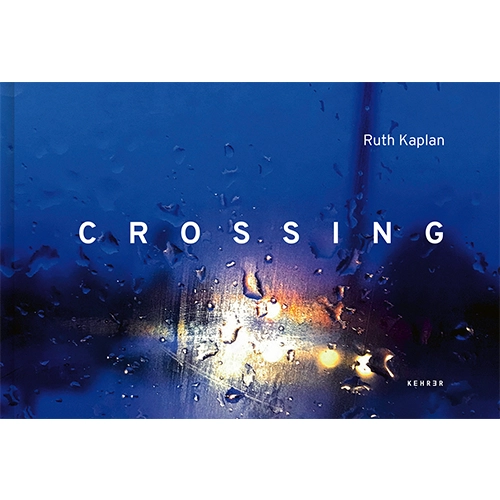
The book itself is modest in size, almost journal-like. Measuring 24.5 x 16.5 cm, it feels less like a grand statement than a personal record. The glossy cover shows a blurred view through a rain-soaked windshield. A few distant lights emerge from the darkness ahead, but little else is visible. It is impossible to know exactly where the road leads. Before turning a single page, I found myself wondering whether the image represented hope or uncertainty. Perhaps it is both.
Inside the cover, dates and times appear like entries from a travel diary. The first photograph is of a bus. Across from it, a simple dedication reads:''For all those in the land of in-between.''
That phrase stayed with me throughout the book.
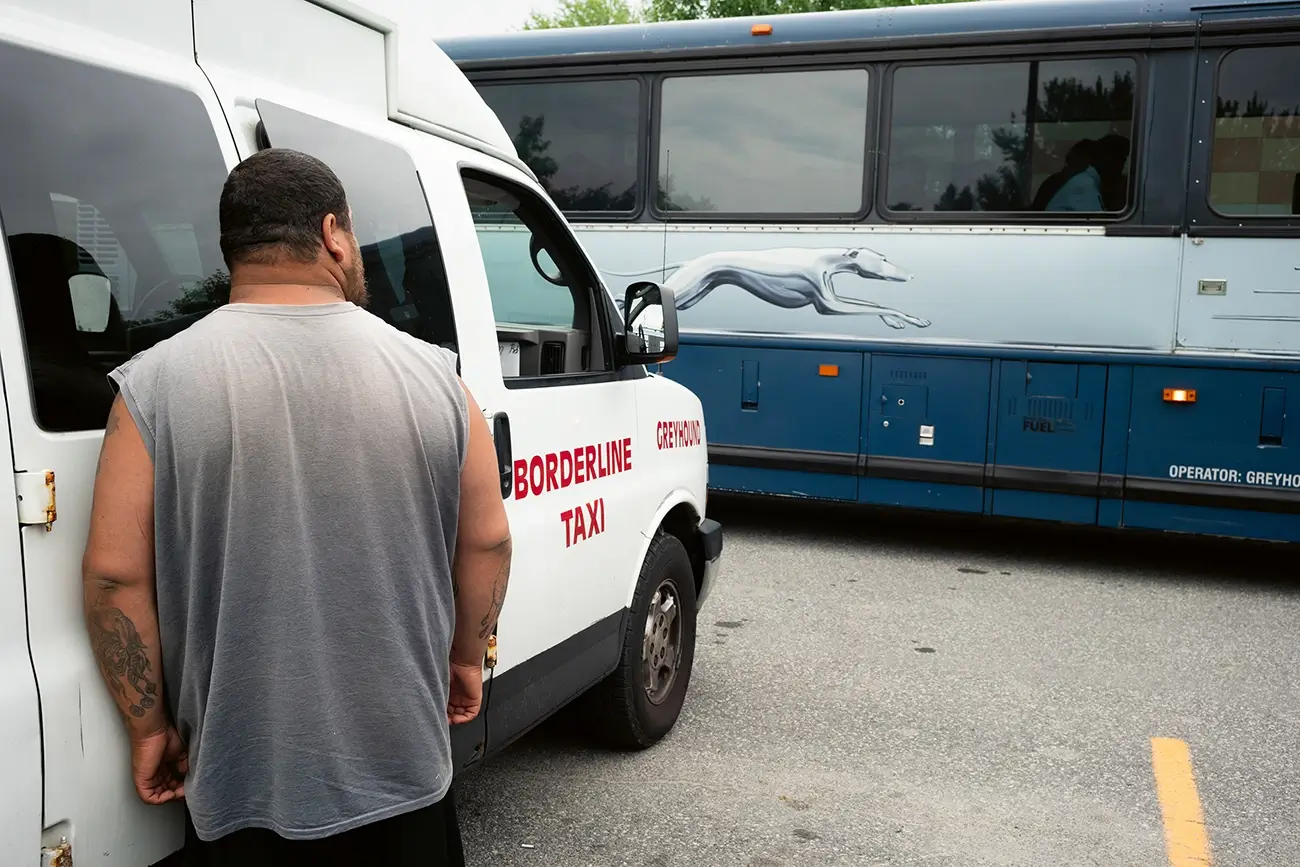
Plattsburgh Bus Station, 2019. Most asylum-seekers arrived by bus from NYC, descended in Plattsburgh, then hired an authorized cab to drive to the Roxham Road border site. © Ruth Kaplan
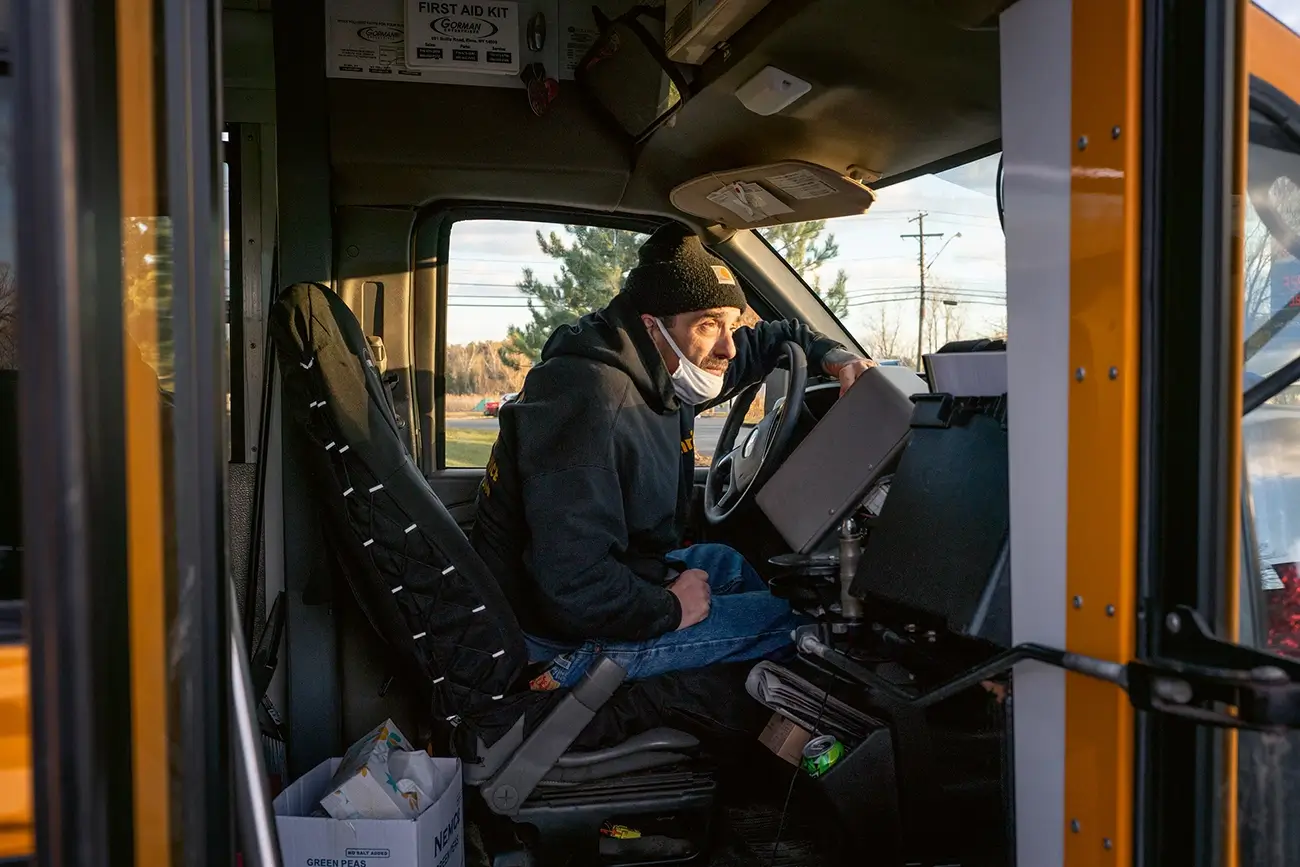
Plattsburgh Bus Station, 2021. Authorized cab driver waits for asylum-seekers to drive to the border. © Ruth Kaplan
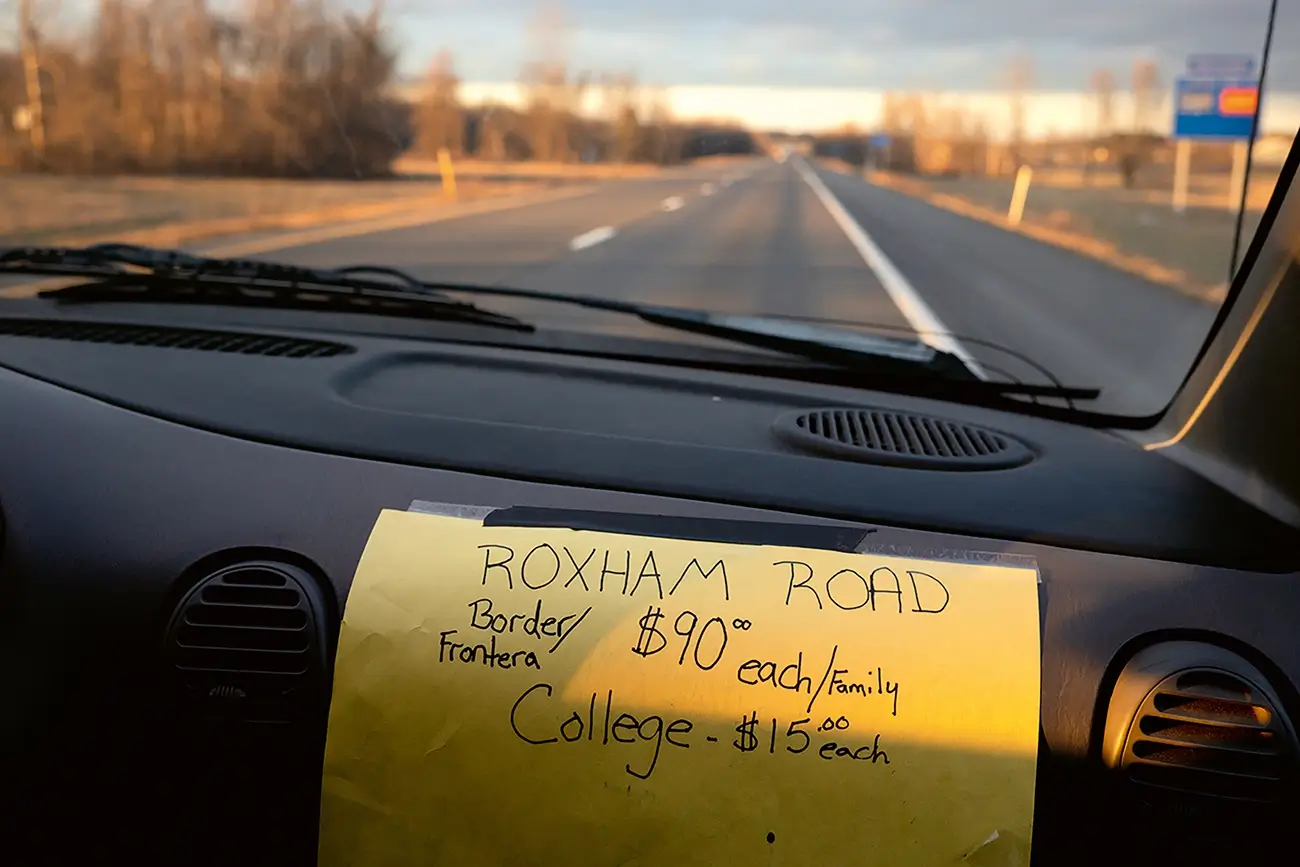
Interstate 87, New York, 2021. Interstate 87 connects Plattsburgh to the border with Canada. The drive takes approximately half an hour. © Ruth Kaplan
Roxham Road, the unofficial crossing point between New York State and Quebec that became known to thousands of asylum seekers, is not a place most people would notice. Looking at Kaplan's photographs, I was struck by how ordinary it appears. There are no monumental border walls, no dramatic landscapes, no images seeking to overwhelm the viewer. Instead, there are roads, vehicles, waiting rooms, motel interiors, bus stations, discarded belongings, stretches of countryside, and people moving quietly through them.
Again and again, Kaplan returns to places that seem almost insignificant. Yet that is precisely what makes the work so powerful. The photographs remind us that life-changing decisions rarely happen in locations that look extraordinary. History often unfolds in parking lots, on roadside shoulders, inside taxis, or at bus stations late at night.
One photograph in particular held my attention longer than the others. It shows a lone woman walking along Roxham Road on a winter day, pulling a suitcase behind her as she makes her way toward the Canadian crossing after being dropped off some distance away. Nothing dramatic is taking place. Yet the image contains an immense emotional weight. Against the vastness of the snow-covered landscape, she appears both vulnerable and determined, caught between a life left behind and an uncertain future ahead. The suitcase rolling beside her becomes a symbol of all that remains after a journey marked by risk, sacrifice, and hope. Looking at the photograph, I found myself imagining the impossible choices hidden inside that single piece of luggage: what was worth carrying, what had to be abandoned, and what memories remained impossible to pack.
What I admire most about Kaplan's work is its patience.
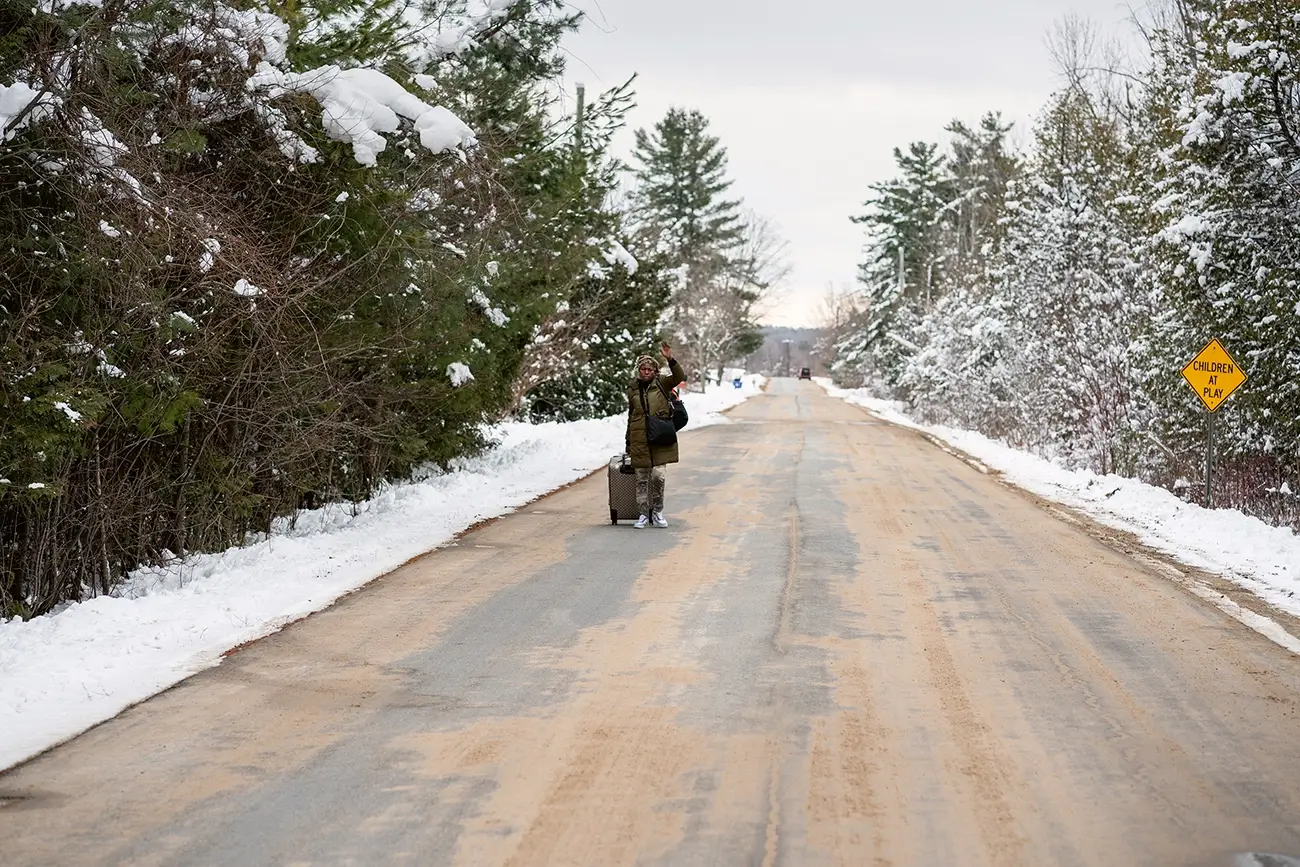
Roxham Road, US side, 2022. An asylum-seeker is dropped off down the road (not by an authorized cab most likely) and walks to the Canadian crossing on Roxham Road © Ruth Kaplan
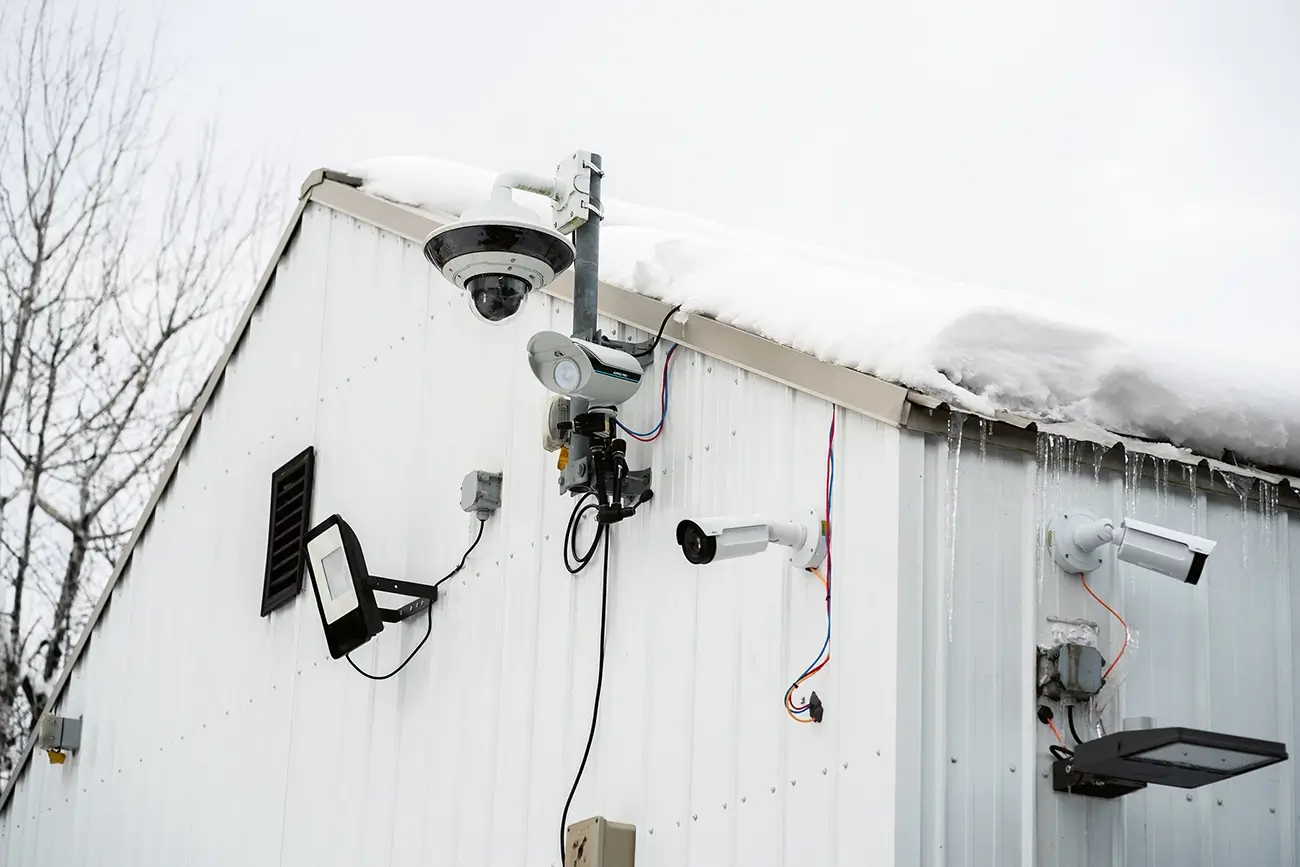
Canadian Border Building, 2022. Once asylum-seekers crossed into Canada, they entered the Canadian border building and began their asylum claim, a long process. They usually spent a few hours in this building and were then brought to a larger immigration facility nearby for a fuller check including Red Cross assistance if necessary and more thorough interviews © Ruth Kaplan
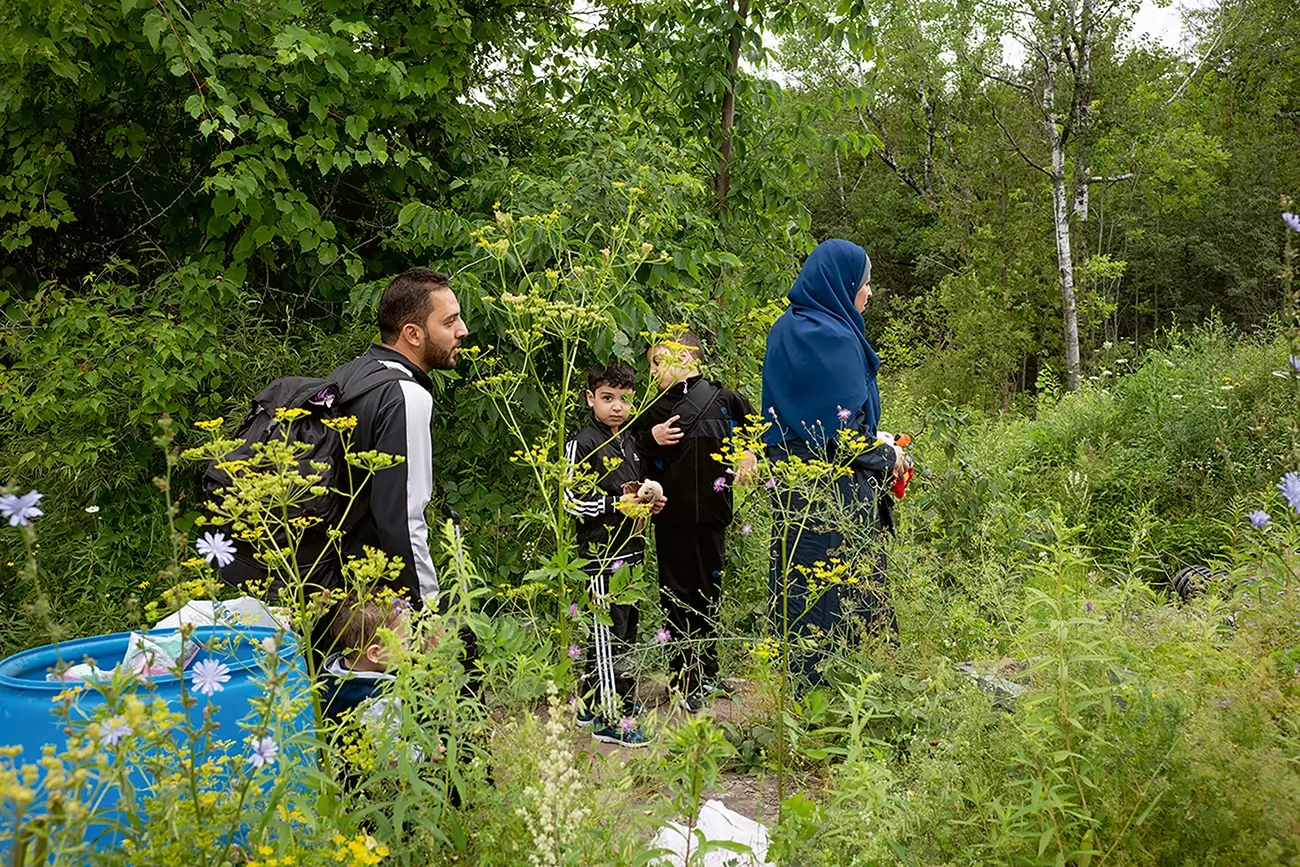
Roxham Road Border Site, US side, 2019. A family watches Canadian border police before they are questioned. Asylum seekers were informed that this was not a legal port of entry and that they would be arrested if they crossed. They must acknowledge this statement before proceeding. If they choose to proceed, they then make a refugee claim upon entry and are not arrested (unless there are issues with their identity and documents). © Ruth Kaplan
She does not photograph people as symbols. She does not reduce them to a political debate or a humanitarian headline. Instead, she allows them to remain individuals moving through a moment of uncertainty. Her photographs leave room for ambiguity, for dignity, and for the uncomfortable reality that few journeys fit neatly into simple narratives.
The road itself gradually becomes the book's central character. Sometimes it feels like a border. Sometimes it feels like a waiting room suspended between countries. Sometimes it seems less like a physical place than a state of mind. Kaplan photographs it in different seasons, under different skies, returning to it repeatedly as if trying to understand how so much human hope could become concentrated in such an unremarkable stretch of land.
As I turned the final pages, I realised that
'Crossing' had quietly shifted my understanding of borders. We often think of them as lines separating one place from another. Kaplan shows something different. A border is also a space of suspension, where one life has ended and another has not quite begun.
The book concludes with a map and thoughtful texts by Sarah Bassnett and Ruth Kaplan, offering context for the project. Yet long before reaching those final pages, the photographs had already done their work.
When I closed the book, I found myself returning to the image on the cover: the blurred windshield, the rain, the faint lights in the distance. Not knowing exactly what lies ahead can be frightening. For some, it is also the only way forward.
'Crossing' is a quiet book. It does not demand attention. It earns it. And long after putting it down, I found myself thinking about those lights still glowing somewhere beyond the rain.
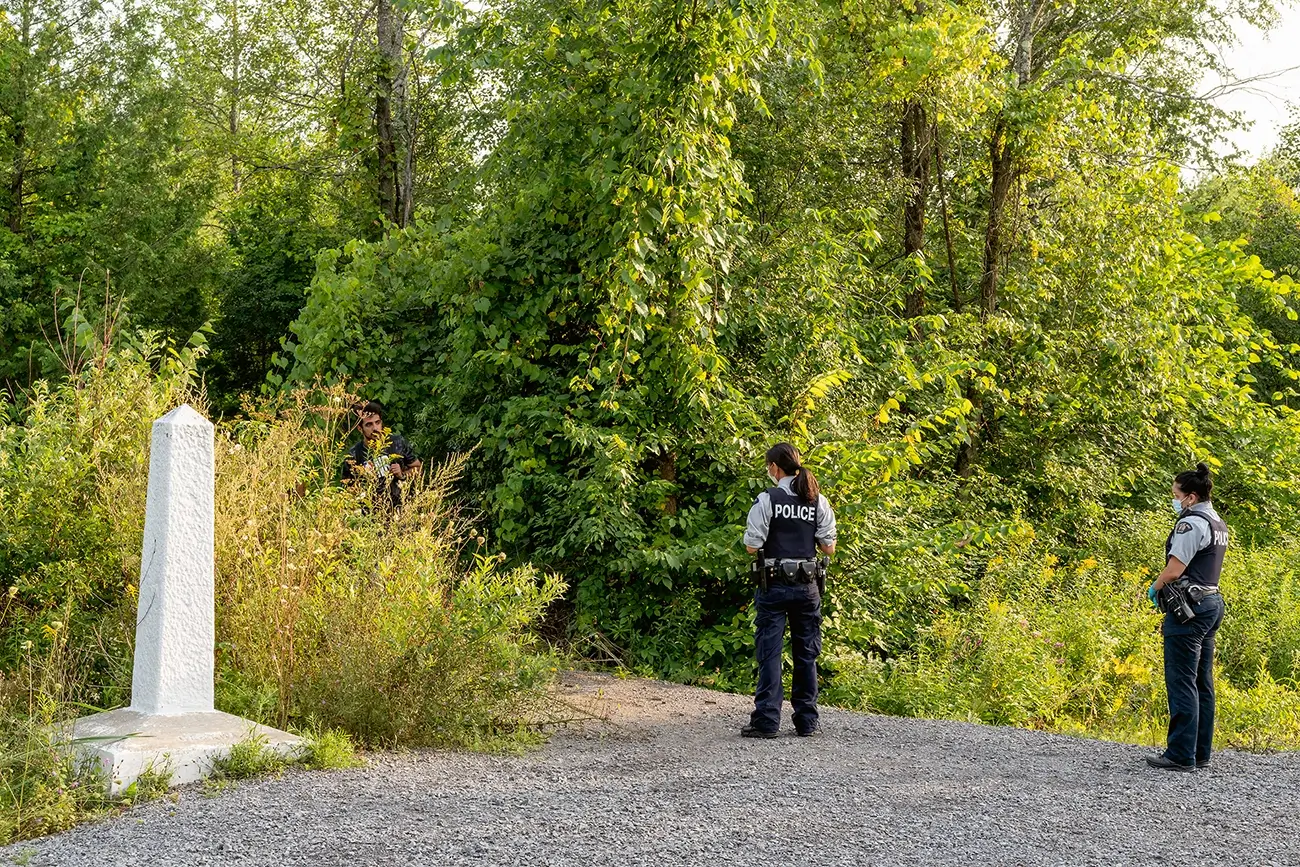
Roxham Road Border Site, Canadian Side, 2021. Canadian Border Police address asylum-seekers during Covid-19 when the borders were closed. © Ruth Kaplan
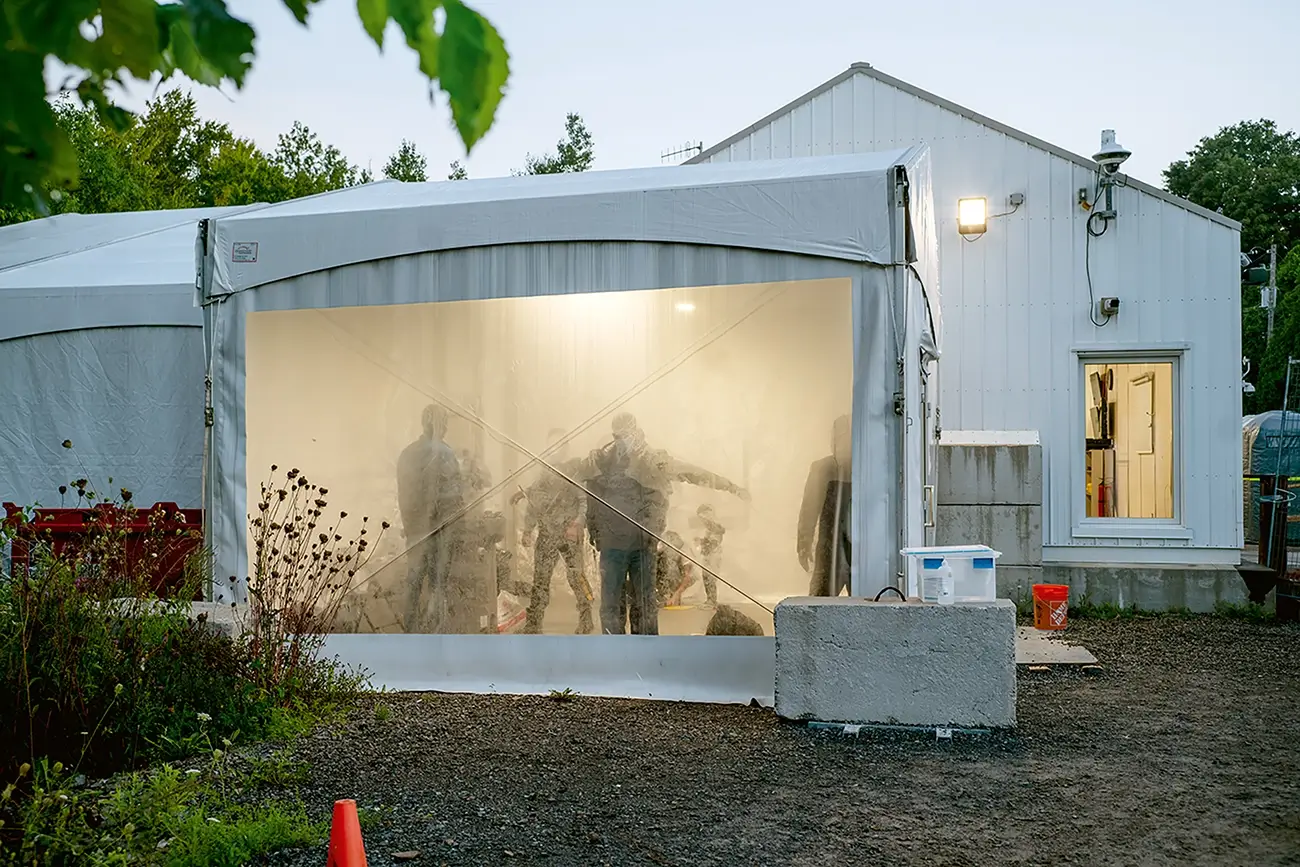
Roxham Road Border Site, Canadian Side, 2022. Once asylum seekers entered the border building, they were frisked. Their belongings were taken and searched, then returned to them. © © Ruth Kaplan
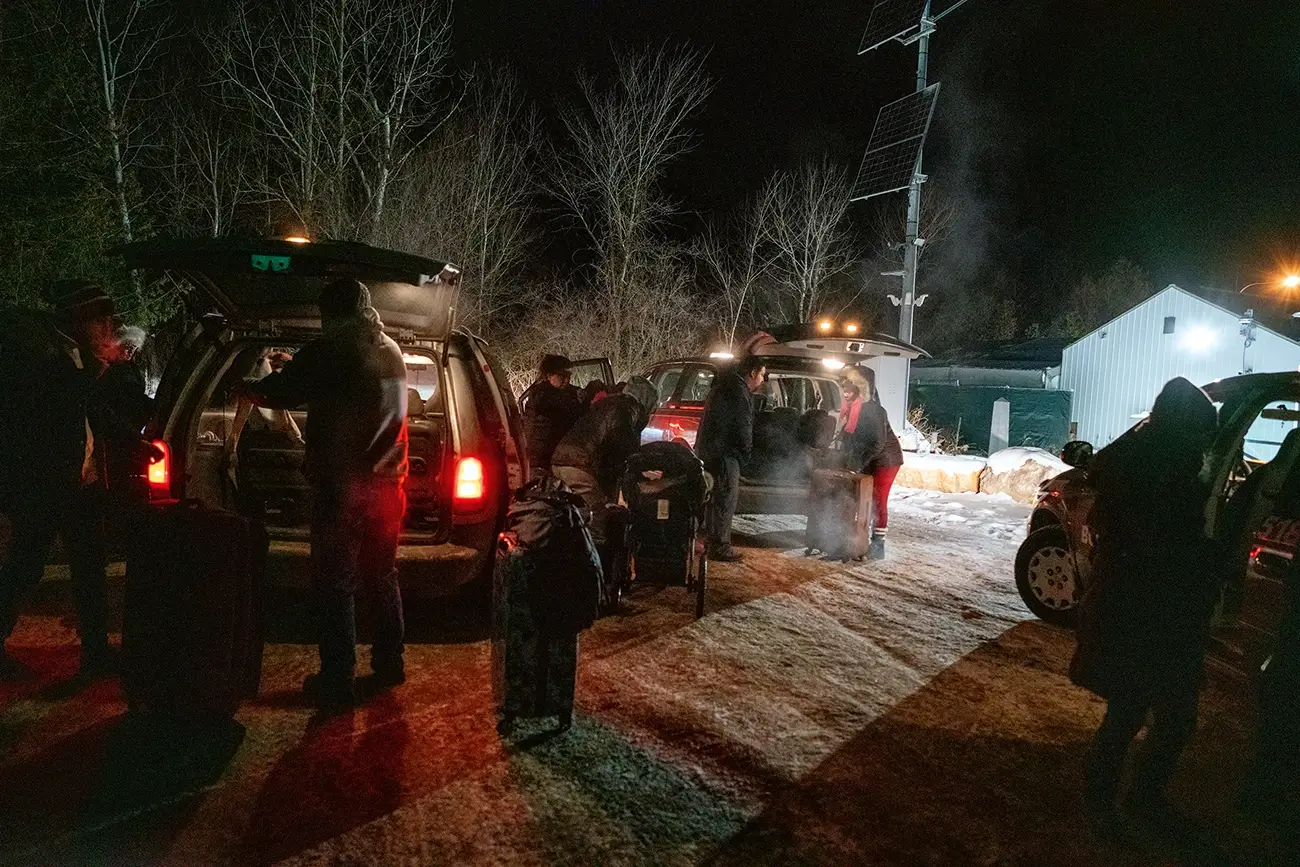
Roxham Road Border Site, US Side, 2019. Cabs drop off asylum seekers at the end of the year (the numbers always spiked at this time of year).© Ruth Kaplan
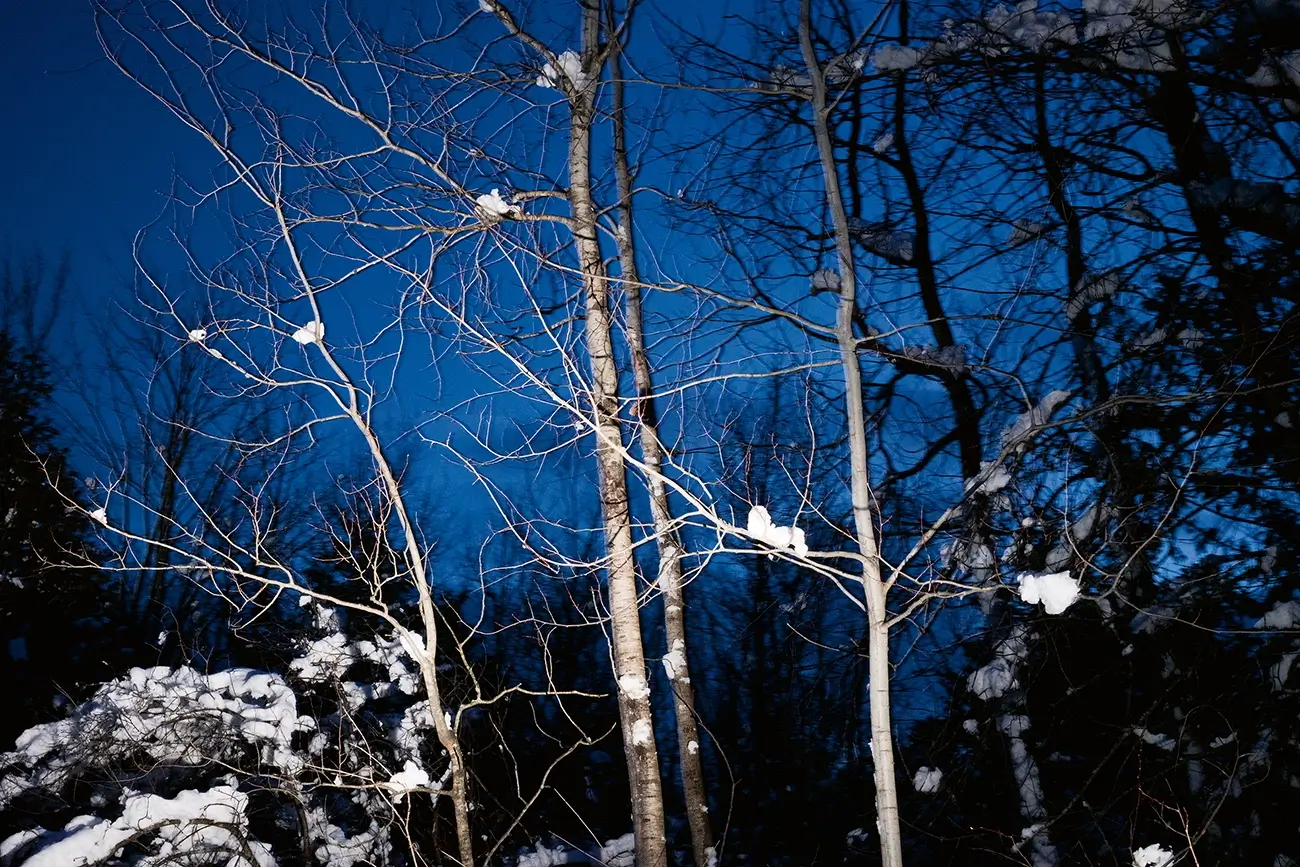
Roxham Road Border Site, 2022 © Ruth Kaplan