I have spent years looking at
Lee Friedlander’s America. It has always been a country of sharp angles, cluttered street corners, and shadows that seem to swallow the photographer whole. So when I picked up his latest monograph,
'Life Still', I expected the familiar noise of his world. Instead, I found something stranger: a 91-year-old photographer holding his breath.
Spanning seven decades of mostly unpublished images alongside brand-new work,
'Life Still' feels less like a retrospective and more like a quiet, lifelong conversation. Friedlander, who has spent nearly seventy years mapping America’s visual clutter, turns inward here, revisiting old photographs while continuing to make new ones. The result is a book that feels both reflective and remarkably alive.
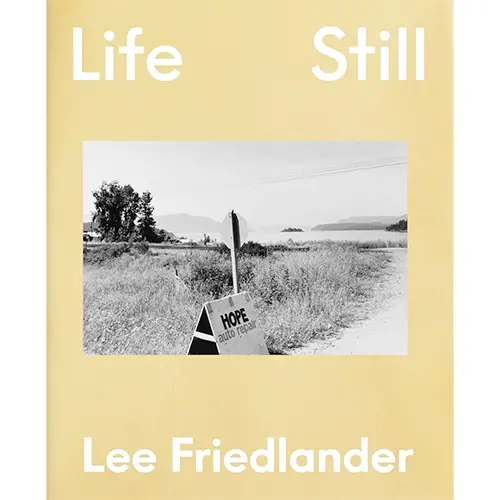
Before even opening it, I was struck by the object itself. The design is beautifully restrained: a pale yellow cover, the title quietly set in white, and a single black-and-white photograph of a roadside sign reading “Hope Auto Repair.” There is nothing flashy about it. In an age of oversized coffee-table books competing for attention,
'Life Still' feels carefully made and deeply considered. Even the smell of the fresh pages—the faint mix of paper and ink that only some new books seem to carry—made me slow down before I began turning through the photographs.
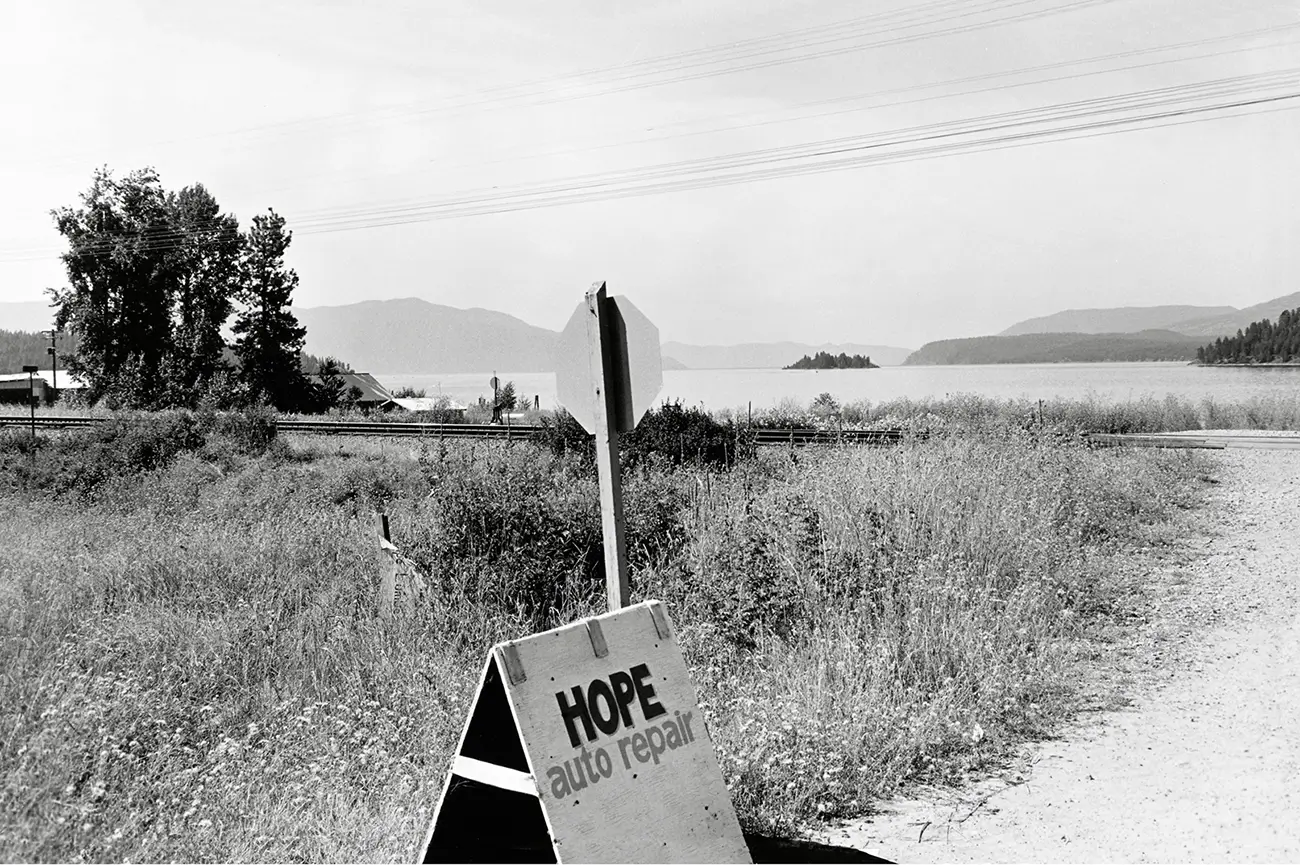
Montana 1974 © Lee Friedlander
The title itself is a beautiful piece of irony. Traditional still life photography is often associated with containment and permanence. But in Friedlander’s hands, life refuses to stay still.
As I turned the pages, what struck me most was the sequencing. Friedlander has always had a mischievous sense of humor, and it appears almost immediately. The first photograph feels like a welcome drink offered at the door. Turn the page and we are greeted by a photograph featuring the word “Entrance,” followed shortly afterwards by a painting bearing the word “Welcome.” It is a small joke, but also a reminder that every photograph in this book has been carefully placed. The image on the left page and the image on the right are almost never from the same year, yet they seem to answer each other across decades. A roadside scene from the 1960s might sit opposite a quiet domestic still life made recently, and somehow the conversation feels seamless. Time collapses, and Friedlander’s recurring obsessions—reflections, fences, absurd juxtapositions, clutter, and humor—echo back and forth through the book like a visual call-and-response. The opening sequence is as deliberate as the closing one, where a simple sign quietly delivers the book’s final message.
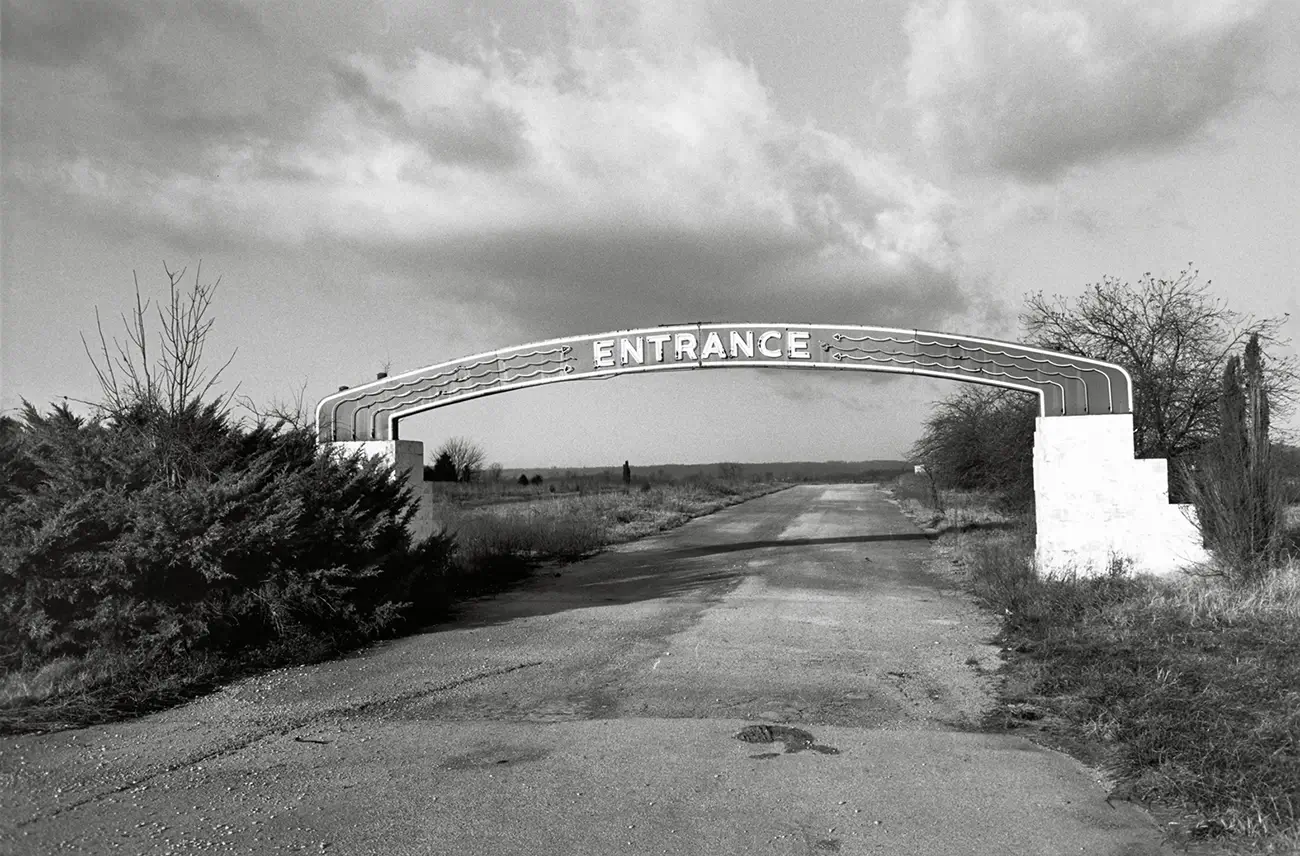
Kentucky 1977 © Lee Friedlander
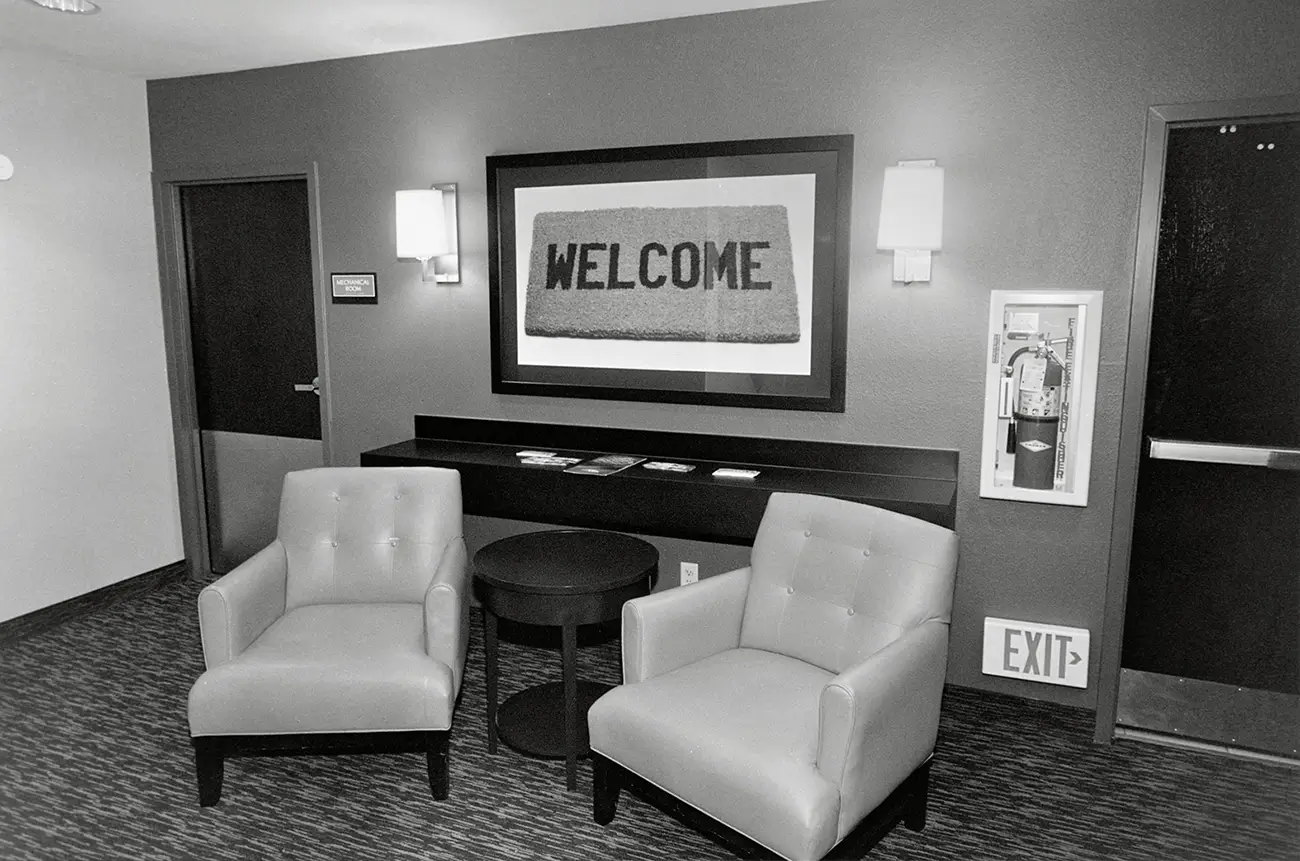
Rhodes Island 2016 © Lee Friedlander
We are treated to many of his signature visual puzzles. In one frame, a chain-link fence cuts diagonally across the image, casting a grid of shadows over a man lying on the pavement. The eye first registers the geometry—the repeating patterns, the fractured space—but soon returns to the figure himself. Friedlander transforms an ordinary human moment into something both formally complex and deeply empathetic, reminding us that his photographs are never just about shapes and shadows, but about the lives caught within them. In another, the square format collapses space entirely, forcing a stucco casino sphinx in Las Vegas to peer absurdly over a parking lot wall littered with debris. The image is both majestic and faintly ridiculous. Friedlander delights in these accidental juxtapositions, finding moments where the ordinary and the absurd briefly occupy the same frame.
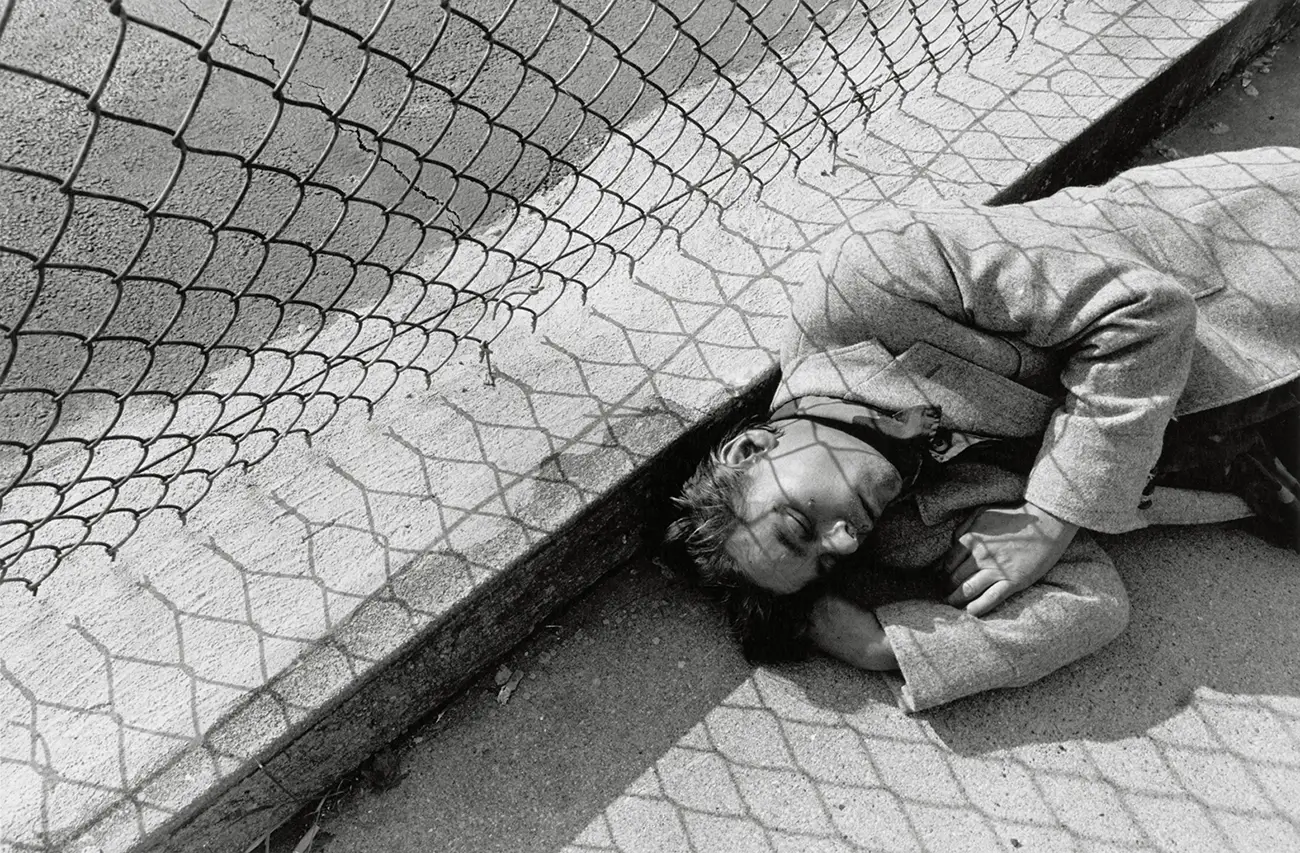
Chicago 1986 © Lee Friedlander
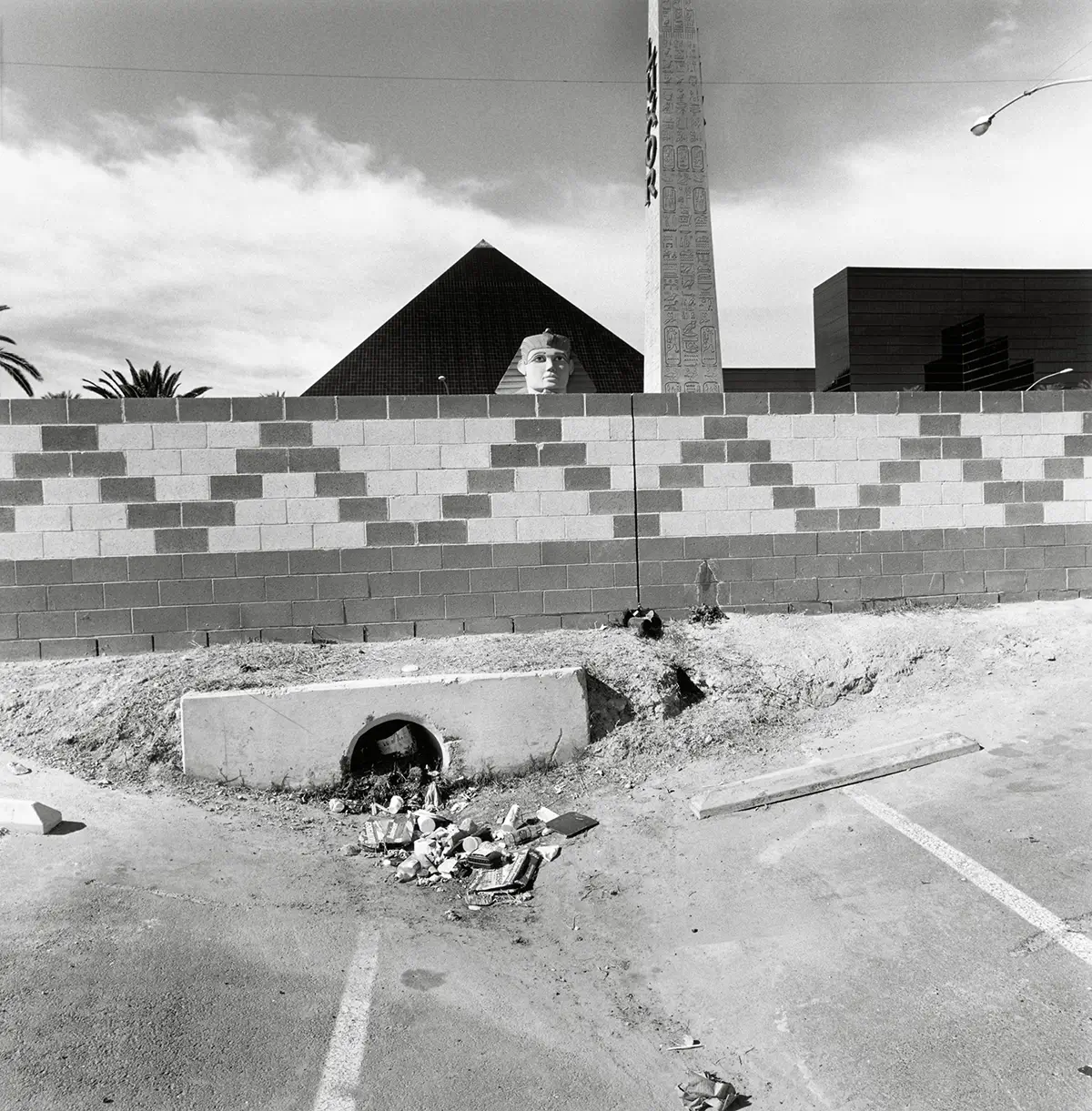
Las Vegas 1997 © Lee Friedlander
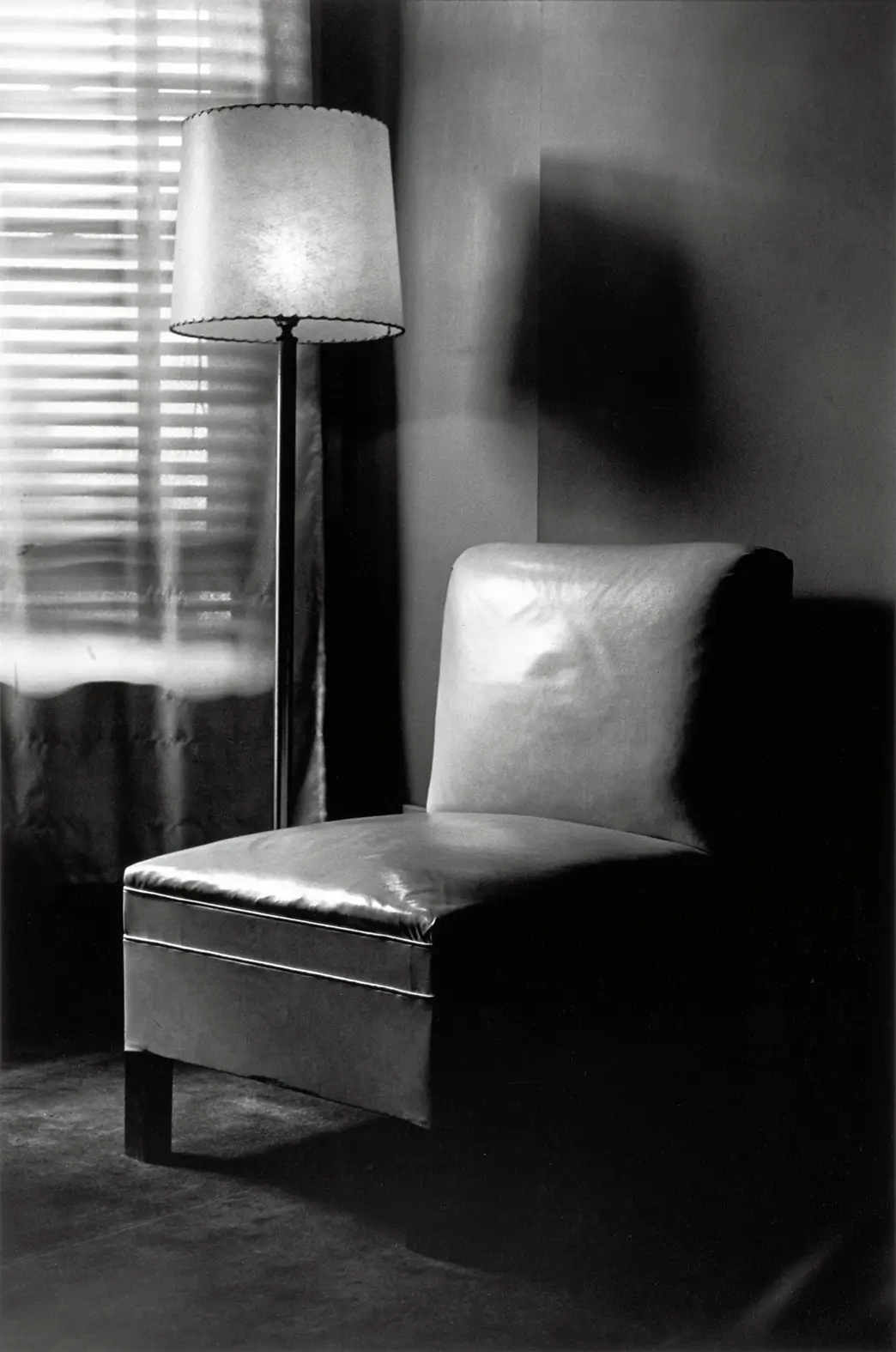
What makes this book special is its profound sense of restraint, born from a very human reality. The book quietly tracks his shift from chaotic streets to his own home, a transition sparked in the 1990s by aching knees. We see the careful attention he honed while photographing the simple vases of freshly cut flowers his wife, Maria, placed around the house. The energy that once roamed city streets is still present, but it has been distilled into something quieter and, perhaps, more intimate.
In the accompanying essay, Hua Hsu writes beautifully about the stubborn paradoxes of the American consciousness—how American culture manages to be simultaneously quiet and loud, phony and true. Friedlander doesn’t try to solve these paradoxes. He simply sits with them. He finds humor in ordinary roadside signs and accidental poetry, treating them like gifts that keep giving long after the film is exposed.
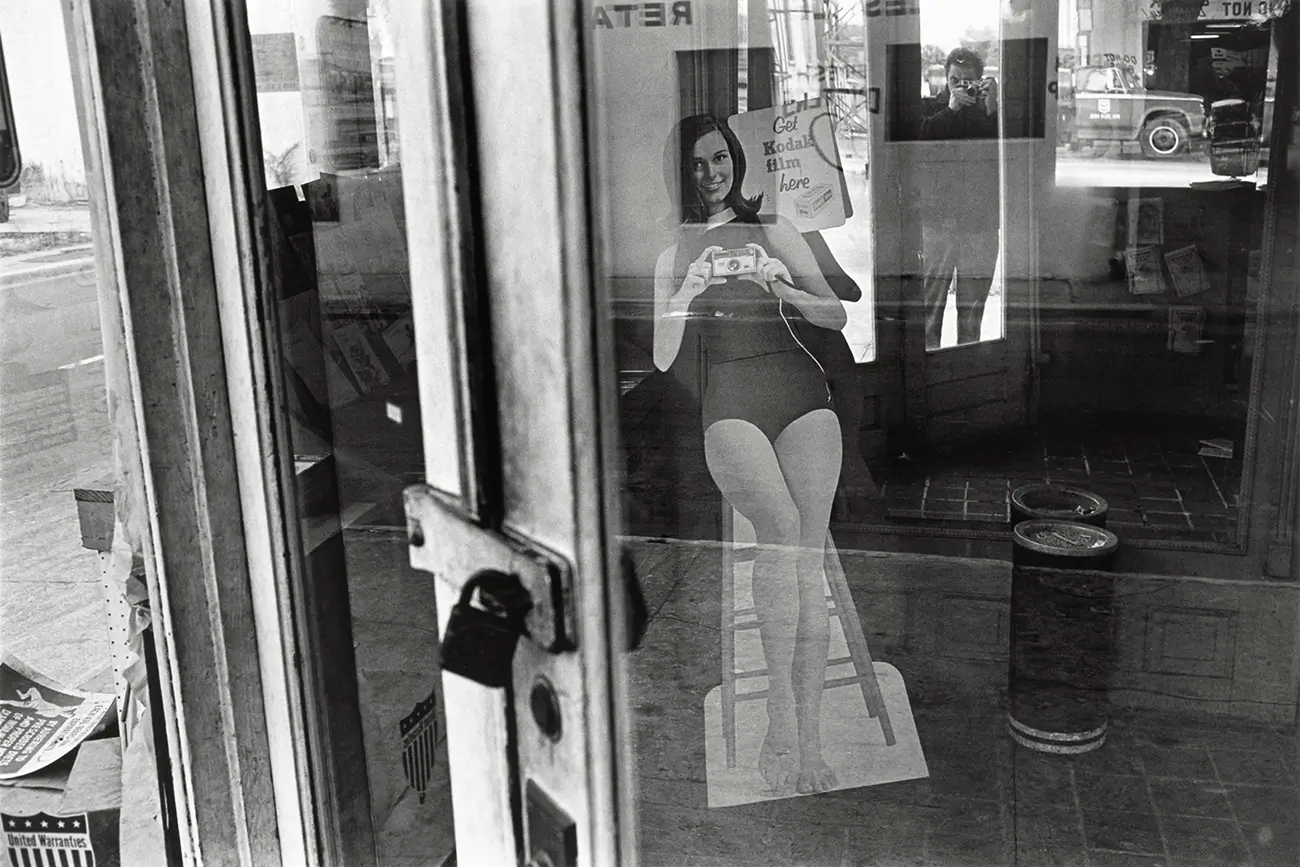
Savannah Georgia 1969 © Lee Friedlander
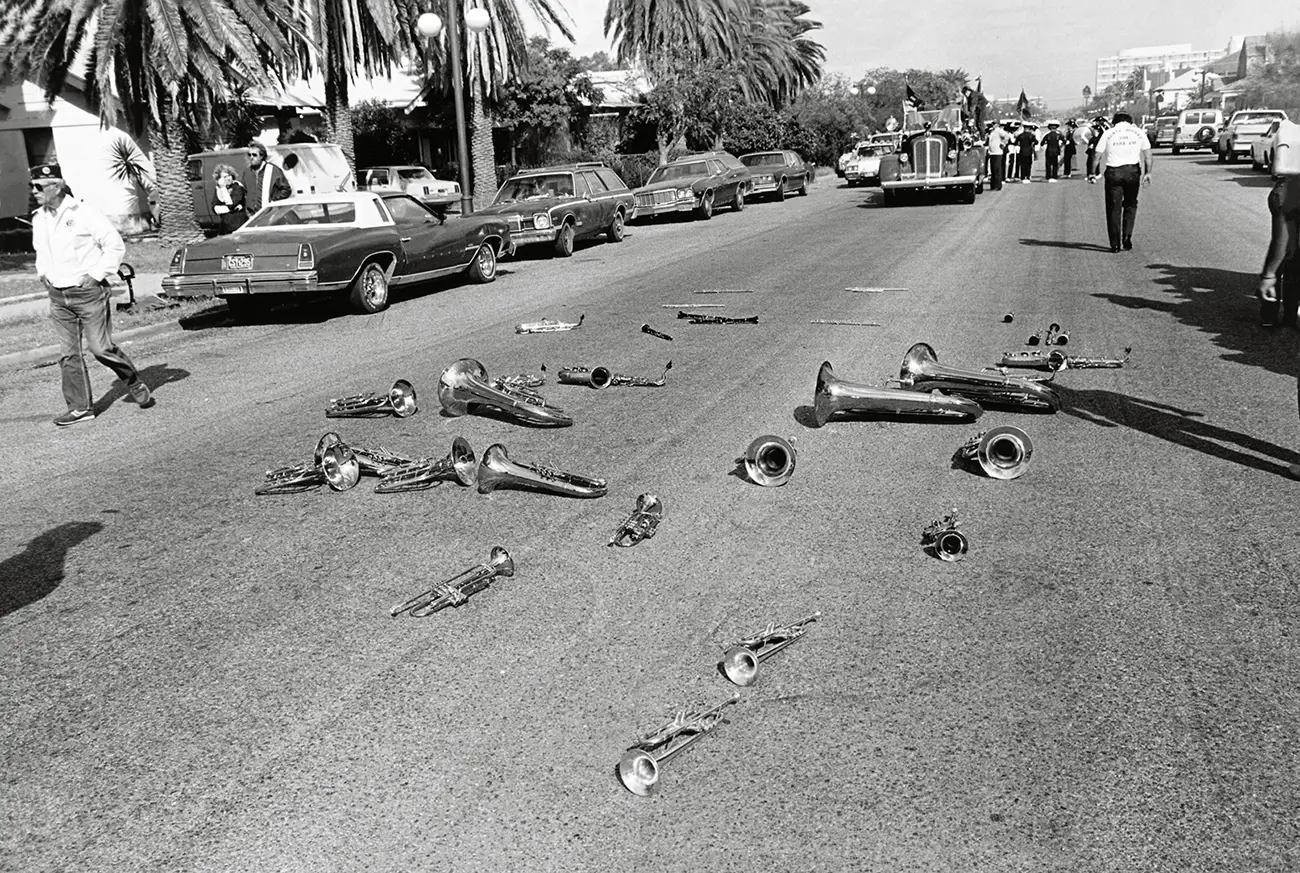
Tucson 1985 © Lee Friedlander
Reading
'Life Still' brought on a deep sense of nostalgia. More than once, I found myself thinking not about photography, but about time itself. The final image in the book, made in 1960, shows a sign on the wall of what appears to be an auto repair shop: “We can fix anything but a broken heart.” After following Friedlander back and forth across seven decades, the photograph lands with unexpected force. Friedlander has always had an eye for accidental poetry, but here the image feels almost impossibly fitting. At age ninety-one, this feels less like a tidy retrospective and more like a man sitting quietly with a lifetime of negatives, deciding which stories are still worth telling. Ending the book on a photograph made more than sixty years ago only deepens that feeling. It leaves the reader with a sense that some images, like certain memories, never stop speaking.
By the time I closed the book, the visual noise had settled into a profound, comforting quiet. Friedlander’s America has always been messy, chaotic, and endlessly surprising. But in
'Life Still', he reminds us of the grace that can be found when we stop rushing through the landscape and simply look at what remains. Beautifully sequenced and thoughtfully produced, it feels less like a publication than something to live with and revisit over time.
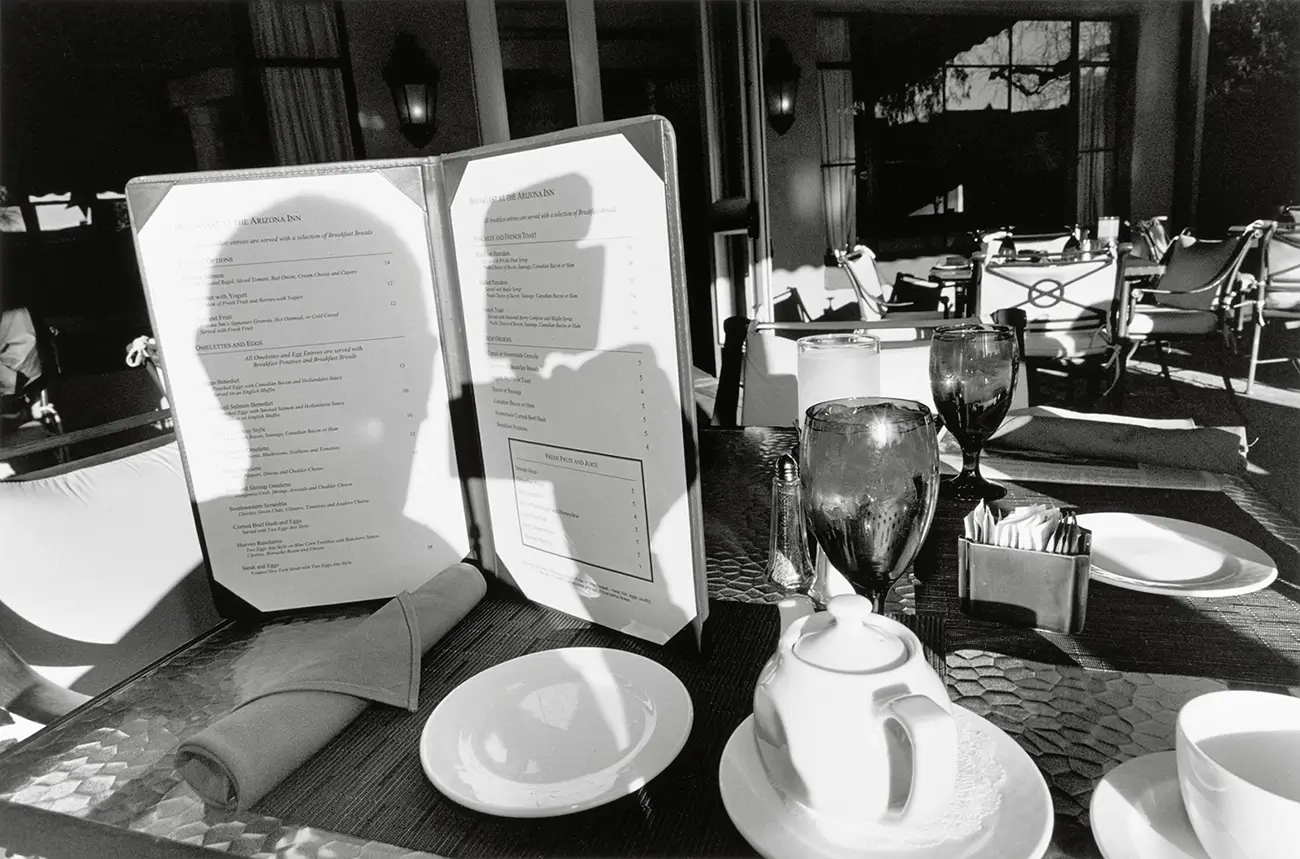
Tucson 2011 © Lee Friedlander
Baltimore 1962 © Lee Friedlander