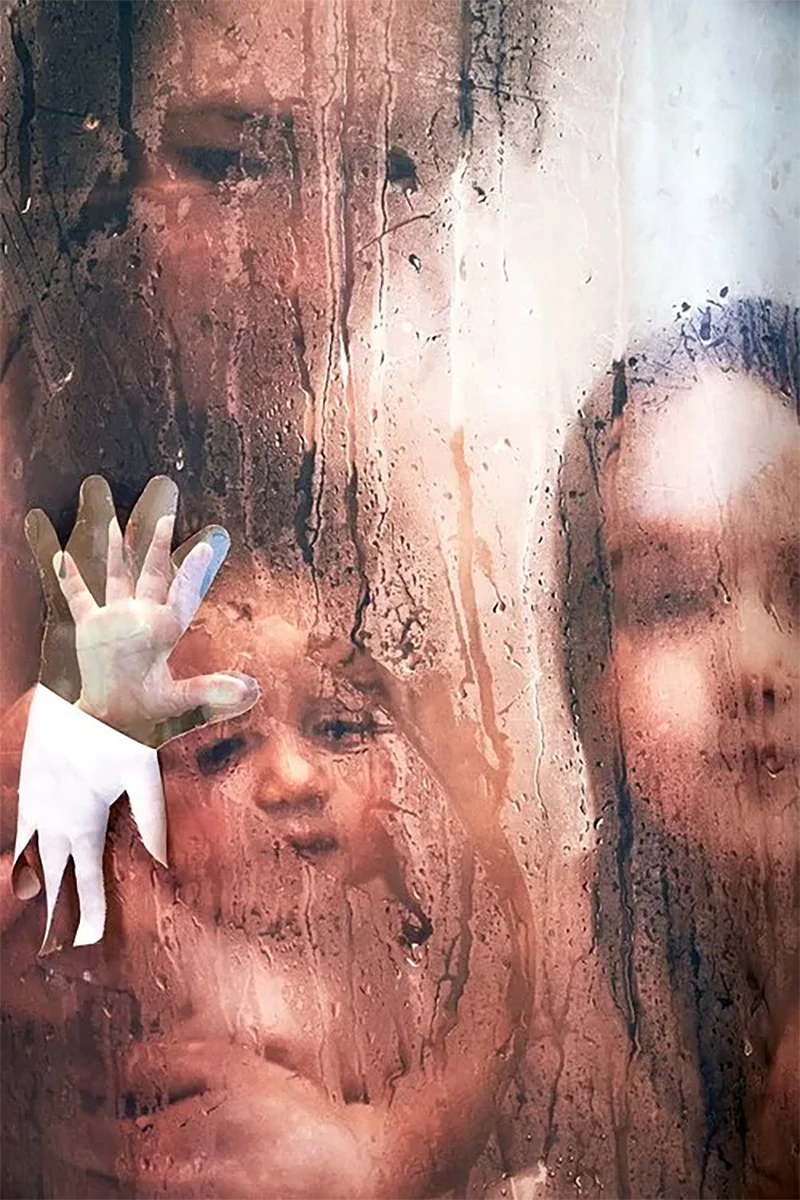

The domestic sphere and the physiological realities of postpartum existence are subjected to a rigorous deconstruction in Tired, Warrior, Defeated, In Love, the first solo exhibition by Alma Haser at Candela Book Gallery. Running through June 20, 2026, the project moves away from the artist’s known focus on identical twins and complex paper folding to examine the systemic and biological pressures of motherhood. Haser, a German-born photographer based in the United Kingdom, utilizes grand silks and mixed-media prints to document the physical toll of caregiving, recording images of stretched skin, bruised tissue, and the structural changes of the maternal body. The work functions as a journalistic rebuttal to the sanitized, idyllic imagery of family life prevalent in commercial media, presenting instead a "patchwork" of time that reflects the mental load and chaotic nature of the role.
The technical execution of the series involves a layering of time and form, where the boundaries between mother and child become visually indistinguishable. This "porosity" of identity is a central theme, exploring the simultaneous sensations of claustrophobia and euphoria. Haser’s methodology involves an ongoing dialogue with a cohort of mothers, incorporating their personal narratives and responses into the visual framework. By utilizing analogue techniques and sculptural manipulations, she creates a textured representation of self-sacrifice and rebirth. The exhibition highlights the instability of the maternal persona, framing it as an experience rooted in both the biological imperative and the sociological expectations placed upon women. The result is a stark, evidence-based portrait of a journey that is as much about the loss of the former self as it is about the creation of new life.
Complementing the photographic works is Four Legs, a series of unique ceramic miniature chairs displayed alongside their photographic counterparts. This segment of the exhibition serves as a physical manifestation of the artist’s need for autonomy within the domestic environment. Haser describes the repetitive act of crafting these objects as a means of exerting control over a micro-space, providing a psychological counterweight to the unpredictability of daily life. This multidisciplinary approach—combining photography, sculpture, and text—reinforces Haser’s standing as a transformative figure in contemporary portraiture. Her work, which previously earned the Taylor Wessing Portrait Prize, continues to challenge the viewer’s perception of reality, forcing a confrontation with the raw and often messy data of human development and survival within the family unit.
Image: © Alma Haser










 Instagram
 Facebook
 Pinterest
 X / Twitter