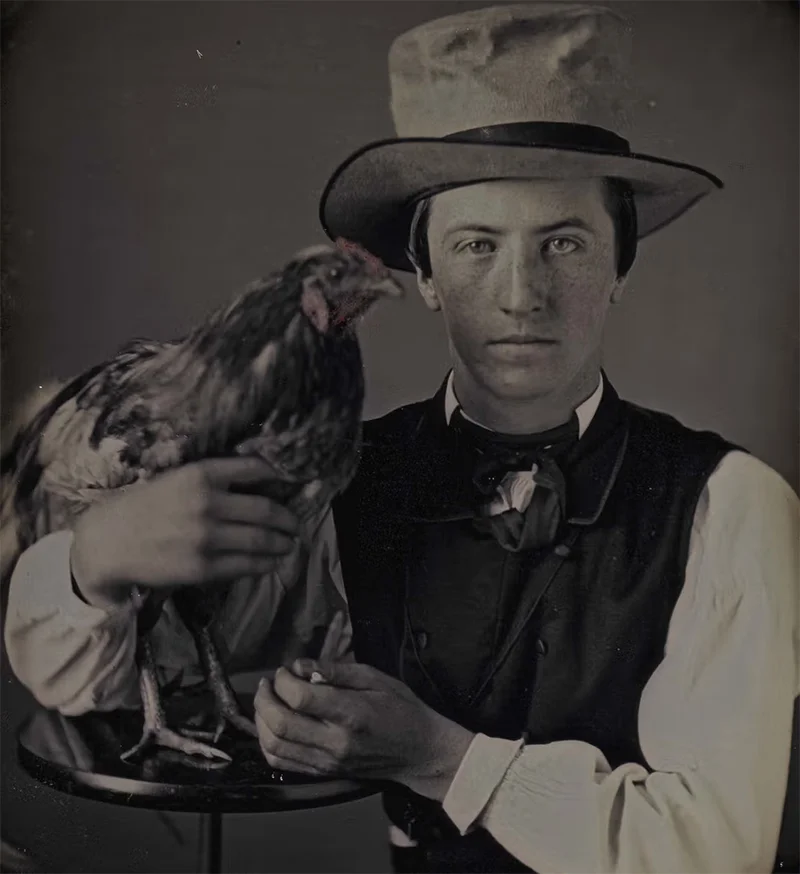
This exhibition reimagines the history of American photography, tracing its evolution from its inception in 1839 through the early 20th century. Showcasing works from The Met’s William L. Schaeffer Collection, it places celebrated photographers—including Josiah Johnson Hawes, John Moran, Carleton Watkins, and Alice Austen—alongside remarkable yet lesser-known practitioners from towns and cities across the nation.
Through a diverse array of photographic formats, from daguerreotypes and cartes de visite to stereographs and cyanotypes, the exhibition highlights how photography swiftly shaped America’s cultural, artistic, and psychological landscape. More than a technological breakthrough, photography became a defining lens through which the nation saw itself, reflecting its transformation and identity. Even before the formal announcement of the medium’s invention, American essayist and philosopher Ralph Waldo Emerson astutely observed in 1835, “Our Age is Ocular,” foreshadowing photography’s profound impact on visual culture.
Image: Unknown Maker, Young Man with Rooster, 1850s










 Instagram
 Facebook
 Pinterest
 X / Twitter