British photographer George Rodger, who died in 1995, captured some of the most emblematic images of twentieth century conflict. His earliest photographs, taken during the German air strikes on London (the Blitz) in the Second World War, gained him a position as war correspondent for Life magazine, a position which sent him to 61 different countries.
Rodger was the first photographer to enter the Bergen-Belsen concentration camp in April 1945, after which he turned his back on war photography, spending the next 30 years traveling 28,000 miles across Africa and the Near East, focusing his lens on the cultures he encountered along the way. "You must feel an affinity for what you are photographing," Rodger remarked of his process. "You must be part of it, and yet remain sufficiently detached to see it objectively.
Like watching from the audience a play you already know by heart." Along with Robert Capa, Henri Cartier-Bresson, David Seymour and William Vandivert, Rodger was a co-founder of Magnum photos in 1947. This monograph presents some of Rodger's most iconic photographs, taken during the 1940s, key years in the life of this charismatic adventurer.
George Rodger: On the Road 1940-1949

Category: Photographer Monographs & Art Books
Reviews: star
star
star
star
star
Author: George Rodger, Andrea Holzherr, Isabel Siben
Publisher: Hatje Cantz
Publication Date:
2009
Print Length: 160 pages
Language: English
Price: paid
paid
paid
Selected Books by This Photographer

George Rodger Nuba & Latuka: The Color Photographs
2017 - Prestel
George Rodger, Chris Steele-Perkins, Aaron Schuman


Humanity and Inhumanity
1999 - Phaidon Press, Incorporated
George Rodger, Bruce Bernard, Peter Marlow, Henri Cartier-Bresson

The Blitz : the Photography of George Rodger
1994 - Bloomsbury
George Rodger, Inge Rodger, George Bondi
Books From the Same Publisher





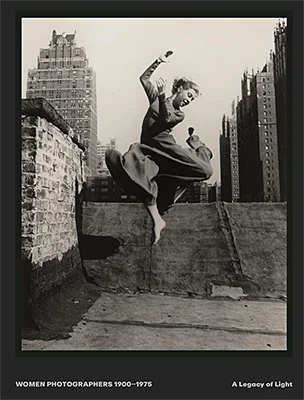
Women Photographers 1900–1975: A Legacy of Light
Jan 2026 - Hatje Cantz
Helen Ennis, Amanda Maddox, Abigail Solomon-Godeau, Carla Williams, Yuri Yamada

expand_circle_rightLatest Books in This Category





















John Baer: The Extraordinary Ordinary: A Memoir in Photographs, 1945–1954
Sep 2026 — John Baer Archive












expand_circle_rightFollow Us






expand_circle_rightSearch

Latest Issue
AAP Magazine #60
expand_circle_rightTrending This Week

 Instagram
 Facebook
 Pinterest
 X / Twitter