A home tells a story long before we cross its threshold. A garden ornament, a flag, a religious symbol, a political sign, or a carefully chosen color can reveal something about the people who live inside. We may never meet them, yet we begin to imagine who they are. In Virtually No Place Like Home, American photographer Lisa Levine invites us to look more closely at these everyday expressions of identity, and to question how much of what we see is true.
Levine is fascinated by the personalities expressed through the exteriors of houses. For her, the difference between a house and a home lies in the marks people leave on it: the objects they choose to display, the beliefs they make visible, and the aesthetic decisions that transform a structure into something personal. The exterior becomes a kind of self-portrait, a public face through which private identities are presented to the world.
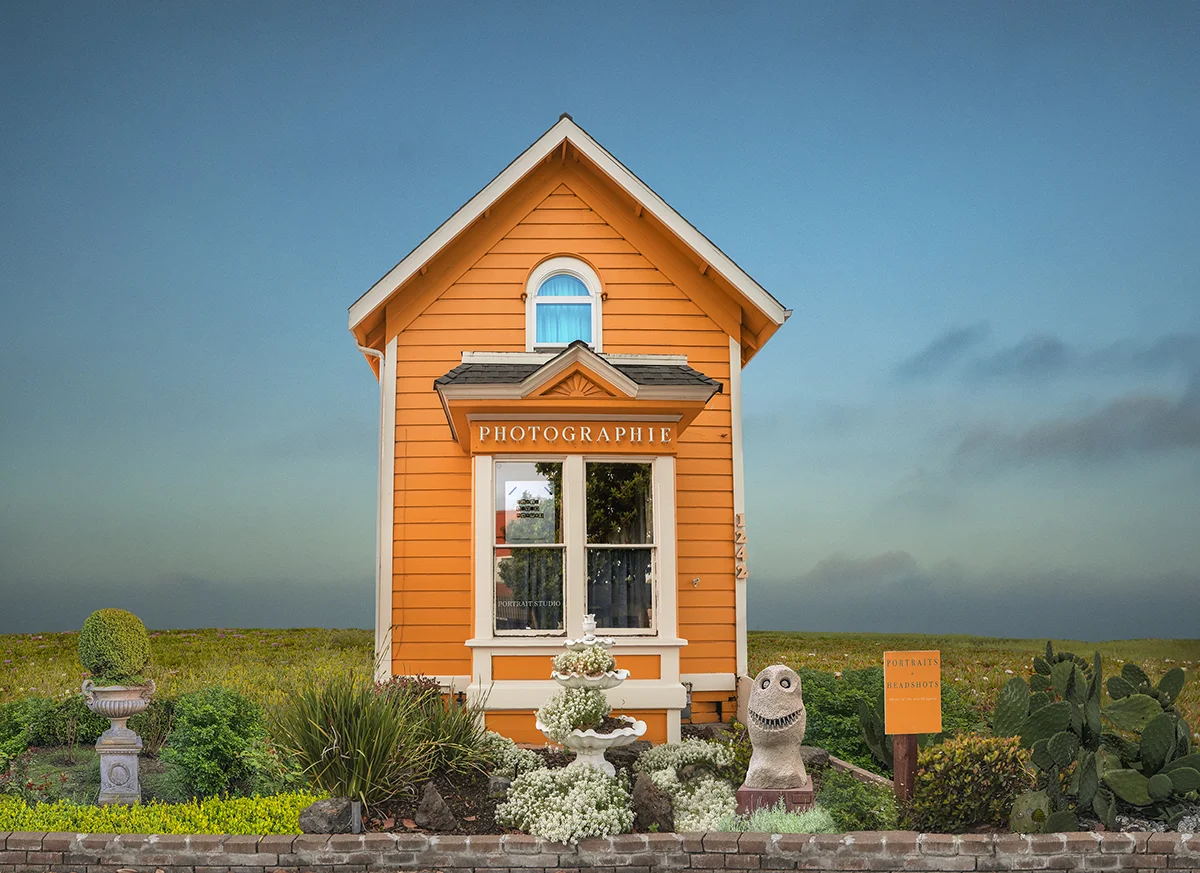
Photographie House © Lisa Levine
In Virtually No Place Like Home, the apparent familiarity of these houses gives way to uncertainty. Levine combines elements drawn from reality and imagination, creating images in which the relationship between a house and its surroundings becomes difficult to establish. The objects we see are real, but they do not necessarily belong together in the way the photographs suggest. The images are carefully constructed, yet they retain enough of the ordinary world to feel entirely plausible. We are left wondering where reality ends and invention begins.
This ambiguity is central to the work. Levine sees a striking parallel between the way we present our homes and the way we present ourselves online. On social media, a photograph rarely tells the whole story. We select what to show, leave things out, arrange the details, and sometimes filter what remains. The result may be truthful, but it is also a version of ourselves that we have chosen to make visible.

Cloud House © Lisa Levine
What makes this series particularly engaging is that it does not offer easy answers. Levine does not simply expose appearances as false or suggest that everything we see is fabricated. The details in her photographs come from the real world, and the identities they evoke may be entirely sincere. The uncertainty lies in how these elements are brought together and in the stories we construct when we look at them.
There is something deeply human in this tension. We all make choices about how we want to be seen, whether through the clothes we wear, the objects we keep around us, the homes we inhabit, or the images we share. Sometimes these choices express who we are. Sometimes they express who we would like to be. Often, the two are inseparable.

Gloria House © Lisa Levine
In an age when so much of our identity is communicated through selected images, Virtually No Place Like Home feels especially relevant. The houses may appear rooted in a particular landscape and culture, but the questions they raise reach beyond their immediate surroundings. How do we construct our public identities? What do we choose to reveal, and what remains hidden? And when an image feels authentic, is that feeling enough to make it so?
Levine leaves these questions open, allowing viewers to look, hesitate, and look again. Her photographs offer no clear boundary between the real and the imagined. Instead, they invite us to recognize how easily the two can coexist, and how readily we participate in creating the stories we believe.
Virtually No Place Like Home by Lisa Levine is presented as part of All About Photo's November 2026 Solo Exhibition.

Big Santa House © Lisa Levine









 Instagram
 Facebook
 Pinterest
 X / Twitter