Remember Me: Picturing African Americans in Early Photography is an important exhibition that looks at one of the most powerful roles photography has played: the ability to shape how people are seen, remembered, and represented. Bringing together around 70 works from the National Gallery of Art’s collection, the exhibition offers a rich and nuanced look at African American life, identity, ambition, and community through photography from the 19th and early 20th centuries.
At a time when photography was still a relatively new medium, African Americans quickly understood its potential. A portrait could be more than a likeness. It could be a statement of dignity, independence, belonging, and aspiration. For Black photographers and their clients, the camera became a way to challenge the limited and often deeply prejudiced images of African Americans that circulated during and after slavery. Remember Me: Picturing African Americans in Early Photography makes clear that these photographs were not simply records of the past; they were also acts of self-definition.

Portrait of a Woman in a Bonnet with Pink Ribbons, c. 1860. Ambrotype with applied color © National Gallery of Art, Ross J. Kelbaugh Collection, Purchased with support from the Ford Foundation, 2023.39.22

Portrait of the Hercules Family, c. 1850 © James Presley Ball, National Gallery of Art, Ross J. Kelbaugh Collection, Purchased with support from the Ford Foundation, 2023.39.16
The exhibition also examines portraits of African Americans made in predominantly white-owned studios before and after the Civil War. These photographs reveal the complicated relationship between photography and representation. Images could reinforce stereotypes, but they could also give individuals a presence and dignity that challenged those same stereotypes. The portraits of free and enslaved men, women, and children on view raise difficult questions about agency, consent, power, and who had control over the making and circulation of an image. Following the abolition of slavery, portraits increasingly reflect a new emphasis on individuality and self-presentation, offering glimpses of people determined to be seen on their own terms.

Portrait of a Couple, 1924 © James Van Der Zee Archive, The Metropolitan Museum of Art
What makes Remember Me: Picturing African Americans in Early Photography especially compelling is the way it moves beyond the idea of photography as a passive historical record. The exhibition asks us to consider who was behind the camera, who was in front of it, and what it meant for a person to have control over their own image. Seen together, these photographs reveal the complexity of Black experiences during a period marked by slavery, emancipation, segregation, migration, and profound social change. They also remind us that the desire to be seen as an individual, rather than through someone else’s assumptions, has always been central to the photographic portrait.
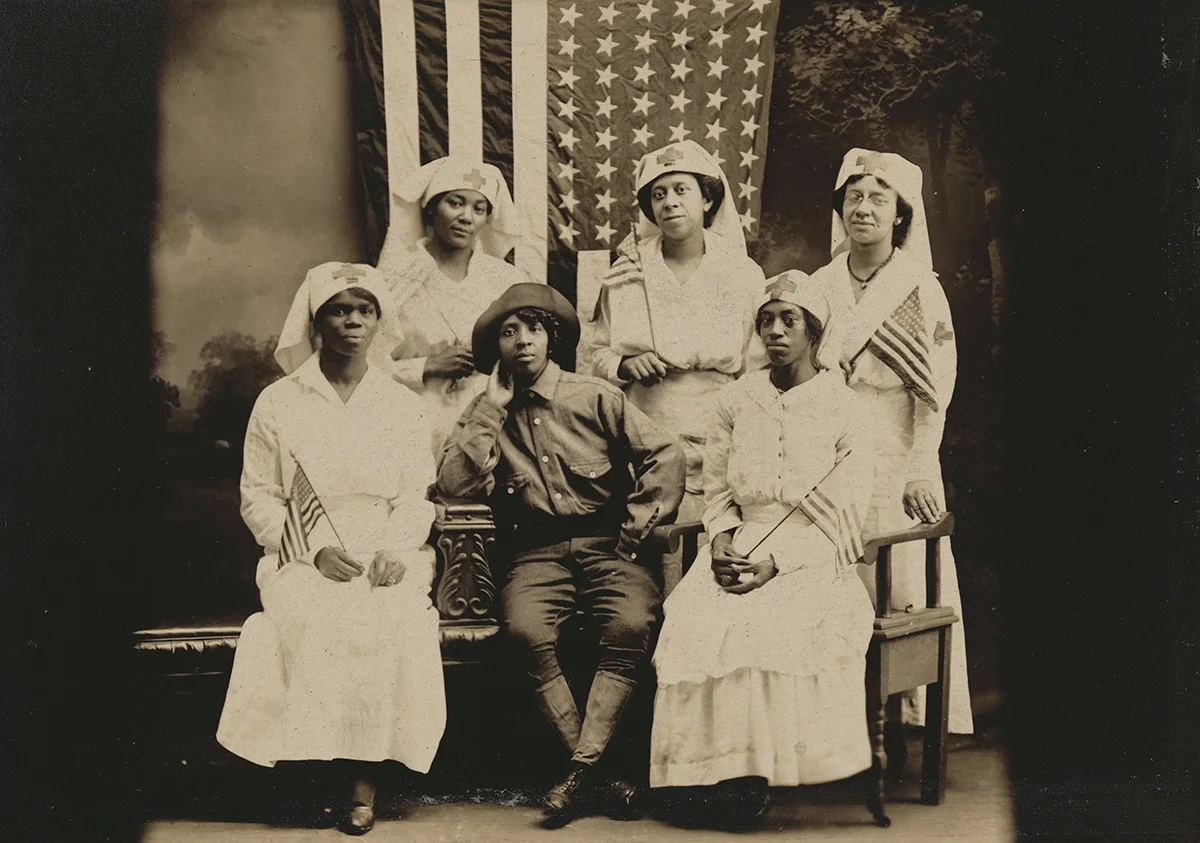
American 20th Century Portrait of Red Cross Nurses,1918 © National Gallery of Art, Ross J. Kelbaugh Collection, Purchased with support from the Ford Foundation, 2023.39.141

Portrait of a Couple, c. 1899 © Daniel Freeman,
Remember Me: Picturing African Americans in Early Photography is organized by the National Gallery of Art. The exhibition is made possible through leadership support from the Trellis Charitable Fund, with additional support from Nion McEvoy and Leslie Berriman. It is curated by Diane Waggoner, acting head and curator of photographs at the National Gallery of Art, with Sarah Greenough, former senior curator and head of the department of photography at the National Gallery of Art.
More than an exhibition about early photography, Remember Me: Picturing African Americans in Early Photography is an exhibition about visibility, authorship, and the right to define one’s own image. Its photographs give us a chance to encounter African Americans not simply as subjects within a historical narrative, but as individuals, families, professionals, entrepreneurs, and communities who actively shaped how they wanted to be seen. That makes this exhibition particularly important today, when questions about representation, identity, and who controls an image remain at the heart of photography.

"Remember Me, Annie", c. 1860 © National Gallery of Art, Ross J. Kelbaugh Collection, Purchased with support from the Ford Foundation, 2023.39.34

Portrait of a Soldier with a Knife and Gun, c. 1863 © National Gallery of Art, Ross J. Kelbaugh Collection, Purchased with support from the Ford Foundation, 2023.39.60









 Instagram
 Facebook
 Pinterest
 X / Twitter