All about photo.com: photo contests, photography exhibitions, galleries, photographers, books, schools and venues.
Win a Solo Exhibition in July 2026 + An Exclusive Interview!
Maxine Helfman
Maxine Helfman
Maxine Helfman

Maxine Helfman

Country: United States
Birth: 1953

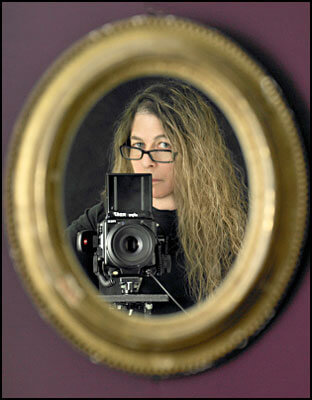
A self-taught, late bloomer, after spending years as a stylist and art director, the only way to truly realize her vision was to get behind the camera. She has since been shooting commercially for advertising and editorial clients while pursuing personal projects. Her work has been recognized by PX3, IPA, Foto Dc, Flash Forward Boston, Critical Mass, British Journal of Photography, Photo News as well as the permanent collection of Santa Barbara Museum of Art and Museum of Fine Art Houston.

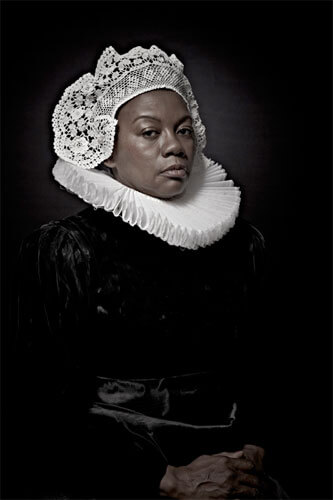
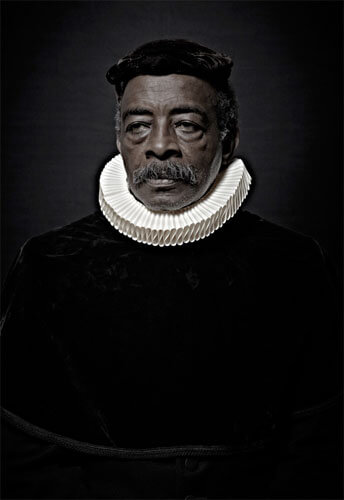
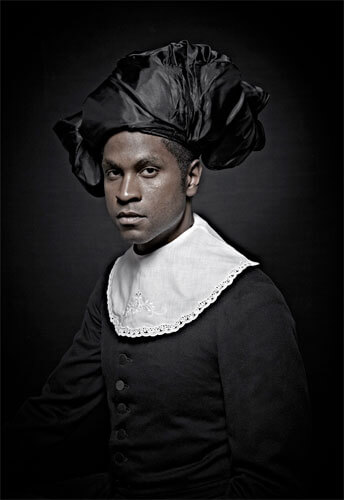
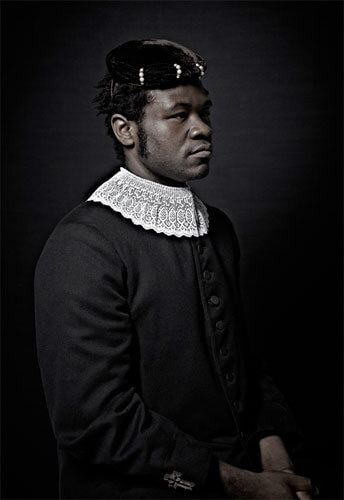
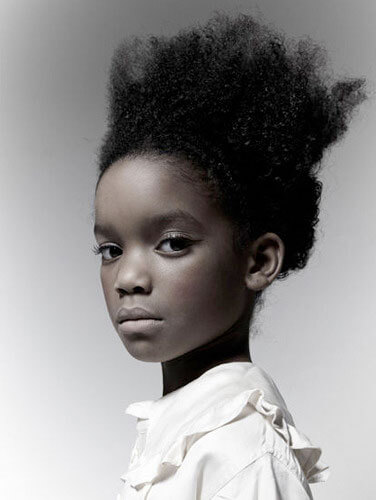
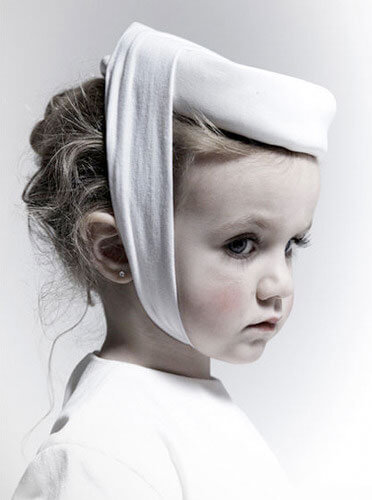
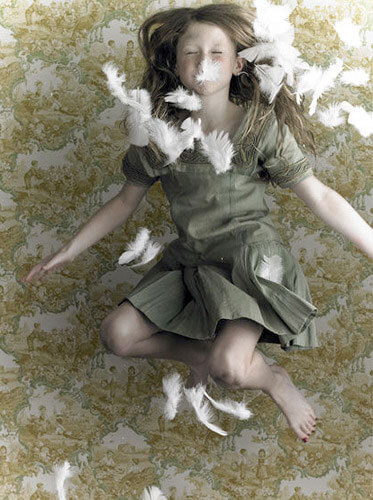
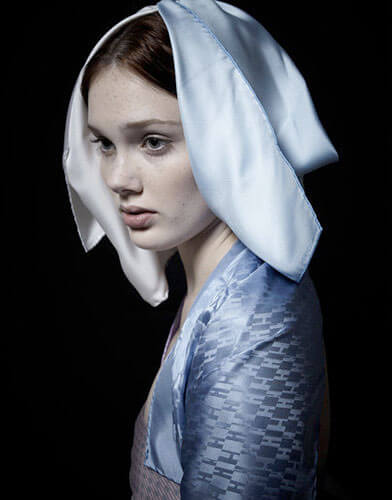
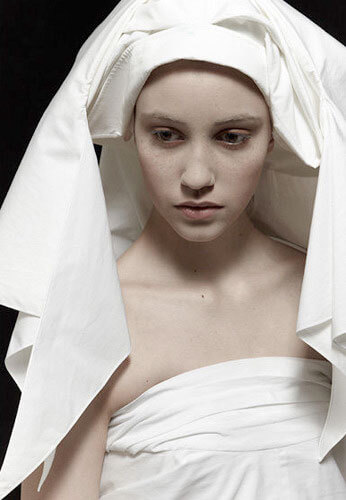
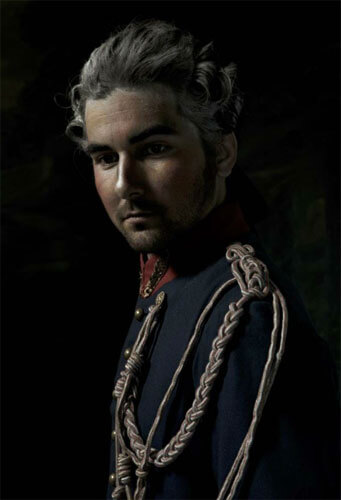
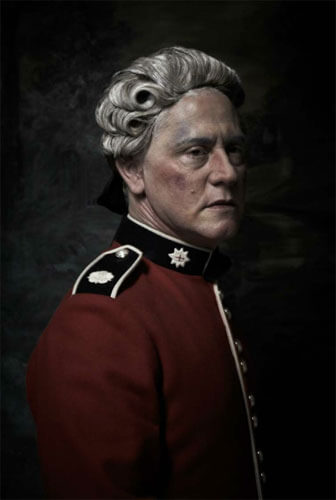
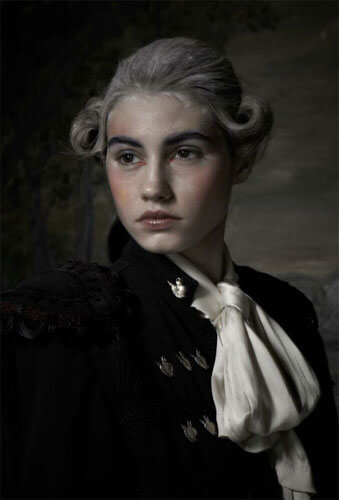
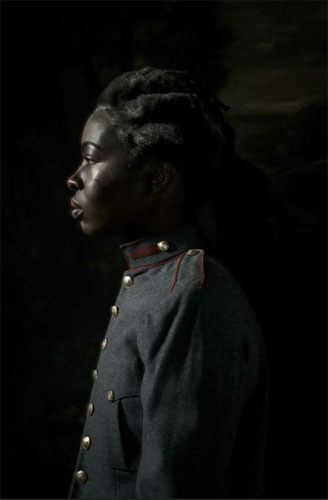
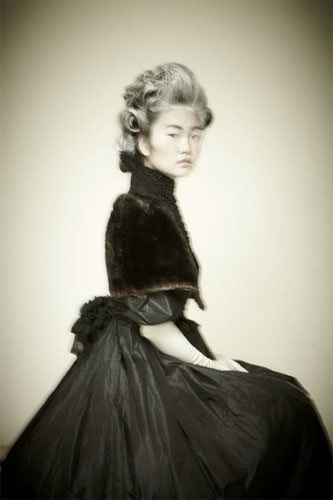
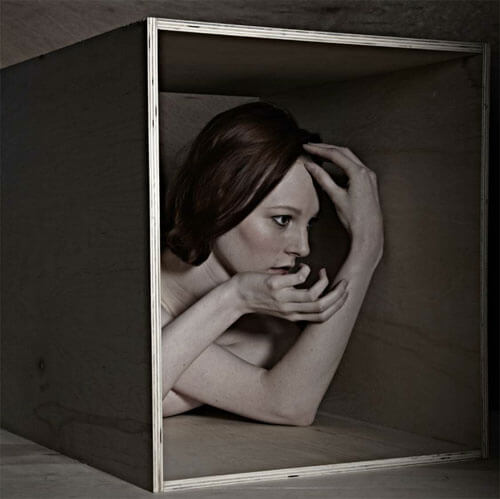
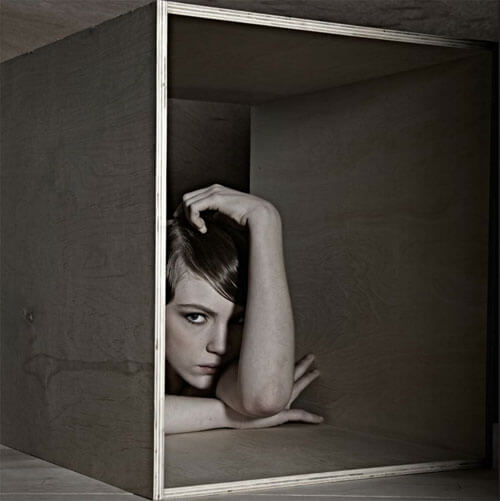
Artist Statement: Inspired by Flemish painting, "Historical Correction" reinterprets these old masters from a more contemporary point of view. Our world and cultures are changing so quickly we are witnessing the collision of past and present. When you look at paintings from periods of art and history, the depiction of the population is defined and specific. As populations shift, our world has become so diverse that different cultures are visually harder to define. Although my photographs are "invented realities", they are about real issues. Populations shift, gender and race are redefined, past definitions are challenged, and the faces of cultures and customs change. My works depicts those changes.

 

Inspiring Portfolios

Call for Entries
AAP Magazine #59 Shapes
Publish your work in our printed magazine and win $1,000 cash prizes
 
Stay up-to-date  with call for entries, deadlines and other news about exhibitions, galleries, publications, & special events.

More Great Photographers To Discover

Szymon Barylski
Poland
1984
Szymon Barylski Polish freelance photographer born in 1984 based in Ireland. He has been published, among others, The Irish Times, National Geographic Poland, The Eye of Photography, Edge of Humanity Magazine. He has had a number of exhibitions in many countries including 3rd Documentary Photography Days in Istambul, MIFA Photography, The SE Centre for Photography- Documentary Photography. His pictures were awarded in many competitions. Szymon is involved in documentary photography and photo essays. Photographing for he is a tool for exploring and learning about the world. He tries to tell a story and show it directly. In his opinion, people are an inexhaustible topic and a source of inspiration. Szymon said: „When traveling, I meet people; as a result, I create the image of my relation with them. The exploration of the environment where I take photos allow me to create emotional and convincing scenes.“ He thinks you cannot photograph the things you do not know well. That is why he prepares himself for each project individually, accurately, going into detail in the newspapers and on the Internet. Next, he looks for an inspiration in other photographer’s photos and conversations, as a result, he can create real pictures. His own narrative presented in his photos are at the same time very personal and common. Szymon thinks that a lot of people can identify themselves with his works. Photographer wish his photos could increase individual and collective awareness about the social, political and economic need and urge people to act, be part of positive changes.
Wynn Bullock
United States
1902 | † 1975
Wynn Bullock (April 18, 1902 – November 16, 1975) was an American photographer whose work is included in over 90 major museum collections around the world. He received substantial critical acclaim during his lifetime, published numerous books and is mentioned in all the standard histories of modern photography. Bullock was born in Chicago and raised in South Pasadena, California. After high school graduation, he moved to New York to pursue a musical career and was hired as a chorus member in Irving Berlin’s Music Box Revue. He occasionally sang the primary tenor role when headliner John Steele was unable to appear and then was given a major role with the Music Box Review Road Company. During the mid-1920s, he furthered his career in Europe, studying voice and giving concerts in France, Germany and Italy. While living in Paris, Bullock became fascinated with the work of the Impressionists and post-Impressionists. He then discovered the work of Man Ray and László Moholy-Nagy and experienced an immediate affinity with photography, not only as an art form uniquely based on light, but also as a vehicle through which he could more creatively engage with the world. He bought his first camera and began taking pictures. During the Great Depression of the early 1930s, Bullock stopped his European travels and settled in West Virginia to manage his first wife's family business interests. He stopped singing professionally, completed some pre-law courses at the state university, and continued to take photographs as a hobby. In 1938, he moved his family back to Los Angeles and enrolled in law school at the University of Southern California where his mother Georgia Bullock (California's first woman jurist) had studied law. Completely dissatisfied after a few weeks, he left USC and became a student of photography at the nearby Art Center School. From 1938 to 1940, Bullock became deeply involved in exploring alternative processes such as solarization and bas relief. After graduation from Art Center, his experimental work was exhibited in one of Los Angeles County Museum of Art's early solo photographic exhibitions. During the early 40s, he worked as a commercial photographer and then enlisted in the Army. Released from the military to photograph for the aircraft industry, he was first employed at Lockheed and then headed the photographic department of Connors-Joyce until the end of the war. Remarried, and with a new daughter, Bullock traveled throughout California from 1945 to 1946, producing and selling postcard pictures while co-owning a commercial photographic business in Santa Maria. He also worked on developing a way to control the line effect of solarization for which he later was awarded two patents. In 1946, he settled with his family in Monterey, where he had obtained the photographic concession at the Fort Ord military base. He left the concession in 1959, but continued commercial free-lance work until 1968. A major turning point in Bullock's life as a creative photographer occurred in 1948, when he met Edward Weston. Inspired by the power and beauty of Weston's prints, he began to explore "straight photography" for himself. Throughout the decade of the 1950s, he devoted himself to developing his own vision, establishing deep, direct connections with nature. A lifelong learner, he also read widely in the areas of physics, general semantics, philosophy, psychology, eastern religion and art. Studying the work of such people as Albert Einstein, Korzybski, Alfred North Whitehead, Bertrand Russell, LaoTzu and Klee, he kept evolving his own dynamic system of principles and concepts that both reflected and nurtured his creative journey.Source: Wikipedia Bullock came into the public spotlight when Museum of Modern Art curator Edward Steichen chose two of his photographs for the 1955 Family of Man exhibition. When the exhibition was shown at the Corcoran Gallery in Washington, D.C., his photograph Let There Be Light, was voted most popular. The second, Child in Forest, became one of the exhibition’s most memorable images. By the end of that decade, his work was widely exhibited and published worldwide and in 1957, he was honored with a medal from the Salon of International Photography. During the early 1960s, Bullock departed from the black-and-white imagery for which he was known and produced a major body of work, Color Light Abstractions, which expressed his belief that light is a great force at the heart of all being. Further image-making innovation included alternative approaches including extended time exposures, photograms, and negative printing. During the 1960s and 1970s Bullock expanded his influence through other roles. In 1968, he became a trustee and chairman of the exhibition committee during formative years at Friends of Photography in Carmel, California. He taught advanced photography courses at Chicago’s Institute of Design during Aaron Siskind’s sabbatical and at San Francisco State College at John Gutmann’s invitation. In the last decades of his life, he lectured widely, participated in many photographic seminars and symposia, and was a guest instructor for the Ansel Adams Yosemite Workshops. Bullock died at the age of 73 in November 1975. Along with Ansel Adams, Harry Callahan, Aaron Siskind, and Frederick Sommer, he was one of the founding photographers whose archives established the Center for Creative Photography in 1975. The Bullock collection consists of 223 prints and 90 linear feet of archival materials, including personal papers, diaries, correspondence, activity files, audio-visual and photographic materials. The archive offers significant information on the exhibition, publication, and sale of Bullock's photographs; his experiments with solarization; his involvement with the Friends of Photography; and his teaching activities. The collection offers insight into Bullock's attitudes toward his own work and the development of his philosophical approach to the medium.Source: Center for Creative Photography
Cathleen Naundorf
France/Germany
Cathleen Naundorf is a French German photographer. In the late 1980s, she graduated from photography studies in Munich. She worked as a photo assistant in New York, Singapore and Paris in the following years, before she started traveling in 1993 to such destinations as Mongolia, Siberia, Gobi Desert and the Amazonas headwaters in Brazil. The results of these insightful pictures have been included in eight publications of renowned publishing houses. Inspired by her encounter of and longstanding friendship with Horst P. Horst, Cathleen Naundorf early on turned to fashion photography. As of 1997, she started photographing backstage Paris fashion shows for Condé Nast. Since 2005, Cathleen Naundorf has worked on her haute couture series “Un rêve de mode” focusing on seven couture houses : Chanel, Dior, Gaultier, Lacroix, Saab, Valentino and Philip Treacy. Thanks to her outstanding pictures, Cathleen Naundorf got the privilege to choose gowns from the couturiers’ archives for her elaborate and cinematic productions. This work got published in "The Polaroids of Cathleen Naundorf", Prestel Edition, 2012.She works with large format cameras like Plaubel or Deardorff for her shootIngs and use mostly Polaroid or negative films. Cathleen Naundorf is working passionately on Haute Couture and Luxury Prêt-à-Porter. Her work got published in magazines like Harper's Bazaar, Tatler, VS Magazine or American Express.Cathleen Naundorf's work is represented by the Hamiltons Gallery in London.
Giacomo Brunelli
Giacomo Brunelli (b. Perugia, Italy, 1977) graduated with a degree in International Communications in 2002. His work has been exhibited at The Photographers’Gallery (Uk), The New Art Gallery Walsall (Uk), The Barbican Centre (Uk), BlueSky Gallery, Portland (Usa), Format Festival, Derby (Uk), Triennial of Photography Hamburg (Germany), Nordic Light Festival (Norway), Noorderlicht Photofestival (The Netherlands), StreetLevel Glasgow (Uk), Photofusion, London (Uk), Delhi PhotoFestival (India), Fotofestiwal Lodz (Poland), Athens Photo Festival (Greece), Daegu PhotoBiennal (South Korea), Angkor PhotoFestival (Cambodia), Tabernacle (London, Uk), Griffin Museum (Boston, Usa) and at commercial galleries such as Peter Fetterman Gallery (Santa Monica, Usa), Robert Morat Galerie (Berlin, Germany), Galerie Camera Obscura, (Paris, France), Arden & Anstruther (Petworth, Uk), Galleria Belvedere (Milan, Italy). He has won the Sony World Photography Award, the Gran Prix Lodz, Poland and the Magenta Foundation “Flash Forward 2009”. He has also been featured widely in the art and photography press including BBC (Uk), The Guardian (Uk), The Telegraph (Uk), Eyemazing (Holland), European Photography (Germany), B&W Magazine (Usa), Creative Review (Uk), Foto+Video (Russia). His work is in the collection of the Museum of Fine Arts Houston (Usa), The New Art Gallery Walsall, Uk Kiyosato Museum of Photographic Arts (Japan) and Portland Art Museum (Usa). Brunelli has published “The Animals” (2008) and “Eternal London” (2014) by Dewi Lewis Publishing, “Self Portraits” (2017) and "Hamburg" (2021) by Editions Bessard, “New York” (2020) by Skinnerboox and "Venice" has been self-published by TantoPress in 2022. In 2012, he was commissioned by The Photographers’Gallery to do the “Eternal London” series and in 2015 by the Deichtorhallen to produce “Hamburg". Interview with Giacomo Brunelli: All About Photo: When did you realize you wanted to be a photographer? I remember when more that 10 years ago, I found my father's camera in a drawer and immediately wanted to be able to use it. Did't know exactly to do what but since then I have been using it to shoot my ideas." Where did you study photography? "I graduated in Communications in 2002 and attended a six month course in photojournalism in Rome." Do you remember your first shot? What was it? "I don't remember my first shot but I started shooting people, lanscapes and animals since the beginning. I have been soon fascinated by the idea of being outside taking pictures of what you like." What or who inspires you? I take inspiration from exhibitions, books, walks, stories and music." How could you describe your style? Street Photography." What kind of gear do you use? Camera, lens, digital, film? "Since the very beginning, I have been using a Miranda Sensomat 35mm, a japanese film camera from the '60. Although I have tried the 28mm and 135mm when I started, I use the 50mm lens only and 1.8 1/500 as combination diaphragm/shutter speed. For a recent commission I got from The Photographers'Gallery two years ago on London, I started using 1/1000 also. Regarding the film, I like Kodak Tri-x 400 and I print the images myself in my darkroom on Agfa Fiber Based paper." Do you spend a lot of time editing your images? For what purpose? "Editing is crucial and I love spending time looking at my images as a body of work and select the ones I feel are the strongest to communicate my vision." AFavorite(s) photographer(s)? "I grew up looking at the great masters such as Lartigue, Muybridge, Giacomelli, Frank, Klein and Winogrand so I think I have been deeply influenced by the way they managed to express their own ideas through photography." What advice would you give a young photographer? "Developing a coherent body of work takes time and energy; I would say just be prepared to work hard." What mistake should a young photographer avoid? "Not to be patient." Your best memory as a photographer? Publishing "The Animals" (Dewi Lewis Publishing, 2008) has been great, seeing your pictures taking the form of a book is fantastic." Your worst souvenir as a photographer? "In 2005 I left my camera and my own things in a taxi in Bratislava."
Rogan Coles
South Africa/United Kingdom
1954
I was born in 1954. Photography is what I do. The stories lie therein. In presenting this body of work I want to explore something that is often overlooked - as in the intrinsic value of photography. As one of his mantras, Jack Ma, the founder and now former CEO of Alibaba and a person whose tenacity I admire, said this, "I always look 10 years ahead". While I'm not going to suggested that this is what I do with my photography or when I am about to embark on a project. But and quite often, there's something prescient in what I do and how I approach my work as a photographer. When I set out to document Smithfield Market in London, this is more or less what happened. Besides all the talk of closing down the market, there were suggestions that the market was going to be refurbished and, in the process, brought up to European Union health standards. At around this time, I used to take a short cut through the market's precinct as I walked from one side of the city to the other. Of course, during the day, there was nothing there. Well, let me qualify, there were no people there. Working hours were from just around midnight until the early hours of the morning. With these various stories doing the rounds, I wanted to investigate. In the process I made contact with the market's management. As a result, I was granted to two week window to document the market and the activities there. This was back in April of 1991. Yes, nearly 30 years ago. This is what I mean, the "intrinsic value of photography". I don't know what these images are worth. I have never exhibited them or ever had them published in any form. No real reason. Then as now, perhaps I didn't have a compelling enough story that publications or curators could buy into. "Intrinsic value" is not going to see this work through to anything significant. Perhaps something like "British working class heroes", "End of an era" or "Times are a changing" may have done it. But, we live on in hope. I have long admired photography of Vivien Maier and see her work in much the same way - and that is, for its intrinsic value. Through her work, Maier more or less defined the Chicago of a particular era. Another photographer's work who I much admire is Max Yavno. Again, the strength of his work lies in its intrinsic value. Through his work, he more or less defined Los Angeles and San Francisco of an era and, to some degree, Cairo. His work is iconic - just as is Maier's.
Artur Nikodem
Austria
1870 | † 1940
Artur Nikodem (1870-1940) was born in Trent, Austria. As a young man, Nikodem studied at the Academy of Fine Arts in Munich, Milan and Florence. He then served in the Austrian Navy before settling briefly in Paris, where he was strongly influenced by the works of Monet and Cezanne. Awestruck by the ability of pigment to rearrange and restructure life on canvas, Nikodem began his endeavors as a painter. His burgeoning artistic career was delayed by military service during World War I. After the war, Nikodem returned to his home in Innsbruck where he began work as a freelance artist. He agreed to test cameras and film for a friend who sold photographic supplies, privately pursuing this means of artistic expression. The modest size and intimate subject matter of these photographs provides a window into the artist's life and mind. After a series of successful international exhibitions, Nikodem emerged as a spokesman for Tyrolean artists. As Nikodem grew older, the changing political climate resulted in his paintings being outlawed in Germany and part of the collection in Nuremberg was destroyed. Unable to secure a teaching position at the Viennese Academy, Nikodem withdrew from public life and lived in seclusion with his wife, Barbara Hoyer, until his death in 1940. Nikodem's photographs were not exhibited or discussed outside of the studio until after his death. Although he worked as a painter for the bulk of his artistic career, he was also a prolific photographer, documenting the small towns and pastoral beauty of the Austrian countryside as well as the women in his life. Nikodem captures these women, his models and lovers, including Gunda Wiese - who died of tuberculosis - and his wife Barbara Hoyer. These sensual portraits portray the erotic tension between the older artist and his much younger subjects. Artur Nikodem's portraits have invited comparison to the paintings of Egon Schiele and the series of photographs by Alfred Stieglitz of Georgia O'Keefe, similarly characterized by both playful experimentation and somber meditation. Source: Robert Mann Gallery
Jesús Umbría Brito
Jesús Umbría Brito is a photographer whose gaze not only observes, but also engages in dialogue with both the world and the passage of time. He has completed PHotoESPAÑA’s Master of Photographic Projects Program, as well as training in narrative and in the photobook discipline with Ricardo Cases. His work has been exhibited in major galleries, including the Bondi Pavilion in Sydney, House of Lucie in Athens, the Lúcio Craveiro da Silva Library in Braga, and the Royal Botanical Gardens of Madrid. He has been a finalist in awards, such as the Gomma Grant, Head On, ReFocus, Analog Sparks, and the Enaire Foundation Photography Awards. He was recently invited to participate in 2025 Chico Review. STATEMENT: The photographer's gaze often deals with the legacy of the past, constantly returning us to the present as the only place from which we can examine history and relive it. Some of the most powerful images of the 20th and 21st centuries emerged from the clash between gaze and otherness, in that interstitial space of encounter between the photographer and the communities that inhabit the margins. Retaguardia is part of that more underground tradition, establishing a stylistic bridge with the work of other photographers such as Bruce Davidson, Larry Clark and Mary Ellen Mark. Like them, the author asks himself: What does it mean to inhabit a subculture? How are identities forged on the edges of the norm? What is the role of photography in representing those who live outside the spotlight? Retaguardia is a photographic project that dwells in the edges of mass society, in the periphery of the normative, in its penumbra. Far removed from dogma and convention, it unfolds a portrait of post-pandemic youth identified with the counterculture surrounding punk music and aesthetics: a mosaic of faces and expressions that seek each other in the mirror of the past to shape their present. From there, the author weaves a dialogue between times and generations. This exercise in memory and exploration becomes a testimony, an act of resistance against oblivion. On the one hand, the author revisits his own memory, three decades ago, when he went through these very spaces of transgression and belonging. On the other, he immerses himself in the present, where new generations rewrite history, adopting yesterday's dilemmas and facing their own. Young people who wear nostalgia like a second skin, who dance to the rhythm of inherited sounds, reconstructing with their own pulse the aesthetics and ideals of times that still resonate in their bodies. In this back-and-forth, the images emerge as witnesses to an immutable life cycle: that of youth seeking its mark on the margins, in the rearguard of dogma and norms. Through portraiture, the artist not only documents, but also questions. He explores identity as a constellation of signs and gestures, the need for belonging as an unbreakable drive, and social transversality as a contested territory. His camera is not a mere observer, but an active accomplice of those who find their place in what is different. The gaze —of the artist, the subject, and the spectator—unfolds as a narrative resource, a temporal bridge connecting generations. It acts as that contact zone that calls us from the past and seeks answers in the present. In this way, the exchange of gazes activates the dialogue between the observer and the observed, engaging us emotionally, blurring the boundaries between time and space, subject and spectator.
Advertisement
AAP Magazine #59 Shapes
Win a Solo Exhibition in July
AAP Magazine #59 Shapes

Latest Interviews

Exclusive Interview with Trevor Cole: Pastoral Peoples and Practices
For this interview, we wanted to focus specifically on The Face of the Mundari and the wider Pastoral Peoples and Practices series. We spoke with Trevor about his long-term work among the Mundari, what continues to draw him back to their cattle camps, and the experience of documenting a culture whose identity remains deeply connected to livestock, tradition, and the natural environment.
Exclusive Interview with Frank Meo
In our latest exclusive feature for All About Photo, I speak with veteran photography representative Frank Meo about what it truly takes to build a sustainable creative career today. Frank brings decades of experience working with Fortune 500 companies, major agencies, and documentary photographers to the table. We dive into the critical business skills often left out of art school curriculums, the power of mentorship, and the inspiring evolution of PROJECTIONS—his international salon platform for visual storytellers. It’s an essential read for anyone navigating the commercial or editorial photography landscape today.
Exclusive Interview with Carolyn Moore
American photographer Carolyn Moore explores the inner landscape of emotion, memory, and personal transformation through a deeply intuitive photographic practice. Her work unfolds as a quiet dialogue between artist and viewer, where images become a space for reflection, vulnerability, and connection.
Exclusive Interview with Luca Desienna and Laura Estelle Barmwoldt
For over seven years, Of Lilies and Remains has explored the depths of the goth and darkwave underground, unfolding in Leipzig—a city long associated with a vibrant and enduring subcultural scene. Moving between iconic gatherings such as Wave-Gotik-Treffen and more intimate moments on the fringes, the project offers a rare and immersive glimpse into a world often misunderstood, yet rich in expression and community. Created by Luca in collaboration with Laura Estelle Barmwoldt, the work embraces a cinematic and deeply personal approach. Rather than documenting from a distance, it moves within the scene itself, capturing its atmosphere, its codes, and its quiet contradictions. The title Of Lilies and Remains hints at this duality—where beauty and darkness, fragility and strength coexist. As the book prepares for its release, we spoke with both artists about the origins of the project, their process, and what it means to document a subculture that continues to evolve while remaining true to its spirit.
Exclusive Interview with Matthew Finley
American photographer Matthew Finley turns inward, using photography as a way to explore identity, memory, and emotional truth. Based in Los Angeles, his practice moves between performance, gesture, and found imagery, creating a visual language that is both intimate and deeply personal
Exclusive Interview with Jan Janssen
Dutch photographer Jan Janssen explores universal human experiences through his long-term project It Matters, winner of the May 2025 Solo Exhibition. Begun in 2016, the series captures intimate moments of everyday life—love, loss, connection, and belonging—across Central and Eastern Europe. Working in countries such as Turkey, Azerbaijan, and Armenia, Janssen spends extended time within communities, building relationships based on trust and respect. His approach allows him to move beyond observation, revealing deeply human and authentic moments. Rooted in travel and personal discovery, It Matters reflects Janssen’s search for what connects us all in an increasingly divided world. The project is ongoing and will culminate in a photobook scheduled for publication in 2026.
Exclusive Interview with Henk Kosche
German photographer Henk Kosche turns his lens toward the streets of Halle an der Saale, capturing everyday life in the late years of the former German Democratic Republic. At the time, Kosche was studying design and exploring the city with his camera, drawn to the atmosphere of its industrial landscape and the quiet rhythms of daily life. His series Street Photography at the End of the 80s, selected as the Solo Exhibition for July 2025, revisits a body of work created just before a period of profound change. Rediscovered decades later in a small box of 35mm negatives, these photographs offer glimpses of a city and its people at a moment suspended between the familiar and the unknown.
Exclusive Interview with Anastasia Samoylova
Anastasia Samoylova is an American artist whose photographic practice is shaped by close observation and a deep attentiveness to place. Working between documentary and formal exploration, she photographs landscapes, architecture, and everyday scenes with a sensitivity to light, structure, and atmosphere. Since relocating to Miami in 2016, her work has increasingly focused on how environments—both natural and built—carry social, cultural, and emotional traces. We asked her a few questions about her practice and her way of seeing, to better understand the thoughts and experiences that shape her work—while allowing the images themselves to remain open and speak in their own time.
Exclusive Interview with Marijn Fidder
Marijn Fidder is a Dutch documentary photographer whose work powerfully engages with current affairs and contemporary social issues. Driven by a deep sense of social justice, she uses photography to speak on behalf of the voiceless and to advocate for the rights of those who are most vulnerable. Her images have been widely published in major international outlets including National Geographic, CNN Style, NRC Handelsblad, Volkskrant, GUP New Talent, and ZEIT Magazin. Her long-term commitment to disability rights—particularly through years of work in Uganda—culminated in her acclaimed project Inclusive Nation, which earned her the title of Photographer of the Year 2025 at the All About Photo Awards. She is also the recipient of multiple prestigious honors, including awards from World Press Photo and the Global Peace Photo Award. We asked her a few questions about her life and work.
Call for Entries
Win A Solo Exhibition in July
Get International Exposure and Connect with Industry Insiders