All about photo.com: photo contests, photography exhibitions, galleries, photographers, books, schools and venues.
Win a Solo Exhibition in July 2026 + An Exclusive Interview!
Michael Eastman
Michael Eastman

Michael Eastman

Country: United States
Birth: 1947

Michael Eastman has established himself as one of the world's leading contemporary photographic artists. The self-taught photographer has spent five decades documenting interiors and facades in cities as diverse as Havana, Paris, Rome, and New Orleans, producing large-scale photographs unified by their visual precision, monumentality, and painterly use of color. Eastman is most recognized for his explorations of architectural form and the textures of decay, which create mysterious narratives about time and place.

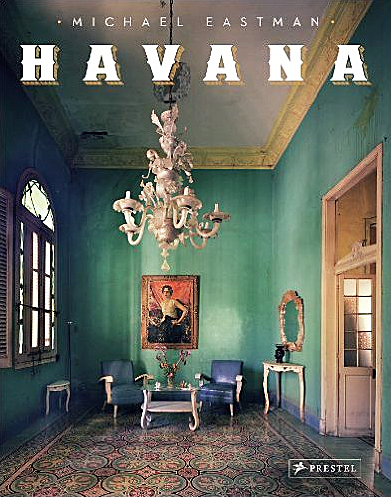
Eastman's photographs have appeared in Time, Life, Art in America, Art News, Art Forum, Communication Arts and American Photographer, and they reside in the collections of The Metropolitan Museum of Art, the International Center of Photography, The Art Institute of Chicago, the Los Angeles County Museum of Art, and other prestigious institutions. His books include Havana (2011, Prestel), Vanishing America (2008, Rizzoli) and Horses (2003, Knopf).

Source: www.eastmanimages.com

 

Selected Book

Inspiring Portfolios

Call for Entries
AAP Magazine #59 Shapes
Publish your work in our printed magazine and win $1,000 cash prizes
 
Stay up-to-date  with call for entries, deadlines and other news about exhibitions, galleries, publications, & special events.

More Great Photographers To Discover

Michael Anker
I entered the professional side of photography during my studies in graphic design. It was then that I discovered the rich tonality and depth of tones that can be found in analog black-and-white photos. My photography teacher at the time, Manfred Paul, provided the necessary inspiration. Nowadays, I execute the majority of my projects using analog methods once again. This approach allows me to alleviate the time pressure from the creative process. "The Dark River" from the cycle "Remember me?" For several years, I have been working on my photographic series "Remember Me," which explores traces of my cultural identity. At the same time, it serves as a long-term study of the relationship between people and landscapes. My focus is on two topographies that lie beyond media attention: the Oderbruch region on the northeastern border of Germany and Poland, and the former German-speaking enclave of Hirschenhof in present-day Latvia. Both areas, which have undergone significant changes, are also imbued with traces of the last great war. My family stories are rooted in these places. The first part of the series, "The Dark River," presented here, tells the story of my father's family's deep connection with nature. The subsequent second part, "The Dark Silence," will explore the migration and flight of my maternal family. Without explicitly stating it, the work invites reflection on the fact that economically or politically motivated migration has always existed. The anchor point of "The Dark River" is the Oder River, which today forms the border between Germany and Poland. Along the Oder, my father's family witnessed the two-and-a-half-century-long transformation of the once primeval river and swamp landscape into an agrarian cultural area, initiated by the Prussian King Frederick II. This region also saw one of the fiercest battles of World War II in 1945. It was here, after the war, that my father met my mother's family, who had reached the Oderbruch on a trek from the Wartheland/Poland. They later met while dancing at the "Schwarzer Adler" in Seelow. In "The Dark River," long-buried memories and dreams resurface. Calm and dark, the Oder flows, filled with memories of itself and the people along its banks. The sky reflects in it, even at night. Dark shallows remain hidden. Sluggish like the stream, life moves through the plains, carrying my own family history with it. Where the landscape is left undisturbed, it recalls its own fertility and the myths that once surrounded it. Scars in its terrain remind it of its vulnerability, keeping the pain alive, and these scars grow deceptively. The images are captured on 120 film, which I believe is the only suitable format for processing history and stories in an epic way.
Michal Cala
Poland
1948
Michal Cala was born in Toruń, Poland in 1948 and studied aircraft construction in Warsaw at the University of Technology in the early 1970's. From 1974 to 1983 he worked as an engineer in various companies in Silesia, and began photographing in the area. In 1977, he moved to Tychy in Upper Silesia, where he co-founded the photographers' association KRON and become a member of the ZPAF – the Union of Polish Art Photographers. Relatively unknown outside of his native country, his work is in several museum collections in Poland; in the Silesian Museum of Katowice, the Silesian Library in Katowice, the Upper Silesian Museum in Bytom, the Coal Mining Museum in Zabrze as well as local government building in Duisburg in the Ruhr (Germany) and various private collections. His work has received much acclaim and won numerus awards; among which are the Grand Prix at the Polish Landscape Biennale in Kielce twice, 1979 and 1983 and won the first prise at the Pilsner International Photo Awards in the Industrial category in 2007. His work from Galicia series and the Paysages de Pologne exhibition was shown in France in 1980's. The Silesia exhibition was shown widely in Katowice (1984, 2002, 2008), Krakow (1986, 2006), Warsaw (1986, 2009), in Enschede, the Netherlands, (2012), at the Photo Biennale Mannheim – Ludwigshafen – Heidelberg (2007) and part of group project at the Noorderlicht Photo Festival in the Netherlands (2008). In 2007 he was classified as one of most important Polish photographers in last century and participated in the group exhibition Polish Photography in XX Century (Warsaw, Poland and Vilnius, Lithuania). In the same year, Cala's photography was featured in British Journal of Photography and Foto8 magazine. Publications on his work include The Anthology of Polish Photography 1839 – 1989, The Masters of Polish Landscape and The Polish Photography in the 20th Century. His past exhibition Metropolis on Silesian urban landscapes was held at the Silesian Museum in Katowice in 2013 and a solo show Silesia and Galicia in the Museum of History of Photography in 2016 in Krakow (Poland). His photo book based on the same series was recently selected in the Open Submission at Belfast and Athens Photo Festivals respectively (2017). The latest solo exhibition at MMX Gallery; SILESIA 1975-1985, was the first time his work has been shown in UK.MMX Gallery about the exhibition Silesia 1975-1985 Michal Cala is regarded as one of the most important Polish photographers of the last century. Cala started taking pictures in his youth and has been working professionally as a photographer for nearly 40 years. Silesia is an industrial district in Poland which at the time of 1970's and early 1980's was experiencing its peak of development and activity. Although providing massive employment for the area, the environmental issues were ignored. Stepping off the train, Cala encountered the other-worldly landscape for the first time and decided this is what he wanted to make of photographic record of. Fascinated by the subject matter, he devoted himself to photographing the Silesian landscape between 1975 – 1992, which resulted in the series entitled Silesia (Śląsk in Polish). Cala's photography took on various influences ranging from surrealism, which inspired a movement in Poland called "fotografia kreacyjna" (creative photography), and the realism of British New Wave cinema of the late 1950's and early 1960's. Poland's isolation during the Cold War made it very difficult for photographers to obtain artistic publications. However, some Czech and Polish magazines were publishing Western photographers work such as Edward Weston, Bill Brandt, Robert Frank and Diane Arbus who acted as a window for inspiration. Cala was influenced by landscape, reportage and social documentary photography, which he always portrayed in his personally stylised images. In Poland, political and material conditions were harsh under Soviet influence. Using a basic 35mm Exa 500 camera, he managed to produce images of such a lyrical beauty only to be emphasised again with a dark graphic printing style, to further enhance his vision of the sometimes-apocalyptic looking landscape before him. A single house surrounded by huge cooling towers, majestic slagheaps, lonely figures microscopic when compared to the massive scale of industrial surroundings are subtle metaphors of living in a communist reality. The majority of photographs in the exhibition are vintage silver gelatin prints, made by Cala at the time they were taken.Source: MMX Gallery
Gilles Caron
France
1939 | † 1970
Gilles Caron (8 July 1939 – 5 April 1970) was a French photographer and photojournalist. He was born in Neuilly-sur-Seine, Hauts-de-Seine, France, of a Scottish mother and a French father, Edouard Caron, an insurance company manager. After the divorce of his parents in 1946, Caron spent 7 years in a boarding school in Argentières, Haute-Savoie. A keen horserider, Gilles Caron briefly embraced a career in horse racing, before moving to Paris where he attended the lycée Janson de Sailly. He then moved on to study journalism at the École des Hautes Études Internationales, still in Paris. He served his National Service in Algeria from 1959 as a paratrooper in the 3rd Marine Infantry Parachute Regiment (3e RPIMa). After nearly 2 years fighting a war he opposed, Caron refused to fight after the Generals' putsch, an aborted coup d'état attempted by 4 former French generals in April 1961. As a result, he spent 2 months in a military prison before finishing his military service in 1962. After returning to Paris Gilles Caron married Marianne, a long-time friend. They had 2 daughters, Marjolaine (born 9 March 1963) and Clémentine (born 8 December 1967). In 1964 Gilles Caron started working with Patrice Molinard, a fashion and advertisement photographer. In 1965 he joined the APIS (Agence Parisienne d'Informations Sociales) where he met Raymond Depardon, then working for Dalmas agency. It was during this period that he had his first major success as a photojournalist, with one of his photos illustrating the leading article of France Soir (21 February 1966 issue, on the Ben Barka affair). After leaving the APIS and briefly working for a celebrity photography agency, Caron joined Depardon and the founders of the recently created Gamma agency in 1967. For the next 3 years Caron covered most of the high-profile conflicts in the world in various countries: Israel in June 1967 during the Six-Day War; Vietnam in November and December 1967, where he was present during the infamous battle for Hill 875 in Dak To; Biafra in April 1968 where he returned twice (in July and November the same year), and where he was with his very good friend Don McCullin and where he met Bernard Kouchner, future co-founder of Médecins Sans Frontières; France in May 1968 to cover the student upheaval in Paris; Mexico in September 1968, when the military and armed men shot student demonstrators in Mexico City days before the opening ceremony of the Olympics; Northern Ireland in August 1969 to cover The Troubles; Czechoslovakia in August 1969 for the anniversary of the end of the Prague Spring the year before. In 1970 Gilles Caron went to Cambodia after king Norodom Sihanouk was deposed by Lon Nol on 18 March 1970. On April 5, Gilles Caron disappeared on Route 1, a road between Cambodia and Vietnam controlled by Pol Pot's Khmer Rouge.Source: Wikipedia In the space of just a few years Gilles Caron, a passionate and audacious young journalist, made his mark in the world of photography breathing new life into a genre: photojournalism. He founded the photographic agency Gamma in 1968 with Raymond Depardon and rapidly made a name for himself by covering all of the period’s major conflicts: the Middle East, Vietnam, Chad, Northern Ireland, Biafra… Wherever there was fighting, he was there with his camera until one day in April 1970, 5 April to be precise, when he disappeared in Cambodia in a zone controlled by the Khmer Rouge. Although he was primarily known as a war reporter, Caron’s photography is also remarkable for the way he managed to capture the quintessential spirit of the 1960s: cinema and France’s Nouvelle Vague, fashion, music, the rebellious younger generation and politics are amongst his main subjects, those that inspired some of his most striking images. His extremely realistic account of the events of May 1968, in particular his famous photo of Daniel Cohn-Bendit confronting a CRS riot policeman, are indelibly fixed in our collective memory. In just a few short years, Caron managed to prove that he was one of photojournalism’s greats.Source: Jeu de Paume
Anita Conti
France
1899 | † 1997
Anita Caracotchian was born in Ermont in Seine-et-Oise to a wealthy Armenian family. She spent her childhood being educated at home by different tutors and travelling with her family, gradually developing a passion for books and the sea. After moving to Paris, she concentrated on writing poems and the art of book binding. Her work got the attention of celebrities and she won different awards and prizes for her creativity in London, Paris, New York and Brussels. In 1927, she married a diplomat, Marcel Conti, and started traveling around the world, exploring the seas, documenting and reporting what she saw and experimented. Spending time on the fishing boats for days and even months on certain occasions gave her a deeper understanding of the problematic faced by the fishermen. In between the two world war, she developed the technique of fishing maps apart from the already used navigational charts. For two years, from one vessel to another, she observed the French fishermen along the coast and Saharan Africa discovering fish species unknown in France. She published many scientific reports on the negative effects of industrial fishing and the different problems related to fishing practices. From 1943 and approximately for 10 years, she studied in the Mauritian islands, Senegal, Guinea and Ivory Coast, the nature of the seabed, different fish species and their nutritional values in regards of protein deficiency for the local populations. Gradually, she developed better preservation techniques, fishing methods and installed artificial dens for further studies. She even founded an experimental fishery for sharks. She became more and more conscientious of the misuse of natural resources by the fishing industry and the major waste that could be prevented. In 1971 she published L’Ocean, Les Betes et L’Homme, to denounce the disaster that men create and its effects on the oceans. Through many conferences and forums and for the rest of her life, she advocated for the betterment of the marine world. She died on 25 December 1997 in Douarnenez.Source: Wikipedia Born in 1899, Anita Conti was recruited in 1935 by French Fisheries Authorities to conduct scientific experiments at sea and to assess fish resources. In 1941 she embarked on a trawler bound for Western Africa and spent the next ten years exploring the mangrove swamps between Senegal and the Ivory Coast, observing and assessing the techniques of traditional fishermen, meeting with local elders, establishing new fisheries... The hair-raising account of her attempts at catching the "Giants of the warm seas", such as sawfish and sharks, bears witness to her intrepid nature. Yet one can also feel her strong desire to contribute to a worthwhile cause. Exploring the swamps is not seen as an unilateral exploitation of African resources by Europeans : it is a genuine attempt at sharing knowledge. Source: aflit.arts.uwa.edu.au Born just before the 20th century started, Anita Conti represents a piece from the past. During her teenage years, she developed a passion for books and sea and started photography in 1914. Indeed, for almost a hundred years, she has been gathering more than 40,000 photographies. Anita was what we can call today an engaged pioneer. Recruited by French Fisheries Authorities to conduct scientific experiments at sea and to assess fish resources, she was the first french female oceanographer. In 1939, she's been the first woman to embark in the service of the National French Navy, and, thus, became the first woman to work on a military ship in wartime. In charge of developing a new technique for fishing maps, she embarked on a trawler bound for western Africa in 1941. During 10 years, she explored the West African coasts, from the Mauritian islands to Senegal and from Guinea to Ivory Coast. She insured a resupply program for the population and the French army. Her goal was to save population from hunger and find nutritional solutions in regards of their protein deficiency. During a decade, she travelled the world, explored the seas, documented and scientifically reported the negative effects of industrial fishing. "To be able to exploit the sea, you must enter into the sea" she used to say. Her African experience helped her to denounce the impacts of plundering the oceans and the major waste of marine resources. "Seas are under threat" she claimed. She tried to find fishing methods like fish farming to avoid overfishing.Source: Panthalassa
Robert Capa
United States
1913 | † 1954
Robert Capa (born Endre Friedmann; October 22, 1913 – May 25, 1954) was a Hungarian war photographer and photojournalist as well as the companion and professional partner of photographer Gerda Taro. He is considered by some to be the greatest combat and adventure photographer in history. Capa fled political repression in Hungary when he was a teenager, moving to Berlin, where he enrolled in college. He witnessed the rise of Hitler, which led him to move to Paris, where he met and began to work with Gerta Pohorylle. Together they worked under the alias Robert Capa and became photojournalists. Though she contributed to much of the early work, she quickly created her own alias 'Gerda Taro' and they began to publish their work separately. He subsequently covered five wars: the Spanish Civil War, the Second Sino-Japanese War, World War II across Europe, the 1948 Arab–Israeli War, and the First Indochina War, with his photos published in major magazines and newspapers. During his career he risked his life numerous times, most dramatically as the only civilian photographer landing on Omaha Beach on D-Day. He documented the course of World War II in London, North Africa, Italy, and the liberation of Paris. His friends and colleagues included Ernest Hemingway, Irwin Shaw, John Steinbeck and director John Huston. In 1947, for his work recording World War II in pictures, U.S. general Dwight D. Eisenhower awarded Capa the Medal of Freedom. That same year, Capa co-founded Magnum Photos in Paris. The organization was the first cooperative agency for worldwide freelance photographers. Hungary has issued a stamp and a gold coin in his honor. Source: Wikipedia On 3 December 1938 Picture Post introduced 'The Greatest War Photographer in the World: Robert Capa' with a spread of 26 photographs taken during the Spanish Civil War. But the 'greatest war photographer' hated war. Born Andre Friedmann to Jewish parents in Budapest in 1913, he studied political science at the Deutsche Hochschule für Politik in Berlin. Driven out of the country by the threat of a Nazi regime, he settled in Paris in 1933. He was represented by Alliance Photo and met the journalist and photographer Gerda Taro. Together, they invented the 'famous' American photographer Robert Capa and began to sell his prints under that name. He met Pablo Picasso and Ernest Hemingway, and formed friendships with fellow photographers David 'Chim' Seymour and Henri Cartier-Bresson. From 1936 onwards, Capa's coverage of the Spanish Civil War appeared regularly. His picture of a Loyalist soldier who had just been fatally wounded earned him his international reputation and became a powerful symbol of war. After his companion, Gerda Taro, was killed in Spain, Capa travelled to China in 1938 and emigrated to New York a year later. As a correspondent in Europe, he photographed the Second World War, covering the landing of American troops on Omaha beach on D-Day, the liberation of Paris and the Battle of the Bulge. In 1947 Capa founded Magnum Photos with Henri Cartier-Bresson, David Seymour, George Rodger and William Vandivert. On 25 May 1954 he was photographing for Life in Thai-Binh, Indochina, when he stepped on a landmine and was killed. The French army awarded him the Croix de Guerre with Palm post-humously. The Robert Capa Gold Medal Award was established in 1955 to reward exceptional professional merit. Source: Magnum Photos
Edouard Boubat
France
1923 | † 1999
Edouard Boubat (September 13, 1923, Paris, France – June 30, 1999, Paris) was a French art photographer. Boubat was born in Montmartre, Paris. He studied typography and graphic arts at the Ecole Estienne, and then worked for a printing company before becoming a photographer after WWII. He took his first photograph in 1946 and was awarded the Kodak Prize the following year. Afterwards he travelled the world for the magazine Réalités. The French poet Jacques Prévert called him a "Peace Correspondent." His son Bernard is also a photographer. Source: Wikipedia Edouard Boubat was born in Montmartre, Paris in 1923. He studied typography and graphic arts at the Ecole Estienne. Edouard Boubat's interest in photography began after World War II. Public collections that hold his work include Fondation Cartier pour l'art contemporain, Paris, Los Angeles County Museum of Art, and The Minneapolis Institute of Arts.Source: Jackson Fine Art Édouard Boubat, France’s most famous romantic photographer, was born in Paris on September 13, 1923. He grew up on the Rue Cyrano-de-Bergerac, Montmartre. As the son of an army chef, he heard many tales of the Great War, in which his father served as a cook on the front lines and was wounded three times. In 1938, Boubat attended the École Estienne, where he studied to become a photo-engraver, but in 1943, he was called up to serve two years of compulsory labour in a factory in Leipzig, Germany. Upon his return to Paris in 1946, Boubat sold his six-volume dictionary to fund the purchase of his first camera, a 6x6 Rolleicord. Boubat's approach to photography was deeply affected by World War II: "Because I know war… because I know the horror, I don’t want to add to it... After the war, we felt the need to celebrate life, and for me photography was the means to achieve this." Spanning a 50 year career, Boubat's photographs do just that. They celebrate the beauty, simplicity, and little things in life. His first professional photograph was taken in the Jardin du Luxembourg in 1946, “Little Girl with Dead Leaves,” a charming and magical shot. The following year, at the age of 24, Boubat exhibited the picture at the Salon International de la Photographie organized by the Bibliothèque Nationale de France, and was awarded the Kodak Prize. It was an amazing start to his career. The same year that he bought the Rolleicord Boubat met his future wife, Lella, of whom he took some of the most beautiful and emblematic photographs of the 20th century. In 1950, Boubat’s work was initially published by the Swiss magazine Caméra. Soon after, he became acquainted with the artistic director of the French magazine Realités. From then on, Boubat traveled the world for the prestigious magazine. His assignments often took him to poor and desolate regions, but Boubat still managed to capture only love and beauty. His special gift as a photojournalist was finding the common thread that linked the everyday life of people everywhere. For Boubat, photography meant meeting his fellow man. He loved to photograph humanity; his images bear witness to the specific relationship he had with his subjects, on which he commented: "We are living photographs. Photography reveals the images within us." In 1968, Boubat left Realités magazine, but continued to work on an independent basis. He tirelessly sought to bring the emotion and beauty of life to our gaze. Considered an heir of Henri Cartier-Bresson’s “decisive moment” photography, Boubat had a rare talent for capturing those fleeting, magical moments that can only be immortalized by the confident eye of a true master. Boubat died in 1999 in Paris, leaving behind a remarkable collection of photography, on which he often philosophized: "Over a lifetime I have noticed that everything is woven together by chance encounters and special moments," he said. "A photograph gives you a deep insight into a moment, it recalls a whole world."Source: Duncan Miller Gallery
Advertisement
AAP Magazine #59 Shapes
Win a Solo Exhibition in July
AAP Magazine #59 Shapes

Latest Interviews

Exclusive Interview with Trevor Cole: Pastoral Peoples and Practices
For this interview, we wanted to focus specifically on The Face of the Mundari and the wider Pastoral Peoples and Practices series. We spoke with Trevor about his long-term work among the Mundari, what continues to draw him back to their cattle camps, and the experience of documenting a culture whose identity remains deeply connected to livestock, tradition, and the natural environment.
Exclusive Interview with Frank Meo
In our latest exclusive feature for All About Photo, I speak with veteran photography representative Frank Meo about what it truly takes to build a sustainable creative career today. Frank brings decades of experience working with Fortune 500 companies, major agencies, and documentary photographers to the table. We dive into the critical business skills often left out of art school curriculums, the power of mentorship, and the inspiring evolution of PROJECTIONS—his international salon platform for visual storytellers. It’s an essential read for anyone navigating the commercial or editorial photography landscape today.
Exclusive Interview with Carolyn Moore
American photographer Carolyn Moore explores the inner landscape of emotion, memory, and personal transformation through a deeply intuitive photographic practice. Her work unfolds as a quiet dialogue between artist and viewer, where images become a space for reflection, vulnerability, and connection.
Exclusive Interview with Luca Desienna and Laura Estelle Barmwoldt
For over seven years, Of Lilies and Remains has explored the depths of the goth and darkwave underground, unfolding in Leipzig—a city long associated with a vibrant and enduring subcultural scene. Moving between iconic gatherings such as Wave-Gotik-Treffen and more intimate moments on the fringes, the project offers a rare and immersive glimpse into a world often misunderstood, yet rich in expression and community. Created by Luca in collaboration with Laura Estelle Barmwoldt, the work embraces a cinematic and deeply personal approach. Rather than documenting from a distance, it moves within the scene itself, capturing its atmosphere, its codes, and its quiet contradictions. The title Of Lilies and Remains hints at this duality—where beauty and darkness, fragility and strength coexist. As the book prepares for its release, we spoke with both artists about the origins of the project, their process, and what it means to document a subculture that continues to evolve while remaining true to its spirit.
Exclusive Interview with Matthew Finley
American photographer Matthew Finley turns inward, using photography as a way to explore identity, memory, and emotional truth. Based in Los Angeles, his practice moves between performance, gesture, and found imagery, creating a visual language that is both intimate and deeply personal
Exclusive Interview with Jan Janssen
Dutch photographer Jan Janssen explores universal human experiences through his long-term project It Matters, winner of the May 2025 Solo Exhibition. Begun in 2016, the series captures intimate moments of everyday life—love, loss, connection, and belonging—across Central and Eastern Europe. Working in countries such as Turkey, Azerbaijan, and Armenia, Janssen spends extended time within communities, building relationships based on trust and respect. His approach allows him to move beyond observation, revealing deeply human and authentic moments. Rooted in travel and personal discovery, It Matters reflects Janssen’s search for what connects us all in an increasingly divided world. The project is ongoing and will culminate in a photobook scheduled for publication in 2026.
Exclusive Interview with Henk Kosche
German photographer Henk Kosche turns his lens toward the streets of Halle an der Saale, capturing everyday life in the late years of the former German Democratic Republic. At the time, Kosche was studying design and exploring the city with his camera, drawn to the atmosphere of its industrial landscape and the quiet rhythms of daily life. His series Street Photography at the End of the 80s, selected as the Solo Exhibition for July 2025, revisits a body of work created just before a period of profound change. Rediscovered decades later in a small box of 35mm negatives, these photographs offer glimpses of a city and its people at a moment suspended between the familiar and the unknown.
Exclusive Interview with Anastasia Samoylova
Anastasia Samoylova is an American artist whose photographic practice is shaped by close observation and a deep attentiveness to place. Working between documentary and formal exploration, she photographs landscapes, architecture, and everyday scenes with a sensitivity to light, structure, and atmosphere. Since relocating to Miami in 2016, her work has increasingly focused on how environments—both natural and built—carry social, cultural, and emotional traces. We asked her a few questions about her practice and her way of seeing, to better understand the thoughts and experiences that shape her work—while allowing the images themselves to remain open and speak in their own time.
Exclusive Interview with Marijn Fidder
Marijn Fidder is a Dutch documentary photographer whose work powerfully engages with current affairs and contemporary social issues. Driven by a deep sense of social justice, she uses photography to speak on behalf of the voiceless and to advocate for the rights of those who are most vulnerable. Her images have been widely published in major international outlets including National Geographic, CNN Style, NRC Handelsblad, Volkskrant, GUP New Talent, and ZEIT Magazin. Her long-term commitment to disability rights—particularly through years of work in Uganda—culminated in her acclaimed project Inclusive Nation, which earned her the title of Photographer of the Year 2025 at the All About Photo Awards. She is also the recipient of multiple prestigious honors, including awards from World Press Photo and the Global Peace Photo Award. We asked her a few questions about her life and work.
Call for Entries
Win A Solo Exhibition in July
Get International Exposure and Connect with Industry Insiders