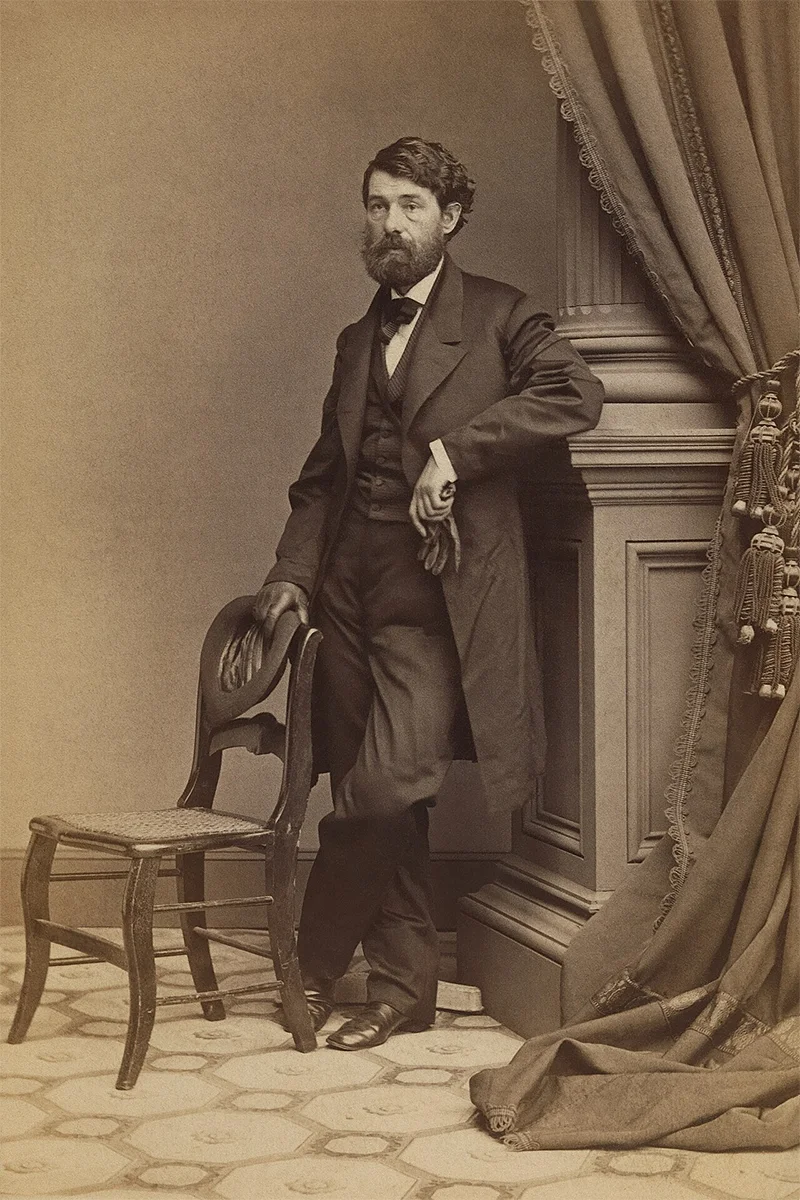


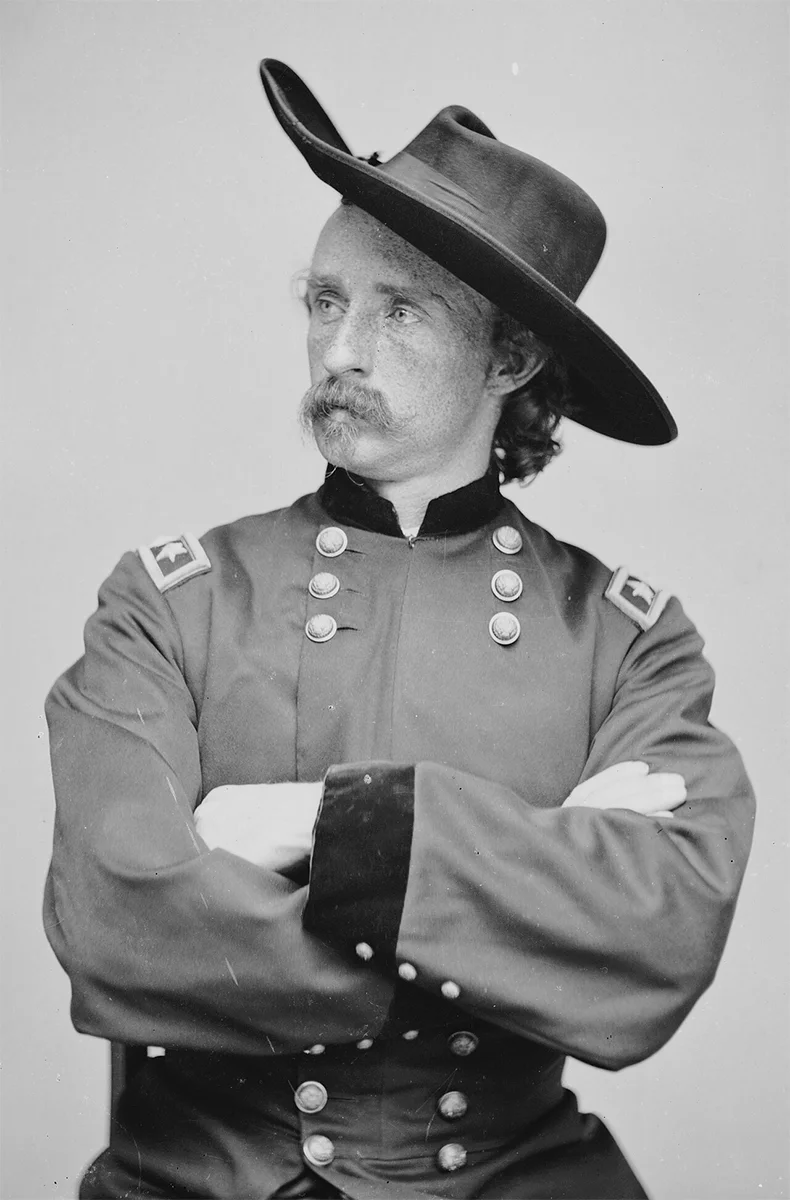


He opened a studio at Broadway and Fulton Street in 1844, and a Washington studio followed in 1849. He exhibited portraits of figures such as Daniel Webster and Edgar Allan Poe. In 1850 he published The Gallery of Illustrious Americans, which did not make money but drew attention to his work. He moved from daguerreotypes to ambrotypes and albumen prints from glass negatives, and he sold cartes de visite in large numbers. He photographed 18 of the 19 presidents from John Quincy Adams to William McKinley. His portraits of Abraham Lincoln were later used for the $5 bill and the Lincoln cent.
In 1861 Lincoln allowed Brady to document the war at his own expense. Brady equipped more than twenty photographers with travelling darkrooms, among them Alexander Gardner, Timothy H. O'Sullivan and George N. Barnard. Brady himself mostly directed the work from Washington, partly because of failing eyesight, and the studio's "Photo by Brady" credit often obscured who took each picture. In October 1862 his New York gallery showed The Dead of Antietam, photographs by Gardner and James Gibson. They were among the first images of battlefield dead seen by the American public.
“[Mathew Brady and I] had many a talk together: the point was, how much better it would often be, rather than having a lot of contradictory records by witnesses or historians—say of Caesar, Socrates, Epictetus, others—if we could have three or four or half a dozen portraits—very accurate—of the men: that would be history—the best history—a history from which there could be no appeal. (1889)”
-- Walt Whitman
Brady spent more than $100,000 on over 10,000 plates, expecting the government to buy them after the war. It declined, and he went bankrupt. A $25,000 payment from Congress in 1875 did not clear his debts. After his wife died in 1887, he died penniless in New York in 1896. His negatives, scattered among several owners, formed the core of The Photographic History of the Civil War (1912). In 1968 he was among the first two Americans named to the International Photography Hall of Fame.













 Instagram
 Facebook
 Pinterest
 X / Twitter