Famous Photographers
expand_circle_rightExplore Iconic Photographers from A to Z
Discover the works of the most iconic Masters of Photography. Click on a letter below to explore our curated A-to-Z list of famous photographers who have shaped the art of photography.

expand_circle_rightMost Famous Photographers of All Time
Who are the most famous photographers of all time? Hard to say, but here is a top 10 with a list of incredible masters of photography. Even if you don't know a lot about photography, you have certainly heard of them. The choice we made was not based on the beauty of the work but on the popularity of the photographers and their images.


United States (1902 - 1984)
Ansel Adams, an American photographer and environmentalist, is known for his black-and-white images of the American West, especially Yosemite National Park. Alongside Fred Archer, he developed the Zone System to optimize exposure and contrast. Adams preferred large-format cameras for their sharpness. He co-founded Group f/64 with photographers like Willard Van Dyke and Edward Weston, emphasizing sharp-focus photography. His works, widely reproduced in calendars, posters, and books, celebrate natural beauty, solidifying his legacy as an artist and conservationist.
expand_circle_rightRead more about Ansel Adams

United States (1913 - 1954)
Robert Capa, born Andre Friedmann in Budapest in 1913, was a renowned war photographer. Fleeing Nazi persecution, he moved to Paris in 1933, where he and Gerda Taro created the persona of Robert Capa. His iconic image of a fallen soldier during the Spanish Civil War brought him international fame. Capa covered WWII, including D-Day and the liberation of Paris. He co-founded Magnum Photos in 1947. Capa died in 1954 after stepping on a landmine in Indochina, earning a posthumous Croix de Guerre.
expand_circle_rightRead more about Robert Capa

France (1908 - 2004)
Born in Chanteloup, Henri Cartier-Bresson developed a passion for painting and Surrealism. After discovering the Leica in 1932, he began a lifelong photography career. His first exhibition was in 1933 in New York. In WWII, he was captured but escaped in 1943 and joined the Resistance. In 1945, he photographed the liberation of Paris. In 1947, he co-founded Magnum Photos. In 1952, he published Images à la Sauvette. He later focused on drawing and painting. He died in 2004, a few weeks before his 96th birthday.
expand_circle_rightRead more about Henri Cartier-Bresson


United States (1890 - 1976)
Born in Philadelphia, Emmanuel Radnitsky, later known as Man Ray, became a commercial artist in New York in the 1910s. He taught himself photography to reproduce his artworks. In 1921, he moved to Paris, where he set up a photography studio and began creating photograms, or ''Rayographs.'' In the 1920s, he also made experimental films, including Return to Reason and Emak Bakia. After returning to the U.S. in 1940, he was frustrated by being recognized only for photography. He returned to Paris in 1951 and focused on painting until his death in 1976.
expand_circle_rightRead more about Man Ray

Switzerland/United States (1924 - 2019)
Robert Frank is one of the most acclaimed photographers of the 20th century. His book The Americans is considered the most influential photography publication of its time. In 2009, a major exhibition organized by Sarah Greenough, Looking In: Robert Frank's The Americans, toured major museums, including the National Gallery of Art and the Metropolitan Museum of Art. The exhibition marked the 50th anniversary of The Americans, first published in 1958 by Robert Delpire and in 1959 by Grove Press, expanding its audience.
expand_circle_rightRead more about Robert Frank


United States (1903 - 1975)
Walker Evans is one of the most influential artists of the 20th century. His crystal-clear photographs and publications have inspired artists like Robert Frank, Diane Arbus, and Lee Friedlander. As a pioneer of the documentary tradition in American photography, Evans had the rare ability to see the present as if it were already the past. His main subject was the vernacular: the everyday expressions of people in roadside stands, cafés, advertisements, and small-town streets. For fifty years, Evans documented the American scene with precision and poetic nuance.
expand_circle_rightRead more about Walker Evans


United States (1886 - 1958)
Edward Henry Weston was a 20th-century American photographer, considered one of the most innovative and influential in the field. Over his 40-year career, he photographed landscapes, still lifes, nudes, portraits, and genre scenes. Weston developed a uniquely American and Californian approach, focused on the people and places of the American West. In 1937, he became the first photographer to receive a Guggenheim Fellowship. Diagnosed with Parkinson’s disease in 1947, he ceased photographing but spent his final years overseeing the printing of his famous images.
expand_circle_rightRead more about Edward Henry Weston

France (1894 - 1986)
Jacques Henri Lartigue, at 69, presented his work at MoMa in 1963, gaining worldwide fame after a feature in Life Magazine. Lartigue’s photography journey began in 1900, with his father gifting him a camera at age 8. His passion for sports, cars, and aviation led him to capture family moments. In addition to photography, Lartigue pursued painting and exhibited in Paris. After struggles in the 1930s, his work was recognized in the 1950s. His first retrospective was held in 1975, and in 1979, he donated his work to France. Lartigue passed away in 1986, leaving a legacy of 100,000 snapshots.
expand_circle_rightRead more about Jacques Henri Lartigue

France (1912 - 1994)
Robert Doisneau was a French photographer known for capturing the surreal in everyday life, often highlighting amusing juxtapositions and human nature. Born in Gentilly, France, he studied lithography before turning to photography. He worked for Renault until 1939, then forged documents for the resistance during WWII. In 1948, he began contributing to French Vogue, but returned to photojournalism in the streets of Paris in 1951. Doisneau’s work has been featured in major retrospectives and is beloved in the history of photography.
expand_circle_rightRead more about Robert Doisneau


United States (1895 - 1965)
Dorothea Lange was an American documentary photographer known for her work during the Great Depression. After studying at Columbia University, she opened a studio in San Francisco. In the 1930s, she photographed homeless people fleeing the Dust Bowl, catching the attention of economist Paul Taylor, who hired her to document agricultural conditions. Lange worked for the Farm Security Administration, producing iconic images like Migrant Mother (1936). She later worked for the Office of War Information and Life magazine, documenting WWII and global issues.
expand_circle_rightRead more about Dorothea Lange

expand_circle_rightPhotographer Interviews & Projects
expand_circle_rightFollow Us






expand_circle_rightSearch

Latest Issue
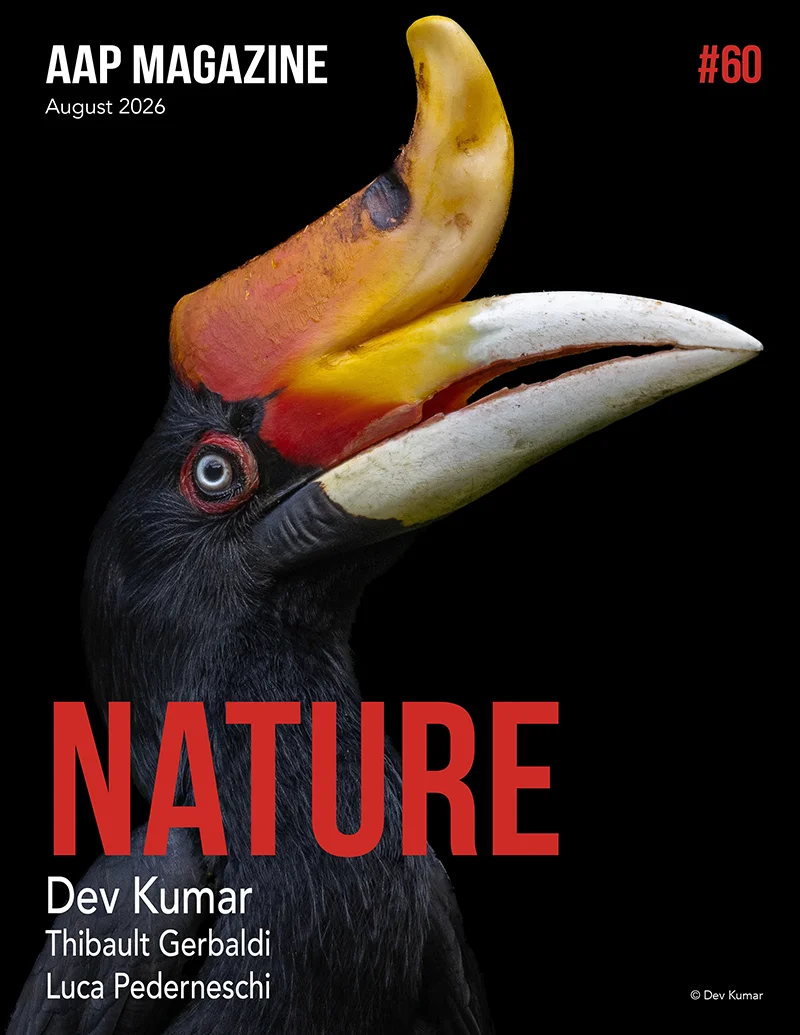
AAP Magazine #60
expand_circle_rightTrending This Week

 Instagram
 Facebook
 Pinterest
 X / Twitter