All about photo.com: photo contests, photography exhibitions, galleries, photographers, books, schools and venues.
Win a Solo Exhibition in July 2026 + An Exclusive Interview!
Michael Eastman
Michael Eastman

Michael Eastman

Country: United States
Birth: 1947

Michael Eastman has established himself as one of the world's leading contemporary photographic artists. The self-taught photographer has spent five decades documenting interiors and facades in cities as diverse as Havana, Paris, Rome, and New Orleans, producing large-scale photographs unified by their visual precision, monumentality, and painterly use of color. Eastman is most recognized for his explorations of architectural form and the textures of decay, which create mysterious narratives about time and place.

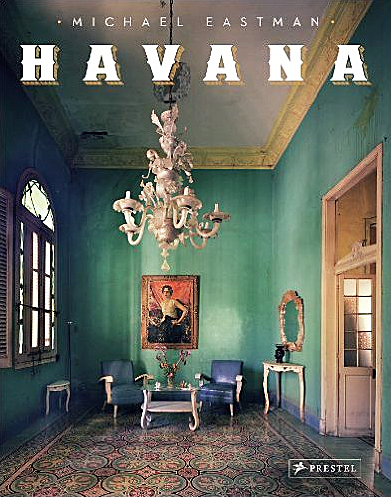
Eastman's photographs have appeared in Time, Life, Art in America, Art News, Art Forum, Communication Arts and American Photographer, and they reside in the collections of The Metropolitan Museum of Art, the International Center of Photography, The Art Institute of Chicago, the Los Angeles County Museum of Art, and other prestigious institutions. His books include Havana (2011, Prestel), Vanishing America (2008, Rizzoli) and Horses (2003, Knopf).

Source: www.eastmanimages.com

 

Selected Book

Inspiring Portfolios

Call for Entries
AAP Magazine #59 Shapes
Publish your work in our printed magazine and win $1,000 cash prizes
 
Stay up-to-date  with call for entries, deadlines and other news about exhibitions, galleries, publications, & special events.

More Great Photographers To Discover

Vicky Martin
United Kingdom
Vicky Martin is an award winning fine art photographer based in the UK. Although she studied art and photography in the 1990s it was not until 2008 when she was awarded a prestigious Rhubarb Bursary that she was able to pursue photography full time. Since then Vicky has had her work published and exhibited nationally and internationally: from Europe to the USA in solo and group shows. Her work continues to garner many awards and nominations, including Winner of Single Image in the Professional Fine Art Category at the 2018 12th Julia Margaret Cameron Awards, Directors Choice Award in the Portrait Exhibition at Praxis Gallery, Winner of the Professional Fine Art Category in the 2016 Fine Art Photography Awards, nominations and honorable mentions in the Julia Margaret Cameron Awards, IPA ,TIFA, IPOTY, PX3 Color Red, Neutral Density Awards, CHROMATIC International Color Photography Awards, La Grande Photo Awards, International Color Awards, Siena International Photo Awards, Photography Grant Award, the Aesthetica Art Prize and 1st place winner AAP Magazine Colors. Throughout Vicky's practice she explores her fascination with identity and the emotions that are created by considered scenarios that are based in both fantasy and reality. Her work explores identity through staging and creating realities for characters who often display conflicting emotions with situations. Vicky seeks to encourage the viewer to ask questions of her work to which ultimately the answers depend on the viewer's own personal identity and perceptions. Discover Vicky Martin's Interview
El Lissitzky
Russia
1890 | † 1941
Lazar Markovich Lissitzky, known as El Lissitzky, was a Russian artist, designer, photographer, typographer, polemicist and architect. He was an important figure of the Russian avant-garde, helping develop suprematism with his mentor, Kazimir Malevich, and designing numerous exhibition displays and propaganda works for the Soviet Union. His work greatly influenced the Bauhaus and constructivist movements, and he experimented with production techniques and stylistic devices that would go on to dominate 20th-century graphic design. Lissitzky's entire career was laced with the belief that the artist could be an agent for change, later summarized with his edict, "das zielbewußte Schaffen" (goal-oriented creation). Lissitzky, of Lithuanian Jewish оrigin, began his career illustrating Yiddish children's books in an effort to promote Jewish culture in Russia. When only 15 he started teaching, a duty he would maintain for most of his life. Over the years, he taught in a variety of positions, schools, and artistic media, spreading and exchanging ideas. He took this ethic with him when he worked with Malevich in heading the suprematist art group UNOVIS, when he developed a variant suprematist series of his own, Proun, and further still in 1921, when he took up a job as the Russian cultural ambassador to Weimar Germany, working with and influencing important figures of the Bauhaus and De Stijl movements during his stay. In his remaining years he brought significant innovation and change to typography, exhibition design, photomontage, and book design, producing critically respected works and winning international acclaim for his exhibition design. This continued until his deathbed, where in 1941 he produced one of his last works – a Soviet propaganda poster rallying the people to construct more tanks for the fight against Nazi Germany. In 2014, the heirs of the artist, in collaboration with Van Abbemuseum and leading worldwide scholars on the subject, established the Lissitzky Foundation in order to preserve the artist's legacy and to prepare a catalogue raisonné of the artist's oeuvre.Source: Tate Margarita Tupitsyn included the essays by Ulrich Pohlmann and Mathew Drutt in her book Beyond the Abstract Cabinet (1999). This book was aimed at an audience with an interest in Russian photography and modernism. The essays in this book brought Lissitzky’s work to limelight. The essays mention various aspect of his work. From 1922 to 1925, Lissitzky experimented with photograph collage and photograms. While working on photograms, Lissitzky experimented with photomontage as well. He was able to achieve vibrant compositions using several printing exposures in order to utilize the effects of transparency. These experiments help him in many advertisements he produced starting from 1924 until 1925. Lissitzky was among the first avant-gardists to revive the photogram or cameraless photographic image, combining this technique with experiments in montage to generate fantastic portraits and design proposals. Largely using photography, Lissitzky also rethought the illustrated book as an architectural form, to be tabbed through, unfolded in all directions, and made into a fully three-dimensional object. These many ideas were deployed in the service of artists and arts organizations, as well as, above all, institutions of the Soviet state, on whose behalf Lissitzky was committed to “influencing the human psyche” collectively and in the public realm. He survived the reversals of fortune suffered by so many politically committed artists in the 1930s but had chronically poor health and died of tuberculosis.Source: The Art Institute of Chicago
Hannah Price
United States
1986
Raised in Fort Collins, Colorado, Hannah Price (b. 1986) is a photographic artist and filmmaker primarily interested in documenting relationships, race politics, social perception and misperception. Price is internationally known for her project City of Brotherly Love (2009-2012), a series of photographs of the men who catcalled her on the streets of Philadelphia. In 2014, Price graduated from the Yale School of Art MFA Photography program, receiving the Richard Benson Prize for excellence in photography. Over the past eight years, Price's photos have been displayed in several cities across the United States, with a few residing in the permanent collection of the Philadelphia Museum of Art. Currently, Ms. Price lives and works in Philadelphia, PA.Source: www.hannahcprice.com Born in Annapolis, Maryland; raised in Fort Collins, Colorado; and now based in Philadelphia, photographer and documentary filmmaker Hannah Price has spent years capturing the nuances of racial identities and societal perceptions. Her work is a critique of the negative and destructive powers of visual representation in determining the realities of black people and other racialized groups. For Price, image-making also offers a strategy of recuperating different ways of relating to other people and the world around us. To date, her projects have included: the internationally-renowned City of Brotherly Love— a visual survey of catcallers she encountered in Philadelphia; Resemblance— a series of portraits of inner-city high schoolers in Rochester New York; Cursed By Night, made in 2012-2013, on the perceived threat of black masculinity; and 2018’s Semaphore, exploring how individuals signal their identities. Price’s photos evince a rare attention to the subjectivities of those she photographs, even as she probes the validity and significance of the social constructs that operate around them. She has previously exhibited in several cities across the United States, with solo shows at Milwaukee Institute of Art and Design, Philadelphia Photo Arts Center, and the Silver Eye Center for Photography, Pittsburgh, while several of her photographs reside in the permanent collection of the Philadelphia Museum of Art. Now, as a 2020 Magnum nominee, Price discusses the political and aesthetic concerns that inform her work, as well as some of the problems and possibilities to be found in using visual communication as a means of fighting racism.Source: Magnum Photos Price moved to Philadelphia in 2009 from Colorado and noticed for the first time that she was getting catcalled. The photographer, who's currently working toward an MFA in photography at Yale, decided to turn the camera on the people who approached her on the Philly streets. This resulted in the series City of Brotherly Love (Philly's nickname). Ambiguity might be one of this project's most prevalent themes. It's been mistakenly referred to as "My Harassers" on some blogs, which Price does not like. Her series doesn't take an aggressive stance on catcalling; it's not meant to incite social action, she says. Rather, it's an observation, a way to react behind the camera lens. Price's portraits leave much to interpretation. Not only do we not know the situations in which she crossed paths with these men, but we also have no idea of their relationship. The photos are framed in a variety of ways; the lighting, composition and even positioning of the subjects themselves vary so much that viewers have plenty of freedom to interpret them.Source: npr
Nazanin Alipour Jeddi
Iran/United States
Nazanin Alipour Jeddi, known as Sitaaj, is a self-taught freelance photographer and translator born in Tehran, Iran, and currently residing in the United States. She specializes in capturing the nuanced experiences of women, exploring themes of gender, identity, and cultural dynamics. Sitaaj's photography has been exhibited internationally and recognized with multiple awards. Her work highlights the profound interplay between women's experiences and the cultural systems surrounding them, fostering dialogue and understanding through her art. In addition to her photography, Sitaaj is an accomplished translator. Her fifth translated book, Howto Be an Artist, was recently published in Tehran. Through her creative work and translations, Sitaaj seeks to inspire and empower individuals to pursue their passions, regardless of their backgrounds or circumstances. Photography remains her true passion, providing a medium to tell compelling and meaningful stories. Lingering Shadows The photography series "Lingering Shadows" is an attempt to capture the simple yet complex and hidden moments that women experience in their everyday lives. These images use the color blue to emphasize the often invisible fatigue—an endless cycle of tasks that, despite their importance, sometimes feel futile and unproductive. The dominant presence of blue conveys a deep sense of coldness and isolation. The goal of this series is to invite viewers to rethink the aspects of women's lives that often go unnoticed. Simple moments, such as drinking tea, preparing food, or a brief pause amid the daily chaos, take on new meaning in these images, representing the emptiness, futility, and underlying complexities in these seemingly ordinary experiences. These photos are not only a personal narrative but also a reflection of the collective experience of women around the world.
Armineh Johannes
United States/France
I was born in Tehran, Iran and studied in England where I obtained a Journalism Diploma, and later in France, where I obtained a B.A. in History and a B.A in English. I started my photography career in 1986 with my first assigned in the Atlas Mountains in Morocco. My work has been mainly on the Middle East and ex- Soviet Union countries. I started working on various assignments in Armenia since 1989 and continue to do so up to this day. In 1989, a year after the earthquake in Armenia, I went there for the first time. I am Armenian born and raised in Iran. Setting foot on the land of my ancestors for the first time brought great emotion for me. Since that first trip to Armenia and the deep connection I felt with the people and the land, I have continued to make regular trips to all corners of Armenia and Artsakh, depicting the lives of my fellow Armenians. In 1989-1990, I made my first trip to Artsakh (Nagorno-Karabakh) and photographed the first Nagorno-Karabakh conflict; I was one of the few photojournalists who managed to travel to the village of Getashen and the villages of the Shahumyan/Shahoumyan region (northern Artsakh) just before Operation Ring in 1991. I continued to travel across Armenia for decades and my humanitarian photo stories have been widely published in magazines and newspapers around the world, such as Los Angeles Times (USA), Washington Post, Newsweek, Le Monde, Peuples du Monde, Libération, L 'Express, Révolution (France), Photo Reporter, France - USSR, UN Multimedia, Foto Pratica (Italy), l'Autre Journal, Marie Claire (Italy), Pop Eye (Japan), Asahi Graph (Japan), Asahi Magazine ( Japan), AIM (USA), Photography (England), etc. In 1997 I decided to go to Armenia and stay there for one year in order to have a more profound understanding of their lifestyle and customs. That period was one of the most enriching and interesting experiences of my life… During the past thirty years I has been documenting the life of Armenians in Armenia, in Karabagh as well as in the Middle East and around the world. I held several exhibitions in France in Portugal and in the United States. In 1990, the prestigious French Newspaper “Le Monde” organized a solo photo exhibition of my work in its halls in Paris. I currently work as a freelance documentary photo-journalist but also collaborate with “Les Nouvelles d’Armenie Magazine”, an Armenian magazine published in France. I am working on having a photo book published of my work on Armenia and Artsakh (Karabagh). I started travelling to Armenia since 1989. I am of Armenian origin (born in Iran) and have continued to travel there on regular basis depicting the lives of Armenians. I travelled to Artsakh (H. Karabagh) several times starting in 1990 and covered the first conflict with Azerbaijan which ended in 1994. During my travels to Artsakh I also photographed moments of their daily lives.
Advertisement
AAP Magazine #59 Shapes
Win a Solo Exhibition in July
AAP Magazine #59 Shapes

Latest Interviews

Exclusive Interview with Trevor Cole: Pastoral Peoples and Practices
For this interview, we wanted to focus specifically on The Face of the Mundari and the wider Pastoral Peoples and Practices series. We spoke with Trevor about his long-term work among the Mundari, what continues to draw him back to their cattle camps, and the experience of documenting a culture whose identity remains deeply connected to livestock, tradition, and the natural environment.
Exclusive Interview with Frank Meo
In our latest exclusive feature for All About Photo, I speak with veteran photography representative Frank Meo about what it truly takes to build a sustainable creative career today. Frank brings decades of experience working with Fortune 500 companies, major agencies, and documentary photographers to the table. We dive into the critical business skills often left out of art school curriculums, the power of mentorship, and the inspiring evolution of PROJECTIONS—his international salon platform for visual storytellers. It’s an essential read for anyone navigating the commercial or editorial photography landscape today.
Exclusive Interview with Carolyn Moore
American photographer Carolyn Moore explores the inner landscape of emotion, memory, and personal transformation through a deeply intuitive photographic practice. Her work unfolds as a quiet dialogue between artist and viewer, where images become a space for reflection, vulnerability, and connection.
Exclusive Interview with Luca Desienna and Laura Estelle Barmwoldt
For over seven years, Of Lilies and Remains has explored the depths of the goth and darkwave underground, unfolding in Leipzig—a city long associated with a vibrant and enduring subcultural scene. Moving between iconic gatherings such as Wave-Gotik-Treffen and more intimate moments on the fringes, the project offers a rare and immersive glimpse into a world often misunderstood, yet rich in expression and community. Created by Luca in collaboration with Laura Estelle Barmwoldt, the work embraces a cinematic and deeply personal approach. Rather than documenting from a distance, it moves within the scene itself, capturing its atmosphere, its codes, and its quiet contradictions. The title Of Lilies and Remains hints at this duality—where beauty and darkness, fragility and strength coexist. As the book prepares for its release, we spoke with both artists about the origins of the project, their process, and what it means to document a subculture that continues to evolve while remaining true to its spirit.
Exclusive Interview with Matthew Finley
American photographer Matthew Finley turns inward, using photography as a way to explore identity, memory, and emotional truth. Based in Los Angeles, his practice moves between performance, gesture, and found imagery, creating a visual language that is both intimate and deeply personal
Exclusive Interview with Jan Janssen
Dutch photographer Jan Janssen explores universal human experiences through his long-term project It Matters, winner of the May 2025 Solo Exhibition. Begun in 2016, the series captures intimate moments of everyday life—love, loss, connection, and belonging—across Central and Eastern Europe. Working in countries such as Turkey, Azerbaijan, and Armenia, Janssen spends extended time within communities, building relationships based on trust and respect. His approach allows him to move beyond observation, revealing deeply human and authentic moments. Rooted in travel and personal discovery, It Matters reflects Janssen’s search for what connects us all in an increasingly divided world. The project is ongoing and will culminate in a photobook scheduled for publication in 2026.
Exclusive Interview with Henk Kosche
German photographer Henk Kosche turns his lens toward the streets of Halle an der Saale, capturing everyday life in the late years of the former German Democratic Republic. At the time, Kosche was studying design and exploring the city with his camera, drawn to the atmosphere of its industrial landscape and the quiet rhythms of daily life. His series Street Photography at the End of the 80s, selected as the Solo Exhibition for July 2025, revisits a body of work created just before a period of profound change. Rediscovered decades later in a small box of 35mm negatives, these photographs offer glimpses of a city and its people at a moment suspended between the familiar and the unknown.
Exclusive Interview with Anastasia Samoylova
Anastasia Samoylova is an American artist whose photographic practice is shaped by close observation and a deep attentiveness to place. Working between documentary and formal exploration, she photographs landscapes, architecture, and everyday scenes with a sensitivity to light, structure, and atmosphere. Since relocating to Miami in 2016, her work has increasingly focused on how environments—both natural and built—carry social, cultural, and emotional traces. We asked her a few questions about her practice and her way of seeing, to better understand the thoughts and experiences that shape her work—while allowing the images themselves to remain open and speak in their own time.
Exclusive Interview with Marijn Fidder
Marijn Fidder is a Dutch documentary photographer whose work powerfully engages with current affairs and contemporary social issues. Driven by a deep sense of social justice, she uses photography to speak on behalf of the voiceless and to advocate for the rights of those who are most vulnerable. Her images have been widely published in major international outlets including National Geographic, CNN Style, NRC Handelsblad, Volkskrant, GUP New Talent, and ZEIT Magazin. Her long-term commitment to disability rights—particularly through years of work in Uganda—culminated in her acclaimed project Inclusive Nation, which earned her the title of Photographer of the Year 2025 at the All About Photo Awards. She is also the recipient of multiple prestigious honors, including awards from World Press Photo and the Global Peace Photo Award. We asked her a few questions about her life and work.
Call for Entries
Win A Solo Exhibition in July
Get International Exposure and Connect with Industry Insiders